
.webp)
10 Best Tools for Email-Based Lead Scoring 2026



Email-based lead scoring helps businesses prioritize prospects by analyzing their fit and engagement with your product or service. With automated scoring, companies see up to 40% higher conversion rates and save time by focusing on qualified leads. Tools now use AI to predict lead quality with 40–60% accuracy, far outperforming manual methods. Real-time scoring is the new standard, enabling instant follow-ups when interest is highest.
Here are the top 10 tools for email-based lead scoring in 2026:
- HubSpot: Combines rule-based and AI-powered scoring, integrates with CRM, starts at $890/month.
- ActiveCampaign: Dynamic scoring with automations, budget-friendly at $49/month.
- Marketo Engage: Advanced scoring for large teams, custom pricing.
- Apollo: AI-driven scoring with contact discovery, starts at $49/user/month.
- MadKudu: Predictive scoring for SaaS, starts at $999/month.
- 6sense: Account-level scoring with intent data, starts at ~$55,000/year.
- Salesforce Einstein: Predictive scoring for Salesforce users, add-on starts at $50/user/month.
- Clay: Data enrichment and scoring from multiple sources, starts at $185/month.
- Gumloop: Flexible AI scoring workflows, starts at $37/month.
- Prospeo: Enrichment-focused scoring with high data accuracy, starts at ~$0.01/email.
Quick Comparison
| Tool | Starting Price | Best For | Scoring Method | Key Feature |
|---|---|---|---|---|
| HubSpot | $890/month | All-in-one teams | Rules + Predictive AI | Built-in CRM integration |
| ActiveCampaign | $49/month | Small businesses | Dynamic + Rules | Affordable with automations |
| Marketo Engage | Custom pricing | Large marketing ops | Behavioral + Fit | Multi-layered scoring models |
| Apollo | $49/user/month | Outbound sales teams | AI-assisted | Combines scoring with contact discovery |
| MadKudu | $999/month | SaaS companies | Predictive AI | High predictive accuracy |
| 6sense | ~$55,000/year | Enterprise ABM | AI + Intent Data | Account-level scoring |
| Salesforce Einstein | $50/user/month add-on | Salesforce users | Predictive AI | Deep Salesforce integration |
| Clay | $185/month | RevOps/data teams | Multi-source enrichment | Pulls data from 100+ providers |
| Gumloop | $37/month | Custom workflows | AI Agents | Tailored scoring workflows |
| Prospeo | ~$0.01/email | Data accuracy | Enrichment-led | 98% email accuracy |
Choose a tool based on your team's size, budget, and data quality. For smaller teams, ActiveCampaign and Apollo offer affordable options. Larger teams might prefer HubSpot, 6sense, or Salesforce Einstein for scalable solutions. Always ensure your data is up-to-date for reliable scoring. To capture this data effectively, you should design the perfect landing page form to ensure high-quality inputs from the start.
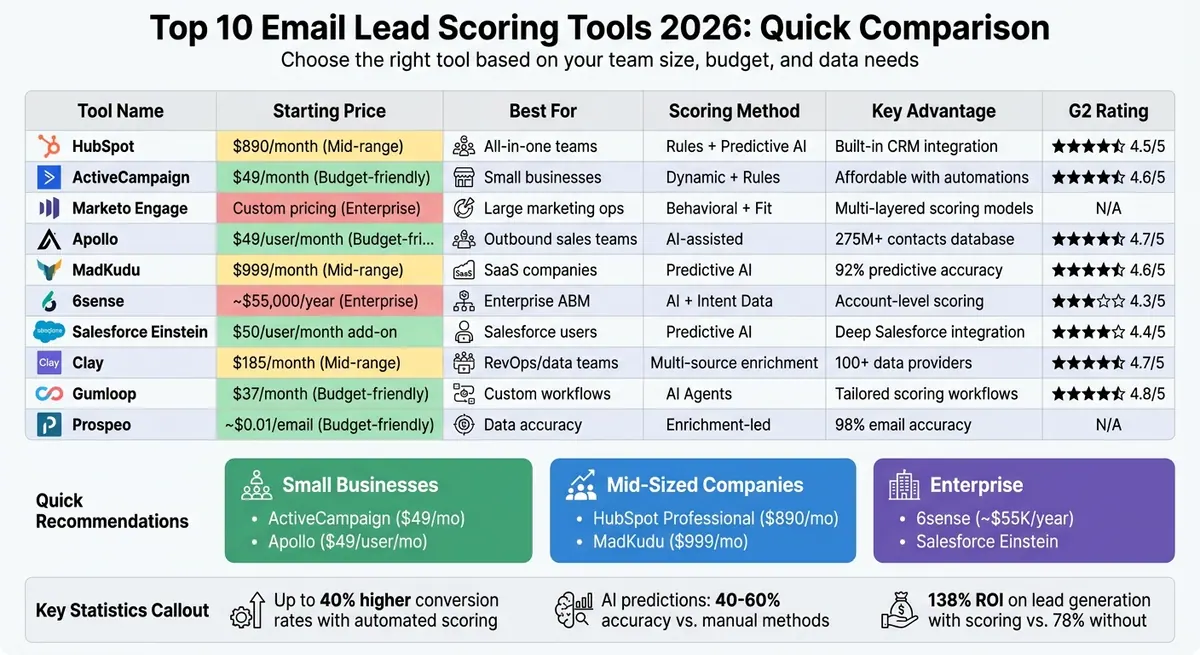
Top 10 Email Lead Scoring Tools Comparison: Pricing, Features & Best Use Cases 2026
1. HubSpot
HubSpot helps marketers track email opens, link clicks, and interactions with CTAs to assign lead scores. You can set rules based on activity frequency - like awarding extra points for repeated opens - or timeframes, focusing only on recent engagement (e.g., the last 30 days). This ensures you're prioritizing fresh interactions over outdated ones.
The platform also automatically reduces scores over time - typically by 50% every 30 days - so inactive leads don't maintain high scores. Negative actions, such as unsubscribing or prolonged inactivity, can lower scores further, helping filter out less promising leads. For Marketing Hub Enterprise users, AI-powered predictive scoring analyzes past conversion data to suggest scoring criteria, streamlining the setup process. These tools integrate seamlessly with HubSpot’s CRM and marketing workflows.
"Lead scores on their own are not actionable. A successful approach to lead scoring will involve automation to make sure that contacts are getting routed to the right people." - Ryan Durling, Inbound Consultant, HubSpot
Integrations with CRM and Marketing Tools
HubSpot’s CRM integration simplifies lead scoring by storing scores as CRM properties. These can trigger automated workflows, such as assigning leads to sales reps or updating lifecycle stages when specific thresholds are reached. The platform also supports multi-object scoring for Contacts, Companies, and Deals, helping prioritize leads across different parts of the sales funnel. Additionally, tools like Zapier allow you to pull engagement data from external platforms like Mailchimp or ActiveCampaign, updating lead scores directly in HubSpot CRM.
Pricing (USD/month)
Here’s how HubSpot pricing breaks down:
- Marketing Hub Professional: $890/month for 2,000 marketing contacts. This tier includes contact-based scoring.
- Marketing Hub Enterprise: $3,600/month for 10,000 marketing contacts, featuring AI-powered predictive lead scoring.
- Sales Hub Professional: $100/seat (minimum 5 seats, $500/month total) for deal-based scoring.
If you need more contacts, expect additional charges of $50–$100 per 1,000 contacts. Onboarding fees range from $3,000 to over $10,000.
sbb-itb-5f36581
2. ActiveCampaign
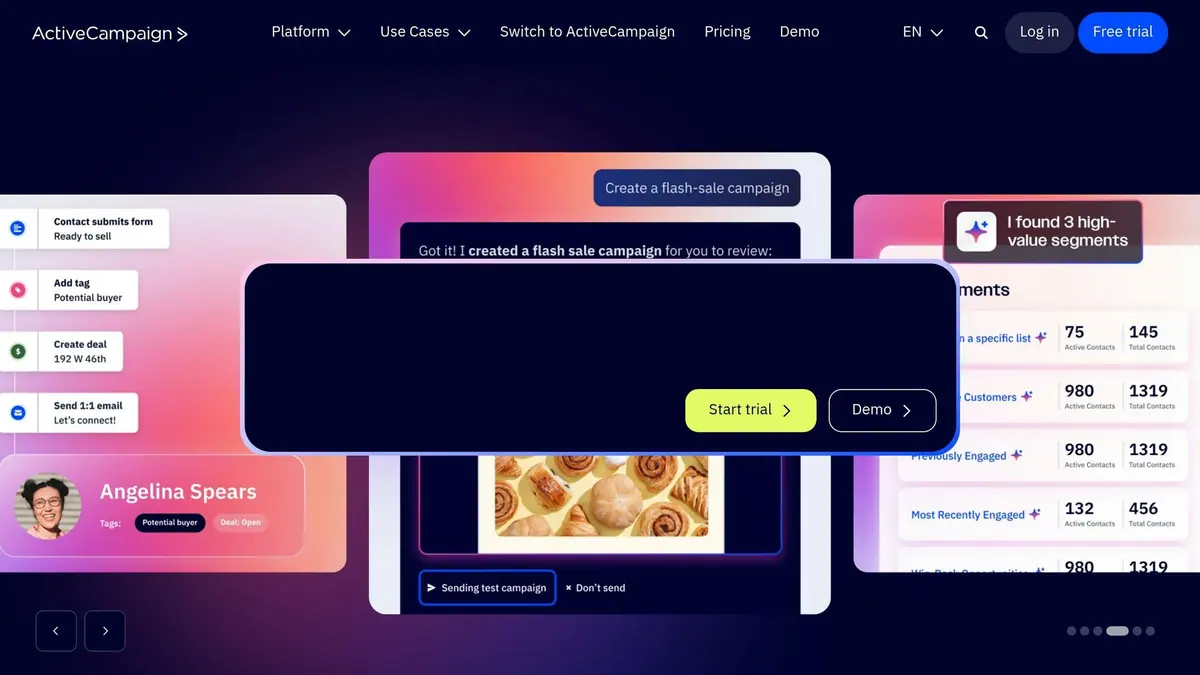
ActiveCampaign provides two types of lead scoring: static scoring, which is applied once, and dynamic scoring, which updates continuously through automations. Marketers can assign or deduct points based on specific email interactions, such as opening emails, clicking links, replying to campaigns, or forwarding messages. To ensure scores remain relevant to current engagement levels, points automatically expire after a set period, typically three months. This combination of static and dynamic scoring helps maintain a system that reflects real-time customer activity.
Once scoring rules are established, ActiveCampaign immediately evaluates existing contacts. Any change in score can trigger automated workflows, such as notifying the sales team or creating a deal record when a contact reaches a designated threshold. For example, in March 2025, the e-learning company LearnUpon reported a 30% increase in their MQL-to-SQL conversion rate after using ActiveCampaign's lead scoring to prioritize prospects based on engagement and alignment with their ideal customer profile.
"One of the most popular uses of scoring is to optimize your sales process so that your sales team is always focused on the highest quality leads."
- ActiveCampaign Help Center
Integrations with CRM and Marketing Tools
ActiveCampaign's built-in CRM simplifies lead management by automatically creating deal records, assigning them to sales reps, and generating follow-up tasks when contacts hit specific score thresholds. The platform also supports over 1,000 integrations, including Salesforce, Shopify, and Microsoft Dynamics, allowing real-time updates to lead scores based on external behavioral data. These integrations make it easier for businesses to consolidate data and streamline lead prioritization.
Pricing (USD/month)
Lead scoring is available as part of the Pipelines enhanced CRM add-on, which can be included in most ActiveCampaign plans. Pricing begins at $15 per month for the Starter plan, $49 per month for the Plus plan, $79 per month for the Pro plan, and $145 per month for the Enterprise plan. Higher-tier plans also offer AI-powered features like Win Probability and predictive sending, which further improve lead prioritization.
3. Marketo Engage
Marketo Engage uses a proprietary algorithm to assign engagement scores ranging from 0 to 100, reflecting how well your email content connects with leads. It evaluates both positive actions (like opens, clicks, and program completions) and negative ones (like unsubscribes), with an average score benchmark set at 50. A score over 50 means you're outperforming the average, while anything below signals room for improvement.
Scores are calculated 72 hours after sending an email, using data from the most recent three campaigns. Marketing automation expert Josh Hill clarifies, "Over 50 means that you are doing better than 50% of customers. Under 50 means you are doing worse than 50% of customers". For buying group scoring in the Journey Optimizer B2B Edition, Marketo assigns default weights of 30 to both "Email Clicked" and "Email Opened" activities. To avoid skewed results, a daily cap of 20 per activity type is applied. This scoring methodology provides a solid foundation for integration and analytics.
Integrations with CRM and Marketing Tools
Marketo Engage goes beyond scoring by offering seamless data integration for unified lead management. It syncs bi-directionally with Salesforce and other CRMs, ensuring that lead scores and engagement data flow smoothly between systems. The platform also uses webhooks to connect with external data enrichment tools, pulling in demographic and firmographic details to score leads even before they enter your CRM. Caryl Mostacho, a Senior Consultant at MERGE, emphasizes, "Lead scoring should be as centralized and as consolidated as possible. It should be its own dedicated program, and [I recommend] leveraging myTokens, which allows you to easily change the value of each variable as you go".
Key Features for Lead Scoring
Marketo separates engagement (Behavior Score) from fit (Demographic Score) to provide more precise lead evaluations. It tracks engagement across multiple channels, including Dynamic Chat and Interactive Webinars, alongside email. For global businesses, localized scoring can be tailored to reflect regional engagement trends. All engagement-related activities are logged in Marketo's activity log, which serves as the foundation for scoring calculations.
Pricing (USD/month)
Marketo Engage does not offer publicly available pricing. Instead, the cost is tailored to factors like database size, required features, and contract terms. Businesses need to contact Adobe's sales team directly to receive a custom quote.
4. Apollo
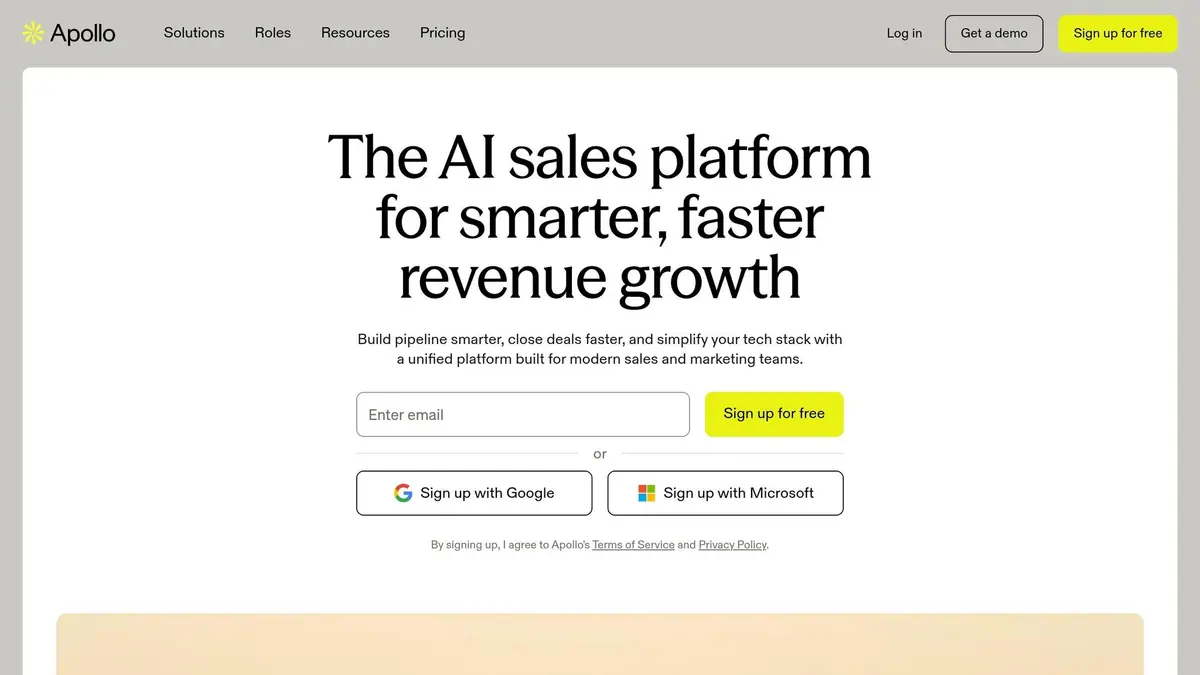
Apollo combines contact discovery with AI-driven email lead scoring, making it a powerful tool for sales teams. It tracks metrics like email opens, reply rates, and even the sentiment of replies to assign scores that reflect a prospect’s likelihood to convert. According to Built-In, companies using Apollo's lead scoring and intent signals reported a 10% increase in win rates and a 10% boost in Average Contract Value (ACV) as of February 2026. While it integrates seamlessly with major CRMs like other tools, Apollo’s standout feature is its automated form enrichment.
Email Engagement-Based Scoring Capabilities
Apollo’s scoring system evaluates both positive and negative email engagement signals. Positive signals include actions like email opens, reply rates, and meeting acceptances, while negative signals - such as unsubscribes or spam complaints - lower a lead’s score. The platform also applies recency weighting and score decay, ensuring that recent actions (like a reply from last week) carry more weight than older interactions (like downloading a whitepaper six months ago).
"Apollo's scores are in a league of their own. Setup is straightforward and results are fast." - Kaleb Jessee, VP of Sales at Talent Quest
Integrations with CRM and Marketing Tools
Apollo offers bi-directional syncing with Salesforce and HubSpot, making it easy to integrate into existing workflows. Its automated form enrichment feature sets it apart by pulling firmographic and behavioral data directly from email addresses, populating CRM fields with valuable insights. With a database of over 275 million contacts and a reported 96% email accuracy, Apollo allows users to filter prospects by score right within search results.
Key Features for Lead Scoring
Apollo provides two scoring options: AI-generated auto-scoring and custom models. The AI scoring uses predictive analytics based on your CRM data and Apollo account history to identify high-converting leads. For more tailored needs, custom models let users define specific criteria and weightings. Leads are scored across three dimensions:
- Persona-fit: Factors like role and seniority.
- Stage-fit: How well the lead aligns with the type of content shared.
- Intent-fit: Frequency and recency of interactions.
Apollo’s scoring system is transparent, showing the criteria behind each score, which helps sales teams take more personalized actions. These features are available across all subscription tiers, ensuring flexibility for different business needs.
Pricing (USD/month)
Apollo offers four pricing tiers to accommodate various budgets and requirements:
- Free: $0/month, includes 10,000 email credits.
- Basic: $49/user/month, includes unlimited email credits.
- Professional: $79/user/month, adds features like a dialer and A/B testing.
- Organization: $119/user/month, includes advanced API access and international dialer (minimum three users).
All paid plans are billed annually, and Apollo maintains a strong reputation with a 4.7/5 rating on G2, based on over 9,015 reviews.
5. MadKudu
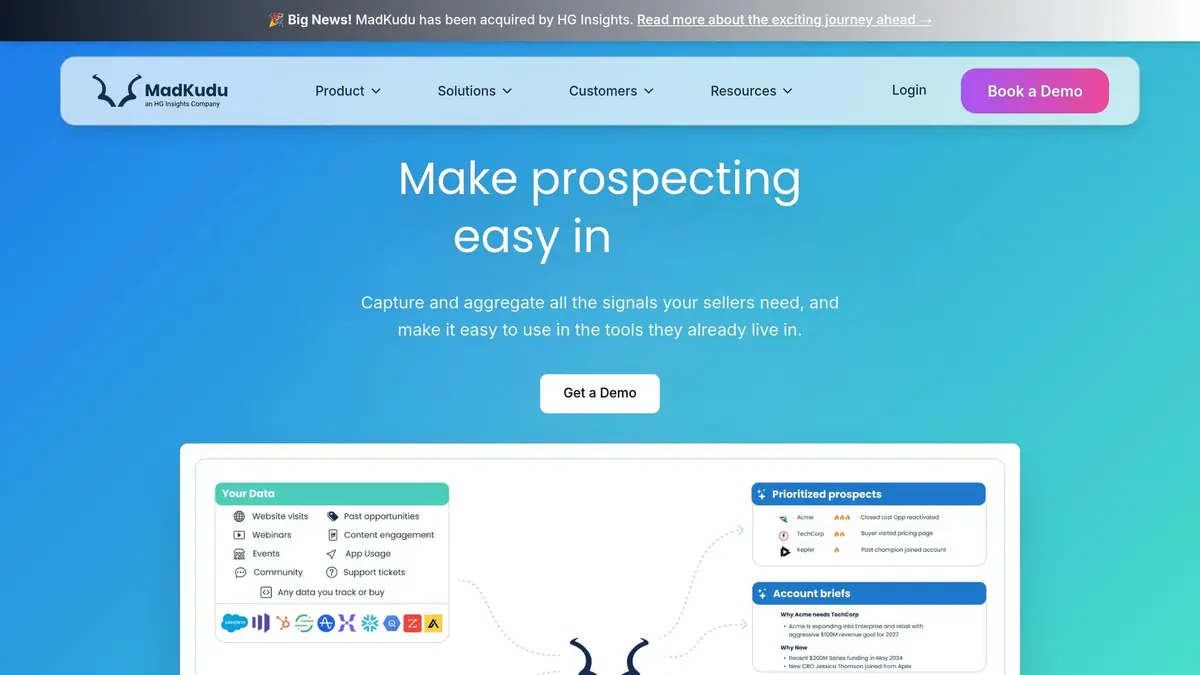
MadKudu moves beyond traditional point-based scoring by using custom AI models trained on your historical data. These models identify conversion patterns that go beyond basic rules, achieving up to 92% predictive accuracy. Timothy Smith, VP Head of Demand Generation, shared impressive results: a 60% increase in SQL conversion and a 212% boost in ACV from ABM efforts.
Email Engagement-Based Scoring Capabilities
MadKudu evaluates a lead's "Likelihood to Buy" by combining email engagement signals with broader user interactions. This scoring system factors in two key components: Customer Fit (demographics and firmographics) and Lead Engagement (behavioral data). Leads are graded from A to E, with scores decaying over time to prioritize recent activity. Companies using MadKudu have reported a 50% increase in lead-to-opportunity conversion rates and can zero in on leads that are 3x more likely to convert.
Integrations with CRM and Marketing Tools
MadKudu seamlessly integrates into existing sales workflows, enhancing its utility. It offers native integrations with popular tools like Salesforce, HubSpot, Microsoft Dynamics, Marketo, Segment, Mixpanel, Amplitude, and Snowflake. The platform’s low-code implementation takes just 1–2 weeks, with lead scores syncing into pipelines and updating every 4 to 12 hours. Unlike opaque algorithms, MadKudu provides clear explanations for its scoring, showing sales teams exactly why a lead received a specific grade - examples include "12 active users" or "used API integration" .
Key Features for Lead Scoring
MadKudu excels in Product-Qualified Lead (PQL) scoring, making it a strong choice for B2B SaaS companies with product-led growth strategies. The platform adapts its models for new markets even when historical data is limited, and it enables marketers to tailor outreach based on engagement levels . Additionally, high activity at the account level can positively influence individual lead scores, capturing team-wide buying intent.
Pricing (USD/month)
MadKudu offers three pricing tiers to fit different needs:
- Growth: Starts at $999/month, covering 2 sales reps.
- Pro: Starts at $2,499/month, with support for 10 sales reps and Slack integration.
- Enterprise: Custom pricing, ranging between $20,000 and $60,000 per year.
MadKudu is best suited for Series B+ SaaS companies with a solid amount of historical deal data. It holds a 4.6/5 rating on G2 based on over 110 reviews .
6. 6sense
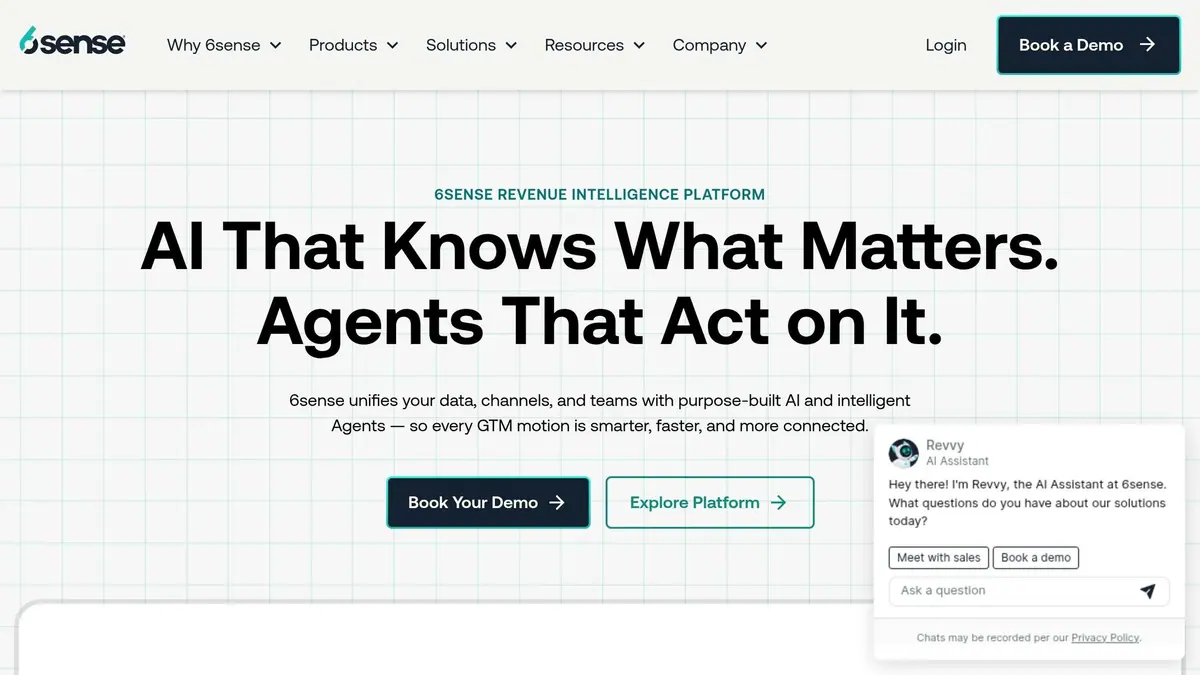
6sense stands out as a tool that focuses on account-centric intelligence for email-based lead scoring. By analyzing a staggering 500 billion monthly intent signals from over 5,000 B2B publishers, it combines this "dark funnel" data with CRM engagement to identify which accounts are actively researching solutions.
Email Engagement-Based Scoring Capabilities
6sense employs a dual scoring system to track email interactions effectively. It assigns a Contact Engagement Score (ranging from 1–100) to individual interactions and an Account Reach Score to measure overall account outreach [56,57,58]. The platform utilizes AI to pinpoint which email engagements are most likely to lead to closed deals [56,57].
Instead of traditional MQLs, 6sense introduces 6sense Qualified Accounts (6QAs), which rely on predictive models to identify accounts ready for sales discussions. Businesses using this method have seen impressive results: opportunities sourced from 6QAs are reported to close 27% faster and have a 99% higher average value compared to non-6QA opportunities. For instance, in 2024, PTC, a software company, leveraged 6sense to identify 1,200 high-intent accounts not previously in their CRM. This effort generated $18 million in net-new pipeline in just four months. By refining targeting and streamlining the sales process, this dual-scoring approach helps accelerate results.
Integrations with CRM and Marketing Tools
6sense integrates seamlessly with major platforms like Salesforce, HubSpot, Microsoft Dynamics, Marketo, Outreach, Salesloft, and Gong [4,62]. It pushes account-level insights directly into CRM records and automates workflows triggered by changes in buying stages. Additionally, it connects with marketing tools to launch targeted ad campaigns on LinkedIn and Google Ads when accounts hit specific intent thresholds [4,62]. A Chrome extension even equips sales reps with real-time intent data while they navigate prospect websites or LinkedIn profiles. These integrations ensure that 6sense remains a central player in prioritizing leads through email engagement.
Key Features for Lead Scoring
The platform's Buying Stage AI categorizes accounts into stages like Awareness, Consideration, Decision, and Purchase using its proprietary 6AI™ engine [63,4]. A new feature for 2026, AI Email Agents, leverages real-time signals to send personalized outreach, handle replies, and qualify leads effectively. Companies have reported significant outcomes with these features. For example:
- Mission Cloud achieved a 66% open rate and saved 150 hours of manual work.
- Harri generated $12 million in pipeline in one quarter with a 4% qualified rate.
- Simpro saw a 126% rise in average deal size and a 42% reply rate.
These capabilities highlight the platform's ability to improve efficiency and drive results.
Pricing (USD/month)
6sense pricing ranges from $60,000 to $150,000+ annually ($5,000–$12,500 per month), depending on the number of CRM seats and account volume. Annual contracts are required, and pricing details are available upon request [3,4]. Implementation typically takes 4 to 12 weeks and often requires dedicated RevOps resources. On G2, 6sense holds a 75/100 score in the Lead Scoring category. Users praise its wide intent data coverage but note that the platform has a steep learning curve [3,62].
7. Salesforce Einstein Lead Scoring
Salesforce Einstein Lead Scoring brings AI-driven predictive scoring to Salesforce CRM. By analyzing historical data from high-quality lead forms, it assigns scores from 0 to 100 based on patterns of successful conversions. Companies using this feature have seen 15% higher win rates on average, with Pandora reporting a 30% boost in lead conversion by using multi-step form designs after adopting Einstein.
Email Engagement-Based Scoring Capabilities
Einstein employs a two-pronged approach: one model evaluates a lead's fit using firmographic data, while another monitors intent based on email engagement, such as opens and link clicks. The Behavior Scoring component updates approximately every four hours, ensuring scores reflect real-time engagement. It also automatically reduces scores for inactive leads, keeping the focus on prospects with current interest.
The tool provides "Top Positive" and "Top Negative" insights, which highlight factors influencing scores - like high email open rates or recent inactivity. Frank Ferris, Sr. Manager of Product Specialists at Coefficient, shared:
"Einstein Lead Scoring gives Salesforce users AI-powered lead prioritization. But it comes at a steep price".
For businesses with limited historical data, Salesforce offers global models that use industry-wide trends while the system trains a custom local model. To create an effective custom model, at least 1,000 historical leads and 120 conversions within six months are typically required.
Integrations with CRM and Marketing Tools
Einstein seamlessly integrates into Sales Cloud and Marketing Cloud Account Engagement (formerly Pardot), enabling it to score both leads and contacts. It works with Einstein Activity Capture to automatically log emails and meetings from Gmail or Outlook, ensuring the AI model has access to up-to-date activity metrics. Additionally, it integrates with Salesforce Flows and Process Builder to automate actions like routing high-scoring leads (90+) to senior sales reps or sending Slack alerts for immediate follow-up.
In a 2024 telecommunications case study, Einstein Lead Scoring helped improve lead conversion rates by 28% (rising from 5.2% to 6.6%) and cut lead qualification time by 35%. For more advanced scoring models, external data from sources like Amazon S3 can be integrated via Salesforce Connect, incorporating historical interactions and service usage patterns. Einstein also reanalyzes lead data every 10 days to ensure scoring accuracy.
Pricing (USD/month)
Pricing for Einstein Lead Scoring depends on the Salesforce edition, with additional costs for certain plans.
| Salesforce Edition | Base Monthly Price (USD/user) | Einstein Lead Scoring Cost | Total Monthly Cost |
|---|---|---|---|
| Enterprise | $165 | +$50 add-on | $215 |
| Unlimited | $330 | Included | $330 |
| Performance | $500 | Included | $500 |
For the Enterprise edition, Einstein Lead Scoring requires a $50 per user/month add-on. However, it's included at no extra charge in the Unlimited and Performance editions. Implementation costs can range from $50,000 to $200,000 for mid-market deployments due to setup and data preparation requirements. To achieve reliable scoring, ensure your organization has logged at least 120 conversions in the past six months.
8. Clay
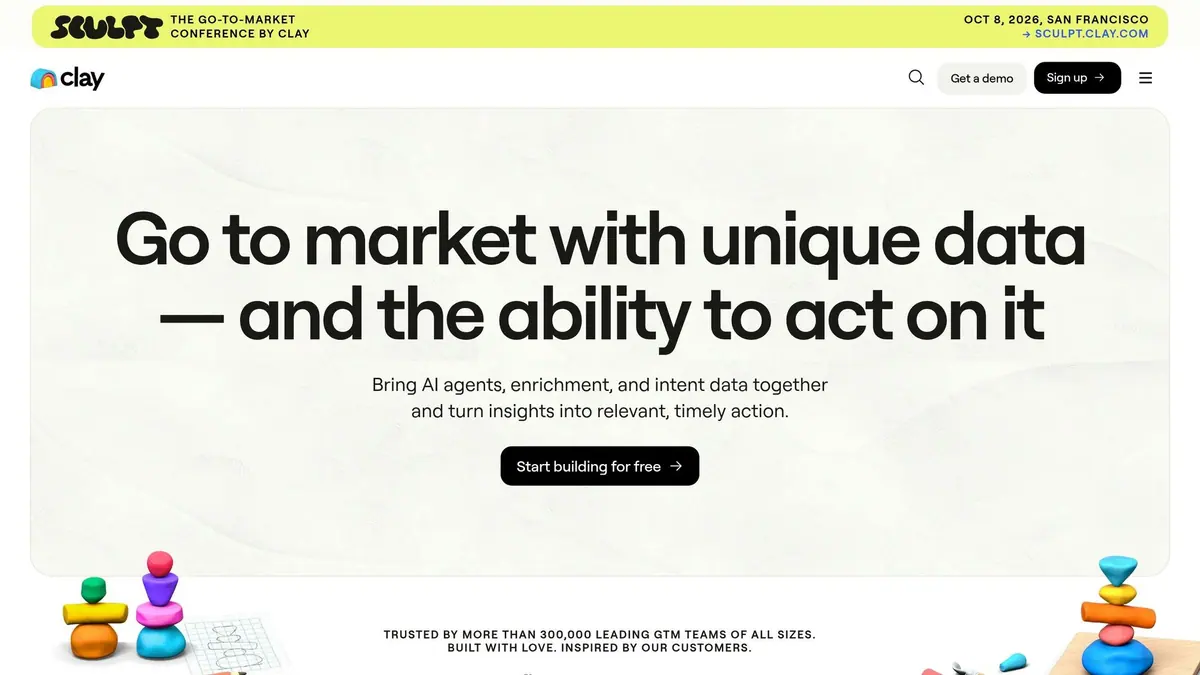
Clay stands out among lead scoring tools by offering a unique approach to data enrichment and scoring. Positioned as a go-to-market orchestration platform, it combines data from over 150 providers with AI-driven lead scoring. Unlike traditional tools that rely on a single database, Clay employs "Waterfall Enrichment", layering providers like LeadMagic, Apollo, and Hunter to ensure highly accurate contact data. This multi-provider system has reportedly tripled data coverage for users.
Email Engagement-Based Scoring Capabilities
Clay monitors lead engagement through email responses, website visits, and event participation. It allows users to create custom scoring systems with formula columns, assigning points for specific interactions - like +10 points for a verified email or a mobile number, enhancing multi-channel reach. The platform’s AI capabilities take this further by synthesizing engagement data into AI columns (powered by GPT or Claude), producing a 0-100 fit score, tier classifications (hot, warm, cold), and detailed reasons behind the score.
Clay also features Claygent, an AI research tool that autonomously gathers custom data points such as hiring signals or tech stack details to refine scores even more. Raman Khanna from Growth shared:
"Every lead is pre-qualified, scored on unique signals, and routed automatically through Clay. We're now generating pipeline from segments we weren't even touching before."
With real-time scoring, Clay can qualify and route leads instantly after a form submission. Some users have achieved a 5-minute lead response SLA and doubled their lead-to-opportunity conversion rates. This aligns with proven strategies for optimizing lead conversions across the sales funnel. This system integrates seamlessly with existing tools, making it a powerful addition to any sales process.
Integrations with CRM and Marketing Tools
Clay integrates with major CRMs like Salesforce, HubSpot, Pipedrive, and Microsoft Dynamics 365, enabling users to sync lead scores effortlessly. For outreach, it connects with platforms such as Outreach, Salesloft, Gong Engage, Instantly, and Smartlead.ai, allowing enriched and scored leads to flow directly into email sequences.
Anthropic, for instance, used Clay to boost its inbound lead enrichment coverage to nearly 100%, automating enrichment, scoring, and flagging before syncing leads to Salesforce. This eliminated manual research and enabled instant routing to sales teams. Clay’s combination of multi-source data enrichment and AI-powered scoring is reshaping email-based lead scoring strategies.
Pricing (USD/month)
Clay offers flexible pricing options tailored to different business needs:
| Plan | Monthly Price | Annual Price | Data Credits | Actions/Month |
|---|---|---|---|---|
| Free | $0 | $0 | 100 | 500 |
| Launch | $185 | $167 | 2,500 | 15,000 |
| Growth | $495 | $446 | 6,000 | 40,000 |
| Enterprise | Custom | Custom | 100,000+ | 200,000+ |
Clay operates on a credit system, where "Data Credits" are used for vendor data purchases, and "Actions" measure tasks like formula execution or CRM syncing. With a 4.6/5 rating on G2 from over 570 reviews, users frequently highlight how it automates manual research and streamlines workflows.
9. Gumloop
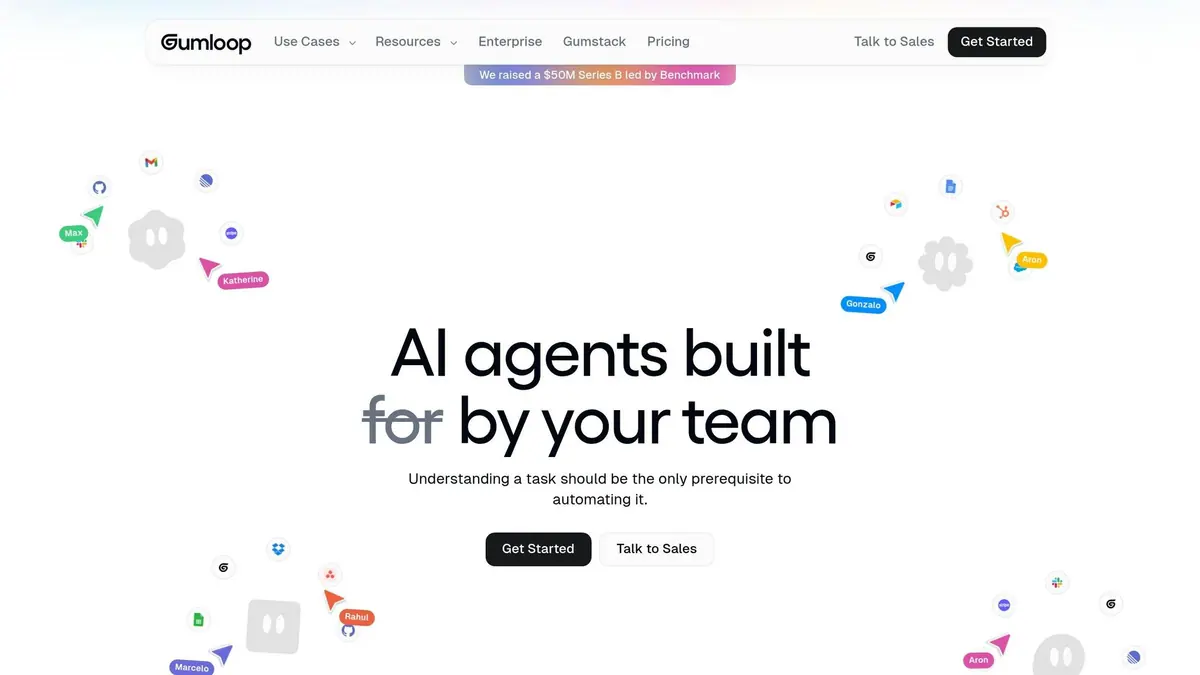
Gumloop takes a different approach to email-based lead scoring with its customizable AI automation platform. It empowers businesses to design tailored scoring logic and manage their lead pipeline from start to finish. From data enrichment and scoring to CRM updates, Gumloop allows you to create AI agents that handle it all. Unlike rigid, pre-set systems, it offers flexibility, letting you adapt the scoring process to your specific needs.
Key Features for Lead Scoring
What sets Gumloop apart is its ability to consider qualitative factors alongside typical firmographic metrics. While many tools focus on elements like company size or industry, Gumloop's AI agents assess whether a prospect genuinely needs your solution by analyzing contextual signals. For example, you can build workflows that integrate tools like Typeform for lead capture, Apollo for data enrichment, and HubSpot or Salesforce for CRM management - all within a visual canvas.
Gumloop also features an AI assistant called Gummie, which allows you to create scoring workflows simply by describing them in natural language. These workflows can trigger actions such as routing high-scoring leads to Slack or placing lower-scoring ones into nurture sequences - no coding required. Additionally, the platform supports the Model Context Protocol (MCP), enabling connections to various data sources and warehouses for more detailed enrichment.
Integrations with CRM and Marketing Tools
Gumloop connects seamlessly with popular tools like HubSpot, Salesforce, Pipedrive, Attio, and Zoho, using email engagement data for real-time scoring updates. It also integrates with Apollo for enrichment and supports notification tools like Slack, Microsoft Teams, Gmail, and WhatsApp. Security and compliance are priorities, with SOC 2 Type II and GDPR compliance, as well as role-based access control for enterprise users.
Pricing (USD/month)
| Plan | Monthly Price | Credits/Month | Seats | Best For |
|---|---|---|---|---|
| Free | $0 | 2,000 | 1 | Testing and individuals |
| Solo | $37 | 10,000+ | 1 | Single power users |
| Team | $244 | 60,000+ | 10 | Growing teams |
| Enterprise | Custom | Custom | Custom | Large organizations needing SSO/VPC |
Gumloop uses a credit-based system, where credits are consumed for each automation task performed. According to user reviews, the platform holds a 4.8/5 rating on G2 (based on 6+ reviews) and a perfect 5/5 on Product Hunt (from 9+ reviews). While users praise its flexibility, some note that setting up custom scoring workflows can take time to master.
10. Prospeo
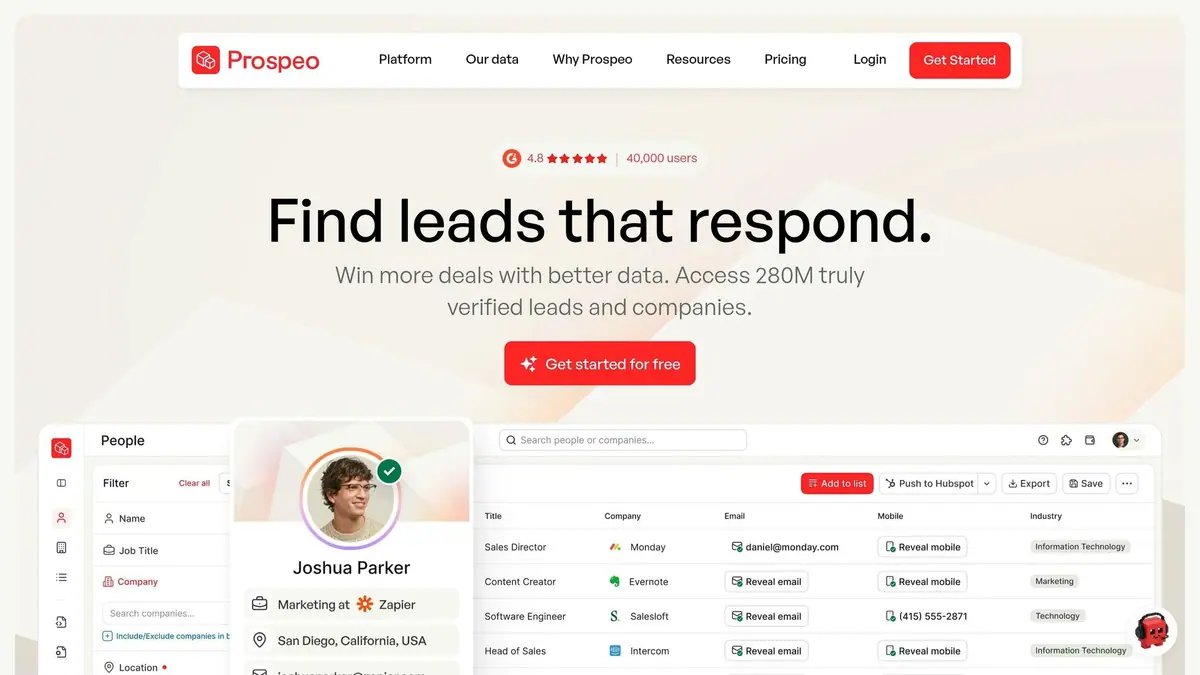
Prospeo stands out by pairing its lead scoring capabilities with highly reliable, up-to-date contact data. With a 98% email accuracy rate and a refresh cycle of just seven days (compared to the industry’s six-week norm), it ensures you're working with active, accurate records rather than stale information. Its extensive database includes over 300 million professional profiles, featuring 143 million verified emails and 125 million verified mobile numbers. This robust data infrastructure complements the advanced scoring systems offered by other platforms on this list.
Key Features for Lead Scoring
Prospeo delivers over 50 data points per contact, such as firmographics, technographics, seniority levels, and funding signals. It employs a proprietary 5-step verification process - including catch-all handling, spam-trap removal, and honeypot filtering - to achieve its high email accuracy rate. Additionally, the platform integrates Bombora intent data across 15,000 topics, allowing you to complete the "Intent" component of your lead scoring (often 20–30% of the total) without needing to rely on separate vendors.
Instead of focusing on email opens, Prospeo recommends scoring based on high-intent engagement signals. For example, you can add points for positive replies (+20), "tell me more" responses (+15), and link clicks (+10), while deducting points for unsubscribes (–25) or "not interested" replies (–10). The platform also supports score decay, deducting 10 points per week after three unanswered touches.
In 2026, Snyk, a cybersecurity company, used Prospeo to enhance performance for its 50 account executives. Thanks to Prospeo's 98% accurate email data, Snyk reduced bounce rates from 35–40% to under 5%, leading to a 180% increase in AE-sourced pipeline and generating over 200 new opportunities monthly.
Integrations with CRM and Marketing Tools
Prospeo offers native integrations with Salesforce and HubSpot, syncing verified data directly into CRM objects like Contacts, Companies, Leads, and Accounts. It also connects with tools like Clay, Lemlist, Instantly, Zapier, Make, and n8n, enabling automated enrichment workflows. The platform achieves an 83% enrichment match rate and a 92% API match rate for bulk CRM uploads. CRM sync is included in all plans, even the free tier.
Pricing (USD/month)
Prospeo operates on a credit-based pricing model, charging roughly $0.01 per verified email. The free tier includes 75 email verifications and 100 Chrome extension credits monthly, with paid plans starting at around $39 per month. Its Chrome extension, used by over 40,000 users, supports more than 15,000 companies for B2B data enrichment.
Comparison Table
Here's a quick look at ten lead scoring tools, compared by pricing, target audience, scoring methods, and standout features:
| Tool | Starting Price | Best For | Scoring Method | Key Advantage | G2 Rating |
|---|---|---|---|---|---|
| HubSpot | $800/mo (Pro) | All-in-one teams | Rules + Predictive AI | Easy deployment with built-in CRM integration | 4.5/5 |
| ActiveCampaign | $49/mo (Plus) | SMBs | Behavioral + Rules | Combines scoring with email automation at a budget-friendly price | 4.6/5 |
| Marketo Engage | $895/mo | Large marketing ops | Behavioral + Demographic | Multi-layered models with detailed control | N/A |
| Apollo | $49/user/mo | Outbound teams | AI-assisted | Scoring and prospecting in one platform with access to 275M+ contacts | 4.7/5 |
| MadKudu | $999/mo | PLG/SaaS teams | Predictive AI | Provides explainable, human-readable scoring insights | 4.6/5 |
| 6sense | ~$55,000/year | Enterprise ABM | AI + Intent Data | Account-level scoring with "dark funnel" visibility | 4.3/5 |
| Salesforce Einstein | $165/user/mo (Enterprise) | Salesforce users | AI Predictive | Fully automated with deep CRM integration | 4.4/5 |
| Clay | $185/mo | RevOps/Data teams | Waterfall Enrichment | Pulls data from 100+ providers for precise enrichment | 4.7/5 |
| Gumloop | $37/mo | Custom automation | AI Agents | Highly flexible for building tailored workflows | 4.8/5 |
| Prospeo | ~$0.01/email | Data accuracy | Enrichment-led | Achieves 98% email accuracy with 15,000 intent topics | N/A |
Best Picks Based on Team Needs
For small businesses, ActiveCampaign ($49/month) and Apollo ($49/user/month) are great choices, offering CRM, sequencing, and scoring in one platform. Mid-sized companies might lean toward HubSpot Professional ($800/month) or MadKudu ($999/month), which provide advanced features with clear transparency. Meanwhile, enterprises often go for 6sense (around $55,000/year) or Salesforce Einstein, thanks to their scalability and robust features.
"The gap between a $12/seat/month CRM plan and a $130K+/year enterprise predictive platform is enormous." - Prospeo Team
Scoring Tips for Teams
If your team has fewer than 1,000 closed-won deals, starting with rule-based scoring is a smart move before transitioning to AI-powered models. When clean, accurate data is used, machine learning models can boost conversion rates by up to 75% compared to traditional rule-based systems.
Integration Options
Integration capabilities play a big role in tool selection. Tools like HubSpot, Salesforce Einstein, ActiveCampaign, and Marketo Engage offer seamless native CRM integrations. On the other hand, Clay, Gumloop, and Prospeo rely on APIs and popular integration tools. Apollo and MadKudu provide flexibility with native Salesforce and HubSpot syncs, as well as connections to platforms like Segment and Mixpanel.
These comparisons and insights help narrow down the right tool for your team, with further details explored in the conclusion.
Conclusion
When choosing an email-based lead scoring tool, focus on what aligns with your current data quality and lead volume - not an idealized future scenario. For businesses with fewer than 1,000 closed-won deals, sticking to a rule-based scoring model within your CRM might deliver quicker results than investing in a predictive platform that could cost up to $130,000 annually. Remember, a higher price tag doesn’t always lead to better outcomes. The key is to ensure your lead scoring tool complements your existing sales processes and data quality.
"Your lead scores are only as good as your data." - Prospeo Team
Before committing to a platform, take the time to audit your data. Incomplete or outdated CRM records will lead to unreliable scores. Ideally, at least 70% of critical fields - like job title, company size, and industry - should be filled out before implementing a scoring engine. Companies that improve their data quality often experience up to a 40% boost in conversion rates when adding lead scoring.
Integration is another critical factor. Tools built into CRMs, such as HubSpot or Salesforce Einstein, avoid sync delays and reduce setup challenges. Standalone platforms, on the other hand, may require additional API work. The best lead scoring tools also provide clear insights into why a lead scored high, helping sales teams prioritize with confidence.
Lastly, consider costs in relation to your data volume and expected growth. Review how expenses will scale as your lead volume increases. Businesses using lead scoring have reported a 138% ROI on lead generation compared to 78% for those without it. But that success hinges on whether the tool helps your sales team focus on leads with high intent that are most likely to convert.
FAQs
Should I use rule-based scoring or AI scoring?
In 2026, the right approach hinges on your team's goals and how you handle data. Rule-based scoring works well for smaller teams or those managing fewer than 500 leads each month. It relies on manually set criteria, making it straightforward and easy to implement. On the other hand, AI scoring leverages machine learning to analyze data and rank leads more effectively. This option is better suited for larger datasets or enterprise-level teams with access to dedicated data resources.
What data do I need before lead scoring works well?
To make lead scoring effective, having precise data about your prospects' actions and profiles is essential. This includes tracking email opens, website interactions, and demographic information. AI-driven tools can process this data to estimate how likely a lead is to convert, allowing you to prioritize the most promising opportunities.
How do I pick a lead score threshold for sales handoff?
To determine the right lead score threshold for handing off to sales, focus on identifying the score that signals a lead is ready for direct sales engagement. While this is commonly around 60 points, the exact number can vary based on your specific scoring model and business objectives. Analyze past conversion data to pinpoint the score range where leads have the highest likelihood of converting. Use this as a starting point, and fine-tune the threshold over time by incorporating performance results and feedback from your sales team.
Related Blog Posts
Get new content delivered straight to your inbox

The Response
Updates on the Reform platform, insights on optimizing conversion rates, and tips to craft forms that convert.


Drive real results with form optimizations
Tested across hundreds of experiments, our strategies deliver a 215% lift in qualified leads for B2B and SaaS companies.
