
.webp)
Contextual Targeting for B2B Lead Generation



Contextual targeting is a privacy-friendly way to connect with high-intent B2B buyers by aligning ads with the content they’re engaging with. Unlike behavioral targeting, it doesn’t rely on tracking user activity across the web. Instead, it analyzes the content of webpages in real time to place ads that match the topic being viewed.
Key Takeaways:
This approach not only respects user privacy but also delivers measurable results, making it a powerful tool for modern B2B marketing.
Innovative Strategies for B2B Marketing | Jonno Burden
What is Contextual Targeting and Why It Matters for B2B
Contextual targeting is all about matching ads to relevant content by analyzing keywords, topics, and even the tone of a webpage in real time. Instead of tracking someone's online behavior across multiple sites, it focuses on the immediate environment - showing ads based solely on what the person is currently reading or watching. This makes it different from behavioral targeting, which relies on tracking browsing history, search activity, and purchase patterns to predict future actions. For instance, if a procurement manager is reading an article about supply chain resilience, they might see an ad for inventory management software - not because their online behavior was tracked, but because the content they’re engaging with aligns with the ad. This is especially important for B2B marketers, given that 62% of B2B buyers rely solely on digital content to make purchasing decisions. Plus, since contextual targeting doesn’t require collecting extensive behavioral data, it avoids many privacy and compliance headaches.
How Contextual Targeting Works
The privacy-first nature of contextual targeting is powered by advanced technology that identifies relevant content in real time. It goes beyond simple keyword matching by using semantic analysis to understand the full meaning of a webpage. This means it can distinguish between words with multiple meanings. For example, the word "bank" could refer to a financial institution or the edge of a river. Semantic analysis ensures that an ad for financial services appears only when the context is appropriate.
Here’s how it works: the system scans the content of blogs, articles, and web pages to identify themes and topics. Then, it dynamically places ads that align with the identified content. This way, ads for enterprise software might appear next to articles on digital transformation, cybersecurity ads might be paired with content about data breaches, and HR platform ads could reach readers exploring workforce management strategies.
Benefits for B2B Marketers
For B2B marketers, contextual targeting offers clear advantages by placing ads in front of decision-makers at the exact moment they’re engaging with relevant topics. This approach filters out low-intent prospects, ensuring ad spend is focused on audiences who are more likely to be interested in the solutions being offered. It’s also cost-efficient, requiring fewer resources compared to behavioral targeting while still delivering strong results. For brands that may not have extensive behavioral data, contextual targeting provides a straightforward way to build awareness and generate leads. Over time, the engagement data collected through this approach can support more refined audience-based strategies.
Aspect
Contextual Targeting
Behavioral Targeting
Analyzes webpage content in real time
Relies on collecting and storing large amounts of user data
Operates without tracking personal data, simplifying compliance
Requires strict adherence to privacy regulations
More budget-friendly with fewer resource demands
Higher costs due to data collection and management
50% higher click-through rates; 30% better conversions
Provides detailed audience insights but depends on existing profiles
Can target users not included in behavioral datasets
Limited to users who match established profiles
With its ability to connect with decision-makers at the right moment, contextual targeting has become a key tool for modern B2B lead generation strategies. It’s an efficient, privacy-conscious way to ensure your message reaches the right audience when it matters most.
How Contextual Targeting Improves Lead Quality and Conversion Rates
Contextual targeting isn't just about respecting user privacy - it’s a game-changer for improving lead quality and boosting conversion rates. By aligning ads with a prospect's current interests, it ensures your message reaches decision-makers exactly when they’re researching solutions in your industry.
Reaching High-Intent Prospects
Picture this: a CFO is reading an article on cash flow management challenges, and - right there - a treasury management software ad appears. Or, a procurement director dives into content about supply chain resilience and sees an ad for your inventory management solution. This kind of precision is why 69% of consumers engage more with contextually matched ads and why this approach delivers 50% higher click-through rates and 30% better conversions.
Contextual targeting connects your ads with prospects who are actively exploring topics relevant to your solution. For instance, a hospital administrator researching healthcare compliance regulations isn’t just casually browsing - they’re looking for answers. Your compliance software ad reaches them in that exact moment of need, increasing the likelihood of engagement.
What’s more, this method uncovers unexpected opportunities. Sales teams often discover that leads outside their traditional buyer personas can still lead to successful outcomes. Contextual targeting enables this by focusing on what prospects are currently reading rather than relying solely on past behavior or demographic profiles. For example, someone from an unexpected industry vertical could be researching a problem your product solves, and your ad appears at just the right time.
This approach doesn’t just enhance engagement - it also ensures your ad spend is used wisely, which brings us to the next point.
Reducing Wasted Ad Spend
Contextual targeting doesn’t just find the right audience - it ensures your budget is spent efficiently. Traditional marketing often casts a wide net, targeting broad demographic groups like all professionals in a specific age range or location. This can lead to irrelevant impressions, as many of those people may have no interest in your product.
Contextual targeting eliminates this inefficiency by narrowing ad placements to content directly related to your product. For example, instead of targeting all professionals aged 30-50 in major cities, a company selling project management software can display ads on pages about remote team collaboration, productivity challenges, or workflow optimization. The audience may be smaller, but the relevance is far greater.
This precision not only reduces cost-per-engagement but also allows marketers to refine underperforming ads more effectively. By focusing on high-value impressions, you’re investing in prospects who are already engaged, cutting waste and improving ROI.
Additionally, contextual targeting simplifies compliance. Unlike behavioral targeting, it doesn’t require extensive data collection or complex privacy measures, making it a more cost-effective solution for B2B companies. It’s a win-win: better results with less overhead.
How to Build a Contextual Targeting Strategy for B2B
To make the most of contextual targeting, you need a strategy that aligns with how your audience consumes content and makes purchasing decisions. Here's how to create a plan that delivers results.
Identifying Relevant Content Categories
Start by understanding where your prospects spend their time online. Use qualitative interviews and analytics to uncover their content consumption habits, industry challenges, and triggers for decision-making. Pinpoint the Category Entry Points (CEPs) - the moments when decision-makers start exploring solutions. For instance, a CFO might look into "accounting software" while grappling with year-end reporting, whereas an IT director could investigate cybersecurity tools after a high-profile data breach.
Dive into your website analytics to identify which content drives engagement. For example, you may find that prospects who engage with case studies on digital transformation are more likely to convert. Your content categories should cover a mix of broad areas, like Business Services or Enterprise Technology, and niche topics, such as Cloud Computing Solutions or Supply Chain Management. Validate these categories by assessing their relevance and your brand’s ability to compete effectively. This ensures your budget focuses on areas where you can make the biggest impact.
Creating Audience Segments and Messaging
Segment your audience based on demographics, psychographics, and behavioral data. Break them down by industry, job role, and the specific challenges they face. For each segment, develop an Ideal Customer Profile to guide your efforts.
Craft messaging that resonates with the unique needs of each segment. For example, a CFO will likely care about cost savings and ROI, while an IT director might prioritize security features and integration capabilities. Use industry-specific examples to demonstrate your understanding of their world. For instance, highlight healthcare compliance for hospital administrators or vendor management solutions for procurement directors. This tailored approach not only boosts relevance but also drives stronger engagement.
Setting Up Negative Keywords
Negative keywords are key to avoiding irrelevant placements. If you offer enterprise software, exclude terms like "free", "open source", "DIY", or "student discount", which tend to attract low-intent audiences.
Review search query reports to identify patterns in low-performing impressions and clicks. This analysis will help you spot contexts where your ads aren’t connecting. Apply negative keywords at both the campaign and ad group levels, and update your list regularly based on performance data. This keeps your focus on high-intent prospects.
For better results, keep each ad group tightly focused, with 5–50 related keywords that align with your B2B offerings and selected content categories. Combining this focused keyword strategy with a well-maintained negative keyword list ensures your ads reach the right audience while minimizing wasted spend. This approach lays the foundation for precise campaign execution and better performance tracking.
sbb-itb-5f36581
Running and Optimizing Contextual Targeting Campaigns
Once your strategy is ready, the next step is to launch and refine your contextual targeting campaigns. The success of these campaigns heavily depends on selecting the right platforms and keeping a close eye on performance metrics.
Selecting the Right Advertising Platforms
The platform you choose has a direct impact on your campaign's reach and how precisely you can target your audience. For many B2B marketers, the Google Display Network is often the first choice. It allows you to limit your ads to websites that focus on topics relevant to your audience, ensuring your ads align with the content your prospects are already engaging with.
Beyond Google, programmatic advertising platforms open up opportunities to reach a broader range of B2B-specific sites and publications. The key is to align your platform choices with the places your ideal customers go to research solutions.
Industry-specific publications can be especially effective. For instance, if you're targeting healthcare professionals, placing ads in medical trade publications or respected industry blogs will likely yield better results than general-interest platforms. Similarly, finance professionals and manufacturing executives consume very different types of content, so your platform choices should reflect those preferences.
When evaluating platforms, focus on three core aspects: their contextual targeting capabilities, how well they reach your target industries, and whether they integrate seamlessly with your existing marketing tools. Even the most advanced targeting features won't help if the platform can't connect with your CRM or analytics tools, making it difficult to measure results.
Once you've selected the right platforms, the focus shifts to ongoing performance monitoring and campaign optimization.
Monitoring and Analyzing Campaign Performance
With your platforms in place, real-time monitoring is essential to ensure your campaigns stay efficient and deliver results. This step ties your campaign execution directly to your lead generation objectives.
Start by tracking your click-through rate (CTR). Contextual ads often achieve about 43% higher engagement compared to other types of ads. If your CTR falls short of this benchmark, it may indicate a mismatch between your ad creative and the content where it appears.
While CTR is important, conversion rate carries even more weight. Analyze this metric at both the campaign and ad group levels. If certain ad groups underperform, investigate the content categories where those ads are running. Sometimes, you’ll find that while a topic attracts clicks, it doesn’t convert - suggesting low intent or a poor audience match.
Another key metric is cost-per-acquisition (CPA). Set up automated alerts to flag ad groups where CPA rises without a corresponding increase in conversions. This could signal audience fatigue or market saturation. In such cases, it’s wise to pause or reduce bids on underperforming placements and redirect your budget to better-performing ones.
Keep an eye on impression share to see how often your ads appear in relevant contexts. If you notice low impression share, it might mean your bids are too low or your content categories are too narrowly defined. Adjust your bidding strategy based on the data - raise bids for high-intent content categories and scale back on lower-intent ones.
Don’t just track the quantity of leads - focus on their quality. Implement a lead scoring system to evaluate factors like engagement level, company fit, and feedback from your sales team. Compare the progression of contextually generated leads through your sales funnel to those from other channels to gauge their effectiveness.
Testing new content categories and keywords is also crucial. Dedicate 10-15% of your budget to experimenting with placements that could uncover new high-performing opportunities. This approach balances the stability of proven strategies with the discovery of fresh possibilities.
Use real-time analytics to identify the best times to reach your audience. Are they researching during business hours, or do they engage more after hours? Do certain times of the year see higher activity? Adjust your ad scheduling to align with these patterns and maximize visibility when your audience is most likely to engage.
Finally, regularly review search query reports to weed out low-performing placements and update your negative keywords. Make these adjustments at both the campaign and ad group levels, basing your decisions on actual performance data rather than assumptions.
Every tweak you make - whether it’s adjusting bids, refining targeting, or experimenting with new creative - should aim to eliminate wasted spend and drive better results. This disciplined approach ensures that contextual targeting evolves from a promising tactic into a dependable driver of revenue.
Connecting Contextual Targeting with Lead Capture and Qualification
Once your contextual campaign strategy is up and running, the next step is capturing and qualifying the leads it generates. While contextual ads are great at driving engagement, a weak lead capture process can squander this potential. The handoff from an ad click to a form submission is where many campaigns stumble, even if the targeting is spot on.
To avoid this, your lead capture forms should feel like a seamless extension of the conversation prospects began with your content. Let’s break down how to fine-tune your forms to effectively capture high-intent traffic.
Optimizing Lead Capture Forms with Reform
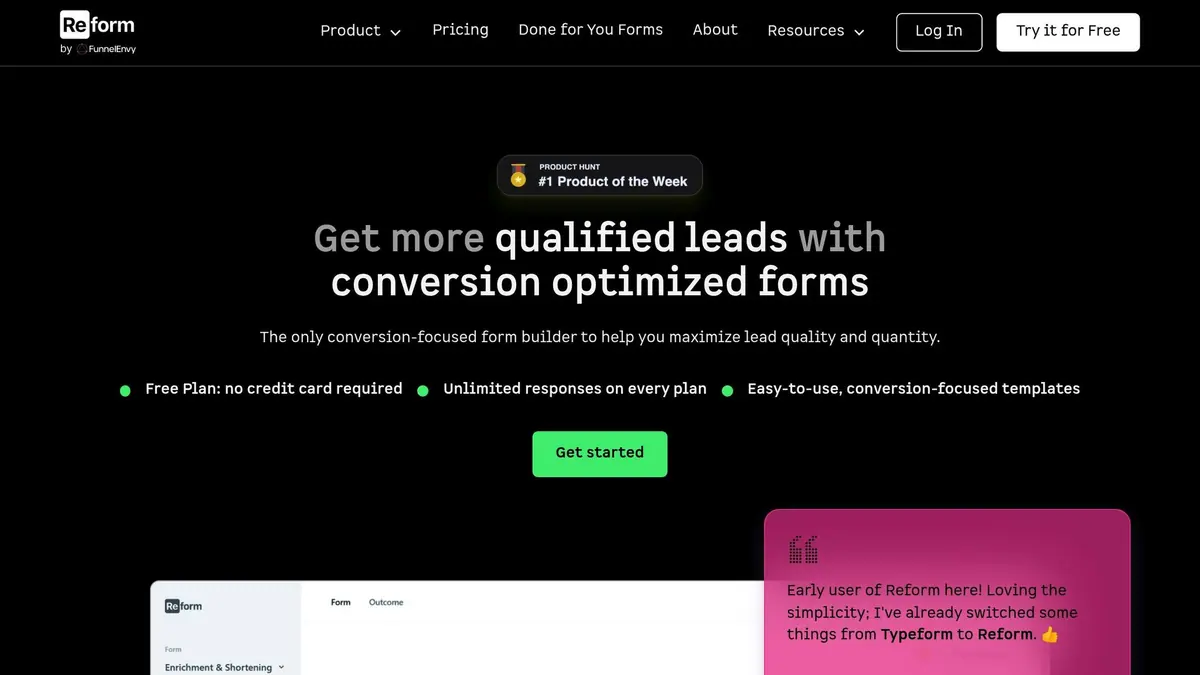
When prospects engage with contextual ads, they’re already showing interest. They’ve interacted with content that matches their needs or challenges. Your lead capture forms should respect that intent by making conversion as easy as possible.
Multi-step forms and conditional routing are two powerful tools to streamline this process. Multi-step forms split the data collection into smaller, manageable pieces. Instead of overwhelming prospects with a long list of questions, you gather information progressively, matching the stage of their buyer’s journey. Conditional routing takes it a step further by tailoring the questions based on previous responses. For example, if a prospect indicates they’re in the awareness stage, the form might guide them to questions about their challenges or educational needs. If they’re closer to making a purchase, the form might focus on budget or timeline details.
This dynamic approach doesn’t just reduce friction - it also segments leads based on factors like company size or industry, which you’ve already identified through your contextual targeting. For instance, someone arriving from a manufacturing blog could see different follow-up questions than someone coming from a financial services blog, even if they’re using the same form link. This automatic segmentation ensures your sales team receives leads that are pre-categorized and ready for appropriate outreach.
Lead enrichment further enhances the process. When a prospect fills out a basic form after clicking on your contextually targeted ad, enrichment tools can automatically add details like company size, industry classification, and even job title verification. For example, if someone clicks an ad on a healthcare blog and submits their name, email, and company, enrichment tools can fill in the gaps, verifying the company’s healthcare focus, employee count, and revenue. This creates a complete profile without burdening the prospect with extra questions, making the lead ready for immediate follow-up.
Reform has shown impressive results, boosting qualified leads by 215% for B2B and SaaS companies. Its no-code platform lets you quickly design and test different form variations, tailored to the specific segments you’re targeting.
Maintaining Lead Quality After Capture
Capturing leads is just the beginning. Ensuring their quality is equally important, especially since contextual targeting often casts a wider net than highly specific account-based strategies.
Email validation is a must and should happen in real time. This step ensures that email addresses are properly formatted and active before they enter your system. Catching typos or fake entries on the spot can prevent your database from becoming cluttered with bad data. A simple prompt to correct a mistyped email can turn a potential loss into a qualified lead.
Spam prevention is another critical layer. Features like CAPTCHA verification, honeypot fields, and behavioral analysis help block bots and suspicious submissions. Reform’s spam prevention tools automatically identify and filter out fake activity, which is especially important for contextual campaigns. While these campaigns are cost-efficient and privacy-friendly, their broader reach can attract more unwanted submissions compared to narrowly targeted account-based methods.
The financial impact of maintaining lead quality is substantial. Contextual targeting already improves ROI by up to 30% by focusing on high-value impressions. Ensuring lead quality means this ROI translates into real sales opportunities, not wasted time chasing invalid contacts.
To go further, incorporate contextual targeting data into your lead scoring model. Details like the content category that led to the ad click, the keywords that triggered it, and the sentiment of the page help reveal a prospect’s current focus and buying stage. For example, someone clicking an ad while reading about specific implementation challenges is likely more serious than someone clicking on a generic display ad. Assign higher scores to leads from content categories that align with key decision-making moments. Form responses can also reflect this alignment - someone actively evaluating solutions should score higher than someone still exploring options.
Finally, your forms should capture contextual intent by including questions tied to the content that brought the prospect to you. For instance, if your ad appeared alongside an article on healthcare data privacy regulations, your form might ask about compliance challenges or regulatory concerns. This approach makes the form feel like a natural continuation of the conversation, creating a smooth, efficient lead generation process that respects the prospect’s intent and maximizes conversion potential.
Conclusion
Contextual targeting has become a powerful approach for B2B lead generation, delivering tangible results while respecting privacy concerns. With contextual ads driving 30% higher ROI, generating 50% more click-throughs, and increasing conversions by 30%, they play a role in influencing 62% of B2B purchase decisions.
What makes contextual targeting so effective? It’s straightforward and doesn’t rely on intensive data tracking. Instead, it naturally delivers your message to the right audience at the right time. This strategy works because it connects with high-intent prospects when they’re actively seeking solutions - whether they’re researching industry challenges, exploring best practices, or evaluating specific products. By aligning your ads with their current interests, you seamlessly engage them without disrupting unrelated activities.
However, the real magic happens when you transition from ad engagement to lead capture. This step is crucial for turning campaign investments into genuine sales opportunities. Tools like Reform help bridge this gap effectively. With features like multi-step forms, conditional routing, lead enrichment, email validation, and spam prevention, Reform ensures that the momentum from your contextual ads leads to capturing high-quality leads. It’s about maintaining a smooth journey from ad interaction to actionable sales data.
The financial advantages go beyond just better conversions. By combining contextual targeting with strong lead qualification and spam prevention, you maximize the efficiency of every dollar spent. This means your sales team spends less time chasing invalid or unqualified leads and more time engaging with prospects who are ready to convert.
Think of contextual targeting and lead capture as two halves of a unified system. Contextual ads attract high-intent prospects, optimized forms capture and qualify them, and enrichment tools automatically fill out their profiles. Validation features ensure the data is accurate, creating a seamless process that respects your prospects’ time while boosting your conversion rates. Each piece works together, making the entire system more effective.
With its privacy-first approach, contextual targeting offers a future-proof strategy that doesn’t rely on third-party cookies or intrusive tracking. To get started, focus on identifying the content categories your prospects engage with most, craft messaging that addresses their specific challenges, and streamline your lead capture process to make conversions effortless. By combining smart ad placement with optimized forms, you’ll build a lead generation system that consistently delivers high-quality results. Privacy-first marketing isn’t just a trend - it’s the way forward. Contextual targeting ensures you’re ready for it.
FAQs
How can contextual targeting help B2B marketers generate higher-quality leads and boost conversion rates?
Contextual targeting gives B2B marketers the ability to deliver ads or content that matches the environment their audience is currently engaging with. By focusing on the context - like specific keywords, topics, or industries - marketers can craft messages that feel directly relevant to what their audience is interested in or needs at that moment.
This approach doesn’t just grab attention; it draws in higher-quality leads. Why? Because you’re connecting with people who are already more likely to see value in what you’re offering. That means better engagement and stronger conversion rates.
For instance, instead of running broad, generic ads, contextual targeting allows you to reach decision-makers when they’re actively exploring related topics. It’s a smarter way to create a marketing experience that feels natural and effective.
How can B2B marketers tailor their contextual targeting strategy to match their audience's content preferences?
B2B marketers can fine-tune their contextual targeting strategy by aligning it with their audience's content preferences. Here's how you can make it work:
Start by digging into your target audience's behavior - look at the websites, articles, and resources they frequently engage with. This will give you a clear picture of the contexts where your ads or messaging are most likely to resonate.
Once you know where your audience spends their time, focus on creating content that fits seamlessly into those spaces. For instance, if your audience loves diving into industry reports, consider placing ads or forms on pages featuring similar content. To take it a step further, tools like lead enrichment and email validation can help ensure the data you collect is accurate and useful, giving you higher-quality leads to work with.
Don't forget to keep an eye on performance metrics like conversion rates and engagement. Regularly reviewing this data allows you to adjust your approach as your audience's habits evolve. By staying tuned in to their preferences, you can make your contextual targeting efforts more impactful over time.
How can I effectively capture and qualify leads from contextual targeting campaigns?
To effectively gather and qualify leads from contextual targeting campaigns, it's essential to use conversion-focused forms that encourage interaction and ensure accurate data collection. Incorporating features like multi-step forms, conditional logic, and lead enrichment can make the process smoother for users while helping you collect detailed and reliable information.
On top of that, incorporating tools such as spam prevention and email validation ensures that the leads you acquire are legitimate and ready for follow-up, ultimately boosting your conversion rates and making your efforts more impactful.
Related Blog Posts
- Policy Changes Impacting Third-Party Cookies
- Contextual Advertising vs Third-Party Cookies
- Conditional Forms in Paid Ads
- 3rd-Party Cookie Restrictions: Role of CDPs
{"@context":"https://schema.org","@type":"FAQPage","mainEntity":[{"@type":"Question","name":"How can contextual targeting help B2B marketers generate higher-quality leads and boost conversion rates?","acceptedAnswer":{"@type":"Answer","text":"<p>Contextual targeting gives B2B marketers the ability to deliver ads or content that matches the environment their audience is currently engaging with. By focusing on the context - like specific keywords, topics, or industries - marketers can craft messages that feel directly relevant to what their audience is interested in or needs at that moment.</p> <p>This approach doesn’t just grab attention; it draws in <a href=\"https://www.reform.app/blog/craft-killer-lead-forms\">higher-quality leads</a>. Why? Because you’re connecting with people who are already more likely to see value in what you’re offering. That means better engagement and stronger conversion rates.</p> <p>For instance, instead of running broad, generic ads, contextual targeting allows you to reach decision-makers when they’re actively exploring related topics. It’s a smarter way to create a marketing experience that feels natural and effective.</p>"}},{"@type":"Question","name":"How can B2B marketers tailor their contextual targeting strategy to match their audience's content preferences?","acceptedAnswer":{"@type":"Answer","text":"<p>B2B marketers can fine-tune their contextual targeting strategy by aligning it with their audience's content preferences. Here's how you can make it work:</p> <p>Start by digging into your target audience's behavior - look at the websites, articles, and resources they frequently engage with. This will give you a clear picture of the contexts where your ads or messaging are most likely to resonate.</p> <p>Once you know where your audience spends their time, focus on creating content that fits seamlessly into those spaces. For instance, if your audience loves diving into industry reports, consider placing ads or forms on pages featuring similar content. To take it a step further, tools like <strong>lead enrichment</strong> and <strong>email validation</strong> can help ensure the data you collect is accurate and useful, giving you higher-quality leads to work with.</p> <p>Don't forget to keep an eye on performance metrics like conversion rates and engagement. Regularly reviewing this data allows you to adjust your approach as your audience's habits evolve. By staying tuned in to their preferences, you can make your contextual targeting efforts more impactful over time.</p>"}},{"@type":"Question","name":"How can I effectively capture and qualify leads from contextual targeting campaigns?","acceptedAnswer":{"@type":"Answer","text":"<p>To effectively gather and qualify leads from contextual targeting campaigns, it's essential to use <strong>conversion-focused forms</strong> that encourage interaction and ensure accurate data collection. Incorporating features like <strong>multi-step forms</strong>, <strong>conditional logic</strong>, and <strong>lead enrichment</strong> can make the process smoother for users while helping you collect detailed and reliable information.</p> <p>On top of that, incorporating tools such as <strong>spam prevention</strong> and <strong>email validation</strong> ensures that the leads you acquire are legitimate and ready for follow-up, ultimately boosting your conversion rates and making your efforts more impactful.</p>"}}]}
Get new content delivered straight to your inbox

The Response
Updates on the Reform platform, insights on optimizing conversion rates, and tips to craft forms that convert.




Drive real results with form optimizations
Tested across hundreds of experiments, our strategies deliver a 215% lift in qualified leads for B2B and SaaS companies.
