
.webp)
12 PCI DSS Requirements for Payment Forms


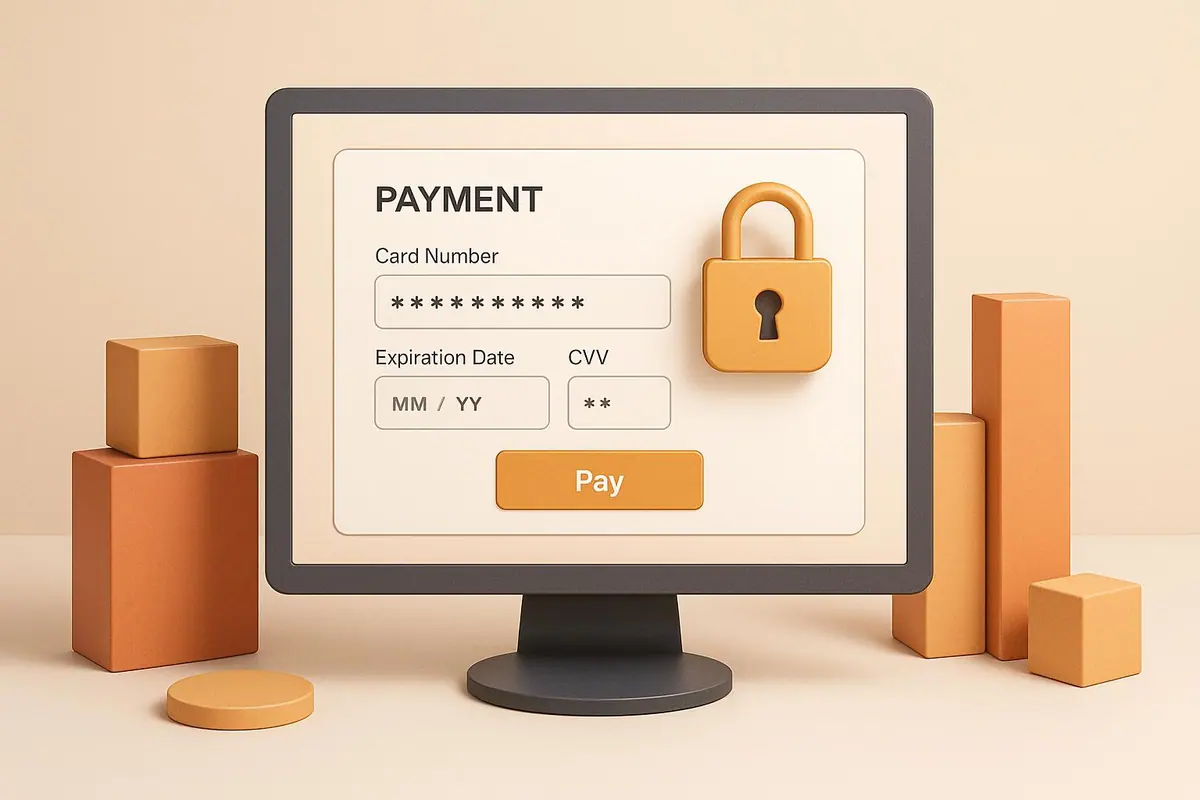
PCI DSS (Payment Card Industry Data Security Standard) is a set of security rules designed to protect payment card data. If your business handles cardholder data, you must comply with these 12 requirements to avoid penalties, data breaches, and loss of customer trust. Here's a quick overview of what you need to do:
- Network Security: Use firewalls to protect cardholder data.
- Secure Configurations: Avoid default passwords and settings.
- Protect Stored Data: Minimize data storage and encrypt sensitive information.
- Encrypt Data in Transit: Use TLS 1.2+ to secure transmitted data.
- Malware Protection: Install and maintain anti-virus software.
- System Updates: Regularly patch and test systems.
- Access Control: Limit data access to those who need it.
- Authentication: Use unique IDs and multi-factor authentication.
- Physical Security: Restrict access to physical systems storing data.
- Logging and Monitoring: Track and review all access to cardholder data.
- Security Testing: Perform regular scans and penetration tests.
- Security Policies: Maintain clear, updated policies for data security.
These steps apply to all businesses handling payment data, regardless of size or transaction volume. Whether you're a small startup or a large corporation, compliance is mandatory to protect your customers and your business. Non-compliance risks include fines, legal issues, and reputational damage.
Quick Tip: Platforms like Reform can simplify compliance with built-in security features like encryption, secure hosting, and access controls. Always verify that your tools and vendors meet PCI DSS standards.
Compliance isn't a one-time task - it's an ongoing responsibility. Regular assessments, timely updates, and staff training are key to staying secure and compliant.
12 Requirements of PCI DSS | Updated for PCI DSS 4.0
PCI DSS Compliance Levels and Requirements
PCI DSS classifies merchants into levels based on their annual transaction volume. Each level determines how businesses validate their security practices and assess their payment forms.
Level 1 is for merchants processing over 6 million transactions annually. These businesses face the strictest requirements, including an annual on-site assessment by a Qualified Security Assessor (QSA). They must also submit a detailed Report on Compliance (ROC) that demonstrates adherence to all 12 PCI DSS requirements.
Level 2 applies to merchants handling between 1 million and 6 million transactions per year. These businesses typically complete an annual Self-Assessment Questionnaire (SAQ) and may need to conduct additional vulnerability scans, depending on the requirements of their card brand or acquiring bank.
Level 3 covers merchants processing between 20,000 and 1 million e-commerce transactions annually. For example, a U.S.-based online retailer handling 50,000 credit card transactions per year would fall into this category. These merchants also complete an annual SAQ and perform quarterly vulnerability scans conducted by Approved Scanning Vendors (ASVs).
Level 4 includes smaller merchants processing fewer than 20,000 e-commerce transactions or up to 1 million total transactions annually. While this is the lowest level, these businesses are still required to complete an annual SAQ and comply with all 12 PCI DSS requirements.
The assessment process differs by level. Level 1 merchants undergo external audits, while Levels 2 through 4 rely on SAQs. The type of SAQ you complete depends on your payment integration method. For instance, fully hosted payment forms qualify for SAQ A, while direct-access payment forms require the more comprehensive SAQ D.
All merchants must validate compliance annually. This involves submitting specific documentation, such as a completed SAQ or ROC, an Attestation of Compliance (AOC), and quarterly vulnerability scan reports, to their acquiring bank or payment processor.
Here’s a quick breakdown of the PCI DSS levels and their requirements:
| PCI DSS Level | Annual Transaction Volume | Validation Method | Assessment Requirements |
|---|---|---|---|
| Level 1 | Over 6 million | QSA on-site assessment | Annual ROC, quarterly scans |
| Level 2 | 1–6 million | SAQ (with possible scans) | Annual SAQ, possible additional scans |
| Level 3 | 20,000–1 million (e-commerce) | SAQ | Annual SAQ, quarterly scans |
| Level 4 | Fewer than 20,000 (e-commerce) or up to 1 million | SAQ | Annual SAQ |
Failing to comply with PCI DSS can lead to serious consequences. Penalties include fines from card brands, higher transaction fees, mandatory forensic investigations in the event of a breach, and even the loss of card processing capabilities. U.S. businesses may also face legal repercussions if customer data is compromised due to inadequate security.
Reform offers secure, conversion-focused payment forms that simplify PCI DSS compliance. With features like built-in encryption and limited data exposure, these forms reduce your PCI scope while streamlining your payment processes.
Understanding your compliance level helps you apply the right security measures for your business. Up next, we’ll explore each PCI DSS requirement and its impact on payment forms.
1. Install and Maintain Network Security
PCI DSS Requirement 1 is the cornerstone of securing payment forms and protecting cardholder data. It requires businesses to install and maintain firewall configurations, creating a secure boundary between trusted internal networks and untrusted external ones. Think of firewalls as digital gatekeepers, controlling the flow of network traffic to and from your payment processing systems.
Why Network Security Matters for Payment Forms
When customers submit sensitive payment details through your forms, robust network security ensures that data stays protected. Firewalls prevent attackers from intercepting or tampering with this information during transmission. Additionally, intrusion detection systems can alert you to any suspicious activity targeting your payment infrastructure.
The infamous 2013 Target breach is a stark reminder of the importance of network security. Attackers exploited a third-party vendor to infiltrate Target’s systems and moved laterally due to poor network segmentation. If proper firewall configurations and segmentation - both PCI DSS requirements - had been in place, the attackers’ access to payment data could have been significantly restricted.
How to Implement Network Security for Payment Forms
To meet PCI DSS standards, you need to take several critical steps:
- Deploy and configure firewalls: Segment the cardholder data environment and limit unnecessary traffic.
- Change default settings immediately: Default passwords and configurations must be updated to prevent exploitation.
- Use Web Application Firewalls (WAFs): These are essential for defending against web-based attacks on form submissions.
Firewalls should be configured to block all traffic by default, allowing only authorized connections. Keep an audit trail of any changes to ensure transparency and accountability. Additionally, place all servers and endpoints involved in payment processing behind properly configured firewalls.
Supporting PCI DSS Compliance
This requirement forms the backbone of PCI DSS compliance for payment forms. Maintaining strong network security helps you stay compliant as your business grows and threats evolve. The PCI Security Standards Council emphasizes this as a foundational measure because securing the network perimeter is a prerequisite for implementing other security controls.
During PCI DSS assessments, auditors pay close attention to firewall configurations. To prepare, you’ll need documentation such as network diagrams, firewall and router configuration standards, and change control records. Failing to maintain proper firewall settings can lead to fines or even the loss of credit card processing privileges.
Simplifying Security with Modern Tools
Platforms like Reform are designed with security in mind, offering features like secure hosting and encrypted data transmission to simplify PCI DSS compliance[context]. These tools allow businesses to implement PCI-compliant payment forms without needing advanced technical expertise. Just ensure the platform is PCI DSS-compliant and configure its security options properly.
For smaller businesses or startups, experts recommend using PCI DSS-compliant platforms or managed security services for tasks like firewall monitoring. Regular staff training, vulnerability scans, and penetration tests are also critical for identifying and addressing potential weaknesses in your payment form setup.
2. Apply Security Configurations to System Components
PCI DSS Requirement 2 addresses a major vulnerability: default configurations. It requires organizations to avoid using vendor-supplied defaults for system passwords and other security settings on all components involved in handling payment data. According to Verizon's 2023 Payment Security Report, over 40% of organizations that experienced payment data breaches failed to change default credentials or implement secure configurations for their systems.
Why This Matters for Payment Form Security
Default settings are like leaving your front door unlocked - they make it far too easy for attackers to gain access. If web servers, databases, or applications supporting your payment forms are left with factory-set passwords or configurations, they become prime targets. Cybercriminals know these vulnerabilities and can exploit them quickly. On top of that, leaving unnecessary services like FTP or Telnet enabled gives attackers even more ways to infiltrate your systems. The Center for Internet Security reports that misconfigurations account for 15–20% of all security incidents in payment environments.
Here’s an example: Imagine a web server hosting payment forms still using its default admin credentials, like "admin/admin." An attacker could log in, take control of the server, and then alter payment forms to steal sensitive customer data or redirect transactions to fraudulent accounts.
To avoid these risks, implementing secure configurations isn’t just a good idea - it’s essential.
How to Secure Your Payment Form Environment
To protect your payment forms, secure configurations must be applied to all system components. Start by changing all default passwords immediately after deployment. This includes not just user accounts, but also database connections, API keys, and service accounts tied to your payment forms. Next, disable or remove unnecessary services and accounts. Every unused service is a potential entry point for attackers.
Using automated configuration management tools like Ansible, Chef, or Puppet can make this process easier. These tools ensure consistent security settings across multiple servers and help detect any unauthorized changes.
Don’t overlook documentation. Keep detailed records of every configuration change - who made it, when, and why. This is not only useful for monitoring your system’s security but also vital for PCI DSS assessments.
Role in PCI DSS Compliance
Secure configurations are a cornerstone of PCI DSS compliance. Without them, enforcing other controls - like restricting access to cardholder data or protecting data during transmission - becomes significantly harder.
PCI DSS auditors pay close attention to system configurations during assessments. They’ll review your configuration standards, change logs, and ensure that security baselines are consistently applied across all components handling payment data. To prepare, maintain thorough documentation, including system inventories, configuration standards, and logs of all changes.
Failing to meet this requirement can result in non-compliance, fines, or even losing the ability to process credit card transactions.
Leveraging Modern Tools for Simplified Security
Thankfully, modern form builders and payment platforms are making secure configurations easier to manage, even for businesses without deep technical expertise. Many platforms now include built-in security templates tailored to meet PCI DSS requirements.
For instance, platforms like Reform offer pre-configured, secure hosting environments with automated security updates. When choosing a platform, ensure it enforces secure defaults while allowing customization to meet specific PCI DSS needs. Look for features like automated patch management, configuration tracking, and integration with security scanning tools. The platform should also provide transparency into its security measures and detailed audit logs to support your compliance documentation.
Even if you rely on managed services, regular reviews of your platform’s security settings are critical to maintaining a strong defense.
3. Protect Stored Cardholder Data
PCI DSS Requirement 3 tackles a key issue: storing more cardholder data than necessary. Businesses are urged to keep only the absolute minimum and ensure it's safeguarded with stringent security measures. According to Verizon's 2023 Payment Security Report, just 43% of organizations achieved full PCI DSS compliance in 2022. For U.S. businesses, a single data breach involving payment card data can cost an average of $4.45 million per incident.
Relevance to Payment Form Security
Payment forms handle highly sensitive information like Primary Account Numbers (PANs), cardholder names, and expiration dates. Storing only essential data - and protecting it properly - is a foundational step in ensuring secure payment form processes.
Practical Implementation for Form Builders
The best approach? Avoid storing sensitive cardholder data altogether. Redirecting users to PCI DSS-compliant payment gateways eliminates the need to store such data. However, if storage is unavoidable, robust measures like AES-256 encryption, effective key management (including regular key rotation), and tokenization can provide strong protection. Employing point-to-point encryption (P2PE) further reduces PCI DSS scope. Additionally, implementing data retention policies - such as automatic deletion of non-essential data after a set period, often 30 days - ensures compliance and minimizes risks.
| Method | Security Level | Implementation Complexity | Best For |
|---|---|---|---|
| Tokenization | High | Medium | Recurring payments, customer profiles |
| Strong Encryption (AES-256) | High | High | Necessary data storage with full control |
| Data Avoidance | Highest | Low | One-time payments, simple transactions |
| Truncation/Masking | Medium | Low | Display purposes, limited functionality |
Impact on PCI DSS Compliance
Properly securing stored cardholder data is a cornerstone of PCI DSS compliance. Auditors closely scrutinize encryption methods, key management practices, data retention policies, and access controls. Storing sensitive authentication data - like CVVs - can result in immediate non-compliance. Falling short of these standards exposes businesses to severe risks, including data breaches, hefty fines, loss of payment processing privileges, legal challenges, and reputational harm.
Ease of Integration with Modern Tools or Platforms
Today's form builders and payment platforms simplify secure data handling. Many include built-in PCI DSS-compliant features such as automatic encryption, secure storage, and seamless integrations with payment processors. Tools like tokenization and encryption help businesses avoid direct storage of sensitive data. When choosing a form builder, look for solutions that offer pre-configured PCI DSS compliance, clear documentation, and automated security features. For example, Reform provides secure hosting environments equipped with compliance tools to simplify storage requirements. Regardless of the platform, regularly reviewing and updating security settings is crucial for maintaining strong defenses.
Next, we’ll explore additional practices to ensure robust PCI DSS compliance.
4. Encrypt Cardholder Data During Transmission
PCI DSS Requirement 4 zeroes in on a critical weak spot: the risk of data interception during transmission. According to the 2023 Payment Security Report by Verizon, over 80% of payment card data breaches stem from intercepted data during transmission, often due to inadequate or missing encryption. For U.S. businesses, such breaches can result in hefty fines and reputational damage. This makes strong encryption a must-have for securing payment forms.
Why Encryption Matters for Payment Forms
Payment forms handle highly sensitive cardholder information. When this data is transmitted without encryption, it becomes an easy target for cybercriminals. Unlike stored data, which is shielded by firewalls and access controls, transmitted data often travels across public networks, making it especially vulnerable. Securing this phase is critical to safeguarding customer information.
How to Implement Secure Transmission in Payment Forms
The cornerstone of secure data transmission is the use of Transport Layer Security (TLS) version 1.2 or higher. TLS has replaced outdated protocols like SSL and early TLS, which are no longer secure. To protect cardholder data, payment forms must operate exclusively over HTTPS, ensuring sensitive information is encrypted before leaving the user's device.
Here’s how to ensure proper encryption:
- Enforce TLS 1.2 or Higher: Configure your web servers to support only TLS 1.2 or newer, with no fallback to older protocols.
- Use Trusted SSL/TLS Certificates: Obtain and install certificates from reputable certificate authorities.
- Deploy HTTP Strict Transport Security (HSTS): This prevents protocol downgrade attacks by enforcing HTTPS connections.
To give you a quick overview, here’s a breakdown of encryption protocols:
| Encryption Protocol | PCI DSS Status | Security Level | Notes |
|---|---|---|---|
| SSL v3.0 | Prohibited | Insecure | Deprecated and vulnerable |
| TLS 1.0/1.1 | Prohibited | Weak | No longer PCI DSS compliant |
| TLS 1.2+ | Required | Strong | Minimum compliance standard |
| End-to-End Encryption (E2EE) | Recommended | Highest | Adds an extra layer of security |
For businesses using form builders, integrating with PCI DSS-compliant payment gateways is a practical way to meet these technical requirements while keeping processes user-friendly.
The Role of Encryption in PCI DSS Compliance
Failing to encrypt cardholder data during transmission violates PCI DSS standards. Auditors scrutinize TLS configurations, certificate validity, and the use of secure protocols to ensure no sensitive data is sent over unencrypted channels - whether during production or testing. Non-compliance can lead to severe consequences, including financial penalties, loss of payment processing privileges, and damage to your reputation. A single lapse in transmission security can jeopardize the entire payment system.
Simplified Integration with Modern Tools
Modern platforms make encryption easier than ever. Many form builders now offer built-in HTTPS support, automatic certificate management, and seamless integration with PCI DSS-compliant payment processors. For instance, Reform prioritizes security by including encrypted data transmission as a standard feature, enabling businesses to meet PCI DSS Requirement 4 without complex configurations.
Advanced methods like end-to-end encryption (E2EE) and point-to-point encryption (P2PE) further enhance security by encrypting data from the moment it’s entered until it reaches the payment processor. To maintain compliance, regularly monitor certificate expirations, update protocols, and conduct vulnerability scans. These steps ensure your payment forms remain secure and compliant.
5. Protect Systems from Malicious Software
Just like secure network setups and encryption shield data, malware defenses safeguard the systems handling that data. PCI DSS Requirement 5 zeroes in on protecting systems from malicious software that could jeopardize payment card information. According to Verizon's 2024 Payment Security Report, a staggering 43% of organizations failed to maintain anti-virus solutions across all systems, with the average cost of a payment card data breach in the U.S. hitting $5.85 million in 2023. Clearly, malware protection isn't just a box to check - it's a necessity.
Relevance to Payment Form Security
After implementing encryption and secure configurations, the next crucial step is defending against malware. Malware directly threatens payment forms by targeting the systems that process sensitive cardholder data. Typical risks include keyloggers, formjacking scripts, and ransomware. Since payment forms handle highly sensitive information at the point of entry and operate over public networks, even a single compromised system could expose thousands of transactions. Strong malware defenses are vital for safeguarding customer trust and ensuring uninterrupted operations.
Practical Implementation for Form Builders
Building an effective malware defense requires a layered approach:
- Install and maintain anti-virus or anti-malware software on all systems involved in payment processing, ensuring automatic updates are enabled.
- Perform regular system scans and document the results to meet PCI DSS compliance requirements.
- Adopt secure coding practices, apply regular patches, and deploy web application firewalls (WAFs) to block malicious traffic.
- Limit third-party scripts and plugins to those from verified, trusted sources.
- Educate staff on identifying and avoiding phishing and social engineering attempts.
Impact on PCI DSS Compliance
Malware protection plays a pivotal role in achieving PCI DSS compliance. Auditors carefully examine anti-virus configurations, update schedules, and scan logs to confirm organizations are actively defending against malware. Falling short in this area can lead to non-compliance, which may result in fines, increased scrutiny from payment processors, or even losing the ability to process credit card payments. Beyond deploying anti-virus tools, organizations must show evidence of ongoing monitoring and response capabilities, such as documented procedures for handling malware incidents and regular security assessments. These measures are essential to a well-rounded PCI DSS strategy.
Ease of Integration with Modern Tools or Platforms
Modern payment platforms have made malware protection more accessible by incorporating advanced security features and automated management tools. These platforms go beyond basic anti-virus solutions, offering real-time threat detection and AI-driven analysis for enhanced protection.
| Solution Type | Malware Protection | PCI DSS Compliance Support | Ease of Integration |
|---|---|---|---|
| Traditional Anti-virus | Basic | Manual reporting required | Moderate |
| Advanced Endpoint Protection | AI-driven, real-time | Automated compliance logs | High |
| Cloud Form Builders | Built-in, automated | Integrated compliance features | Very High |
Cloud-based form builders are increasingly equipped with automated malware scanning and integration with security information and event management (SIEM) tools. Platforms like Reform seamlessly combine malware protection with PCI DSS-compliant features, aligning with the broader goal of secure payment form solutions. Many also support API-based security integrations, allowing businesses to connect to existing security systems effortlessly. This ensures enterprise-grade protection for payment forms without requiring extensive technical expertise.
6. Develop and Maintain Security Systems
PCI DSS Requirement 6 focuses on building secure systems and keeping them well-maintained, especially for payment forms. According to Verizon's 2023 report, one of the most common compliance issues is the delay in patching critical vulnerabilities - often taking an average of 60 days, far exceeding the required 30 days. This highlights the pressing need for ongoing security efforts.
Why Payment Form Security Matters
Payment forms are frequent targets for advanced threats like formjacking and injection attacks, which exploit weaknesses in outdated or poorly maintained code. A notable example is the Magecart attacks, where hackers injected malicious scripts into payment forms that weren’t regularly updated or monitored. Such incidents underscore the importance of proactive security maintenance.
In October 2022, the Payment Application Data Security Standard (PA-DSS) was replaced by the Secure Software Standard and Secure SLC Standard. This change reflects a shift toward integrating security into software development from the very start, rather than treating it as an afterthought.
Practical Steps for Securing Payment Forms
To keep payment forms secure, organizations should adopt these essential practices:
- Regular patch management: Stay up to date with patches for all software components, libraries, and plugins used in payment forms.
- Routine vulnerability scans: Automate scans and penetration tests to identify and address security gaps before deployment and on an ongoing basis.
- Timely application of security patches: Ensure patches are applied within 30 days to meet PCI DSS timelines.
- Security training for developers: Equip your development team with ongoing training to stay informed about the latest threats and secure coding practices.
PCI DSS Compliance Benefits
Maintaining secure systems is not just about meeting PCI DSS standards - it also safeguards customer data and ensures the integrity of payment transactions. This supports critical PCI DSS requirements, such as protecting cardholder data, blocking unauthorized access, and maintaining transaction security.
Failure to maintain secure systems can lead to non-compliance, fines, reputational harm, and a higher risk of data breaches. During audits, organizations must provide evidence of their patch management processes, vulnerability assessments, and security testing efforts. Compliance is not just about implementing measures but also about demonstrating consistent maintenance and improvement over time.
Leveraging Modern Tools for Easier Integration
Modern form builders have simplified security management, allowing businesses to maintain secure payment systems without requiring extensive technical expertise. Many platforms now integrate automated vulnerability scanning and continuous security monitoring into the software development lifecycle.
| Approach | Manual Security Updates | Automated Security & Patch Management | No-Code Form Builder |
|---|---|---|---|
| Effort | High | Medium/Low | Low |
| Risk of Human Error | High | Low | Low |
| PCI DSS Compliance Ease | Challenging | Easier | Easiest (if platform is compliant) |
| Customization | High | Medium | Medium/High |
For businesses using no-code or low-code form builders like Reform, these platforms often handle regular security updates, vulnerability management, and PCI DSS compliance for you. Features like automatic updates, secure coding templates, and integration with vulnerability management tools are becoming standard. If you rely on third-party platforms, it’s essential to confirm that they maintain PCI DSS compliance and follow strict security practices.
This automated approach allows businesses to focus on their operations while ensuring their payment forms remain secure and compliant with evolving PCI DSS requirements.
7. Restrict Access to Cardholder Data
PCI DSS Requirement 7 emphasizes a "need-to-know" principle, ensuring that only individuals with a legitimate job-related necessity can access cardholder data. This approach significantly reduces the chances of data breaches and unauthorized exposure of sensitive payment information collected through your forms.
Why This Matters for Payment Form Security
Payment forms handle some of the most sensitive data your business processes - credit card numbers, expiration dates, and security codes. By limiting access, you not only protect against external breaches but also reduce the risk of internal misuse. According to Verizon's 2023 Payment Security Report, more than 60% of payment card data breaches involved either unauthorized internal access or compromised credentials. This makes restricting access a critical step in safeguarding payment information and maintaining compliance.
Connection to PCI DSS Compliance
Access control is a cornerstone of PCI DSS compliance. The PCI Security Standards Council notes that organizations with strong access controls experience up to 40% fewer payment data security incidents compared to those with weaker controls. To pass a PCI DSS audit, you must demonstrate that access to cardholder data is limited, justified, and continuously monitored. This includes maintaining detailed records of who has access, why they need it, and how their access is being managed.
How to Implement Access Restrictions for Payment Forms
To meet PCI DSS standards, restricting access to payment form data requires a layered approach. Here are practical steps:
- Role-Based Access Controls (RBAC): Assign permissions based on job roles rather than individual requests. For instance, your marketing team might only view submission statistics, while the finance team handling payments would have full access to cardholder data.
- Multi-Factor Authentication (MFA): Make MFA mandatory for anyone accessing payment form data, especially administrators and developers. This adds an extra layer of security beyond just usernames and passwords.
- Regular Access Reviews: Conduct periodic reviews to ensure access permissions align with current job roles. When employees change roles or leave, update their access immediately. Automated access management tools can simplify this process, reducing errors and improving audit readiness.
Simplifying Access Controls with Modern Tools
Modern form-building platforms make it easier to enforce access restrictions. For example, platforms like Reform allow administrators to define which team members can access sensitive form data and maintain detailed audit logs for compliance purposes. These features streamline the technical aspects of implementation.
| Access Control Method | Description | PCI DSS Compliance Impact |
|---|---|---|
| Role-Based Access Control | Assigns permissions by job roles | High - streamlines compliance and lowers risk |
| Manual User Permissions | Sets permissions individually for each user | Medium - prone to errors, harder to audit |
| Automated Access Management | Provides real-time updates and integrations | High - easier to manage and audit |
Using compliant form builders takes much of the complexity out of access control management. Look for platforms that support detailed user permissions, comprehensive audit logs, and seamless integration with your existing authentication systems. These capabilities help enforce the principle of least privilege while ensuring compliance with PCI DSS during audits.
sbb-itb-5f36581
8. Identify and Authenticate System Access
Establishing authenticated access is a cornerstone of a strong, layered defense. PCI DSS Requirement 8 emphasizes assigning every user a unique ID, ensuring accountability and protecting sensitive payment data from both unauthorized access and internal threats. This goes beyond basic login credentials, creating a system that tracks and manages access effectively.
Relevance to Payment Form Security
Strong identification and authentication measures act as a critical safeguard for payment forms. Payment data - like credit card numbers, expiration dates, and CVV codes - requires the highest level of protection. The stakes are high: breaches involving compromised credentials have an average cost of $4.50 million per incident, according to Verizon's 2023 Payment Security Report and IBM’s 2022 data. By enforcing strict authentication protocols, organizations can ensure that only authorized individuals access sensitive information.
Impact on PCI DSS Compliance
Requirement 8 builds on the principle of restricted access by mandating unique user identification, which enhances traceability and accountability. With PCI DSS 4.0, the standards have been elevated, requiring multi-factor authentication (MFA) for all access to the cardholder data environment - not just for remote access. This reflects the growing sophistication of threats and the need for stronger defenses. During audits, PCI DSS compliance will be assessed by examining user management practices, password policies, and authentication logs. Falling short on these measures can lead to non-compliance and hefty penalties.
| Authentication Method | Security Level | PCI DSS 4.0 Compliance | User Experience |
|---|---|---|---|
| Password only | Low | Not sufficient | Simple |
| Password + MFA | High | Required | Moderate |
| SSO with MFA | High | Compliant | Streamlined |
Practical Implementation for Form Builders
To meet Requirement 8, start by assigning each user a unique ID - this is non-negotiable, and shared credentials must be avoided. Implement password policies aligned with NIST guidelines, encouraging long, complex passwords while avoiding frequent, unnecessary changes that could lead to weaker security practices. Many organizations also adopt single sign-on (SSO) solutions, integrating with identity providers like Okta or Azure AD, and enable MFA for all access points. These steps complement earlier access restrictions, adding another layer of protection for payment forms.
Ease of Integration with Modern Tools or Platforms
Modern form-building platforms make compliance with authentication requirements easier than ever. For example, Reform integrates seamlessly with identity management systems, offering features like audit logging, strong password enforcement, and MFA support. When choosing a form builder, prioritize one that enforces secure authentication and maintains detailed audit logs. Regularly review user access and promptly revoke any unnecessary permissions to stay compliant and secure.
9. Restrict Physical Access to Cardholder Data
Physical security plays a crucial role in safeguarding cardholder data, protecting it against both cyberattacks and physical breaches. PCI DSS Requirement 9 emphasizes strict measures to prevent unauthorized access to areas or media where cardholder data is stored. Even when digital safeguards are in place, vulnerabilities like unsecured server rooms or stolen backup media can lead to breaches. These physical protections are an essential complement to the digital measures discussed earlier.
Relevance to Payment Form Security
Physical access controls are a cornerstone of payment form security. According to a Verizon report, 43% of reported breaches stem from weak physical security measures. This underscores the importance of addressing physical vulnerabilities alongside digital defenses like firewalls and encryption. Sensitive information on printed receipts, backup media, or servers can still be compromised if physical security is neglected. The PCI Security Standards Council has highlighted incidents such as stolen backup tapes or unauthorized server room access as significant contributors to cardholder data breaches. To fully meet PCI DSS requirements, physical security must be as robust as digital protections.
Impact on PCI DSS Compliance
Meeting Requirement 9 involves implementing a combination of physical and digital safeguards. Physical security measures might include:
- Secured server rooms with locked access.
- Badge access systems to restrict entry.
- Visitor logs and surveillance cameras.
- Secure storage for paper records containing sensitive data.
Only authorized personnel should have access to areas where cardholder data is handled, and employees must carry proper identification. Maintaining detailed records is also vital for compliance. This includes access logs, visitor sign-in sheets, security camera footage, and documented physical security policies. For businesses using cloud-based solutions, it’s essential to ensure that hosting providers maintain strict physical security and can provide proof of PCI DSS compliance. Failing to enforce these controls can lead to non-compliance, resulting in fines, more frequent audits, or even the loss of payment processing privileges.
Practical Implementation for Form Builders
The strategies for physical security depend on whether an organization manages its infrastructure on-premises or relies on cloud-based solutions. For on-premises setups, consider the following measures:
- Use badge access systems to secure server rooms.
- Require visitor sign-ins and escorts for unauthorized individuals.
- Lock paper records containing cardholder data in secure storage.
Common challenges include underestimating the risks of physical breaches, neglecting the security of backup media, and failing to regularly update access permissions. Regular audits, control testing, and employee training are essential to address these issues.
For cloud-based payment form solutions, much of the responsibility for physical security lies with the service provider. Businesses must conduct thorough evaluations to ensure their provider adheres to stringent physical security standards and maintains up-to-date PCI DSS compliance documentation.
Ease of Integration with Modern Tools and Platforms
Modern cloud-based platforms simplify physical security compliance by outsourcing these responsibilities to specialized data centers. These facilities are managed by professional security teams who maintain enterprise-level protections. For example, platforms like Reform operate within PCI DSS-compliant, physically secure environments, allowing businesses to benefit from high-grade physical security without having to manage it themselves.
When selecting a form builder, prioritize platforms that provide clear documentation of their physical security measures and maintain current PCI DSS certifications. These physical protections work hand-in-hand with digital security measures, creating a comprehensive approach to compliance and data safety.
10. Log and Monitor Network Access
Tracking and monitoring every interaction with cardholder data is essential for maintaining secure payment systems. PCI DSS Requirement 10 explicitly requires organizations to log and monitor all access to network resources and cardholder data, making it a cornerstone of payment security. This process not only helps detect threats in real time but also provides critical forensic evidence in the event of a breach.
Relevance to Payment Form Security
Every interaction with your payment forms - whether a click, submission, or access attempt - generates valuable data that can strengthen your security measures. According to Verizon's 2023 Payment Security Report, more than 60% of organizations that experienced payment data breaches lacked sufficient logging and monitoring controls. This gap leaves businesses vulnerable to undetected threats.
For payment forms, logging captures key details such as user access attempts, form submissions, API calls, and administrative changes. These logs provide a clear record of events, showing what occurred, who was involved, when it happened, and where the access originated. Without this level of visibility, unauthorized access or data theft could go unnoticed for months, especially given the volume of transactions modern forms handle daily.
The PCI Security Standards Council emphasizes that log review is one of the most commonly overlooked requirements. Many organizations fail to meet the daily log review mandate, which is crucial for identifying potential threats early. This oversight can have serious implications for PCI DSS compliance.
Impact on PCI DSS Compliance
Not maintaining proper logs is a quick route to PCI DSS non-compliance. Requirement 10 mandates detailed logging, including information such as user identity, access times, event types, and the resources accessed. Failing to meet these standards can lead to fines, increased audits, stricter oversight from payment processors, and even the loss of credit card processing privileges.
Daily log reviews are another critical requirement. These reviews are vital because payment systems are under constant attack, and early detection can prevent minor incidents from escalating into major breaches. However, many organizations struggle to implement these reviews effectively due to the sheer volume of data involved.
Practical Implementation for Form Builders
To implement effective logging, it’s important to first identify what needs to be tracked. For payment forms, this includes:
- User authentication events
- Access to forms and submission records
- Changes to form configurations
- API interactions with payment processors
- Administrative access to systems handling cardholder data
A case study highlights the benefits of enhanced logging: one organization reduced its incident response time by 40% by integrating logging and monitoring with a Security Information and Event Management (SIEM) system.
Centralized logging systems are key to ensuring no data is overlooked. These systems collect information from all payment form interactions, while automated monitoring tools flag suspicious activities, such as repeated failed login attempts or unusual access patterns.
Protecting logs is just as important as collecting them. Attackers often target logs to erase evidence of their activities, so logs must be encrypted, securely stored, and protected from tampering or deletion. Many organizations use write-once storage systems or immediately send logs to secured, off-site systems to prevent unauthorized modifications.
Ease of Integration with Modern Tools and Platforms
Modern tools have made logging and monitoring much simpler. Cloud-based solutions and SIEM platforms can automatically collect, analyze, and alert on suspicious activities, addressing the challenge of managing the massive volume of log data generated by payment systems.
Some form builders, like Reform, now include integrated logging and monitoring features. These platforms offer real-time analytics, detailed audit trails, and seamless connections to external monitoring tools. This eliminates the need for businesses to develop custom solutions or manage complex logging infrastructures, allowing them to focus on security without adding unnecessary manual processes.
Automation plays a crucial role here. While PCI DSS requires manual log reviews, automated systems can process thousands of log entries per minute, identifying patterns and anomalies far more efficiently than human reviewers. Instead of wading through every log entry, security teams can focus on flagged events that require immediate attention.
Cloud-based solutions also simplify log retention and accessibility. Instead of maintaining on-premises storage, businesses can rely on cloud providers to meet retention requirements while ensuring logs are always available for analysis and audits. These tools not only improve security but also make it easier to stay audit-ready and compliant with PCI DSS standards.
11. Test Security Systems Regularly
Regular security testing is one of the most effective ways to stay ahead of threats targeting payment forms. According to PCI DSS Requirement 11, organizations are required to routinely test their security systems and processes to uncover vulnerabilities and ensure the protection of cardholder data. This isn’t just a one-off task - it involves consistent testing at set intervals and after any major system updates or changes.
The importance of this practice is evident in the numbers. Verizon's 2023 Payment Security Report revealed that only 43.4% of organizations maintained full PCI DSS compliance in 2022, with many falling short due to lapses in regular testing. Supporting this, IBM's 2022 Cost of a Data Breach Report found that organizations with regular security testing and incident response plans saved an average of $2.66 million per breach compared to those without these measures.
Relevance to Payment Form Security
Payment forms are a prime target for cyberattacks because they process sensitive cardholder data in real time. Every form submission, API request, or data transfer creates a potential entry point for attackers. If security testing isn’t performed regularly, vulnerabilities can go unnoticed, leaving opportunities for cybercriminals to exploit these weaknesses.
Take, for example, cross-site scripting (XSS) vulnerabilities. These allow attackers to inject malicious code into payment forms, enabling them to steal sensitive data. Regular vulnerability scans and penetration tests can identify such issues early, allowing businesses to address them before they become a problem.
Given how often web applications evolve - whether through updates, new integrations, or added features - continuous testing is critical. Each change can introduce new security gaps, and systematic testing ensures these are identified and resolved promptly.
Impact on PCI DSS Compliance
PCI DSS Requirement 11 outlines specific testing requirements that are essential for maintaining compliance. Organizations must perform both internal and external vulnerability scans at least quarterly and after any significant changes to their network. Penetration testing is also required annually or following major environmental changes.
Failing to meet these requirements can lead to compliance violations. Auditors closely review these testing measures, and detailed documentation is essential. Records of vulnerability scans, penetration test results, remediation efforts, and system updates must be maintained to demonstrate compliance. Proper documentation not only satisfies auditors but also ensures that organizations can track their security progress over time.
Practical Implementation for Form Builders
A well-rounded security testing strategy involves multiple types of tests performed at different intervals. Here’s a breakdown of key testing components:
- Vulnerability Scans: Conducted quarterly or after system changes, these scans identify known weaknesses.
- Penetration Tests: Performed annually or after major changes, these simulate real-world attacks to uncover hidden vulnerabilities.
- Wireless Scanning: Done quarterly or continuously, this detects unauthorized wireless access points.
| Testing Type | Frequency | Purpose |
|---|---|---|
| Vulnerability Scan | Quarterly/After Changes | Identify known vulnerabilities |
| Penetration Test | Annually/After Changes | Simulate attacks to reveal weaknesses |
| Wireless Scanning | Quarterly/Continuous | Detect unauthorized wireless access points |
Automation plays a big role here. Modern tools can continuously monitor payment forms and associated systems, scanning for threats and flagging vulnerabilities in real time. This reduces the need for manual checks and speeds up detection, making it easier to respond to potential risks.
Testing shouldn’t stop at technical controls. Organizations also need to review their broader processes, such as incident response plans, access controls, and staff security training. This ensures that all elements contributing to payment form security are effective and up to date.
Ease of Integration with Modern Tools and Platforms
Many modern form-building platforms now come equipped with built-in security testing features. These include automated vulnerability scans, real-time analytics, and compliance checks, simplifying the process of meeting PCI DSS requirements. This eliminates the need for custom-built solutions and reduces the complexity of managing security testing.
Cloud-based security platforms further streamline the process. By integrating payment forms with these tools, businesses can benefit from continuous monitoring, automated scanning, and detailed reporting. Many of these platforms also offer pre-configured templates aligned with PCI DSS requirements, making it easier to ensure comprehensive coverage without excessive setup time.
Platforms like Reform take things a step further by offering features such as real-time analytics, spam prevention, and integration with security tools. These capabilities allow businesses to schedule and document security tests while maintaining the audit trails required for compliance.
The move toward automated vulnerability scanning and continuous monitoring is reshaping how organizations approach security. APIs now make it possible to connect payment forms directly to enterprise security systems, creating robust ecosystems that adapt to ever-changing threats.
12. Maintain Information Security Policies
PCI DSS Requirement 12 emphasizes the need for organizations to establish and maintain well-defined information security policies for handling cardholder data. These policies act as the backbone for all other security measures and practices.
A solid information security policy should address every aspect of payment form security. This includes defining roles and responsibilities, setting acceptable use guidelines, detailing incident response procedures, and ensuring ongoing training for personnel managing payment data. These policies aren’t static - they need to evolve continuously to guide daily security practices effectively. Beyond protecting sensitive data, they are a cornerstone for achieving PCI DSS compliance.
Impact on PCI DSS Compliance
Requirement 12 plays a critical role in fostering a security-focused culture within organizations that handle payment data. Without strong policies, even the best technical safeguards can fall short due to human errors or miscommunication. Auditors place significant emphasis on these policies during compliance reviews, ensuring they are thorough, up-to-date, and well-communicated across the organization.
The PCI Security Standards Council highlights that these policies should be tailored to fit an organization’s size, complexity, and risk profile, rather than relying on one-size-fits-all templates.
Relevance to Payment Form Security
Payment forms are key components in your security framework. Policies must specifically address how these forms are created, deployed, maintained, and monitored. This includes defining secure coding standards, data handling protocols, incident response plans, and employee training requirements. Additionally, organizations must establish clear procedures for managing third-party vendors to ensure their services meet PCI DSS standards.
Regular policy reviews are essential. Ideally, policies should be revisited at least once a year or whenever there are significant changes in business operations, technology, or regulatory requirements. This ensures they remain effective against evolving security threats.
Practical Implementation for Form Builders
For those developing payment forms, implementing robust security policies requires careful planning. Organizations should create straightforward guidelines for data handling, access controls, and incident response plans that are easy for teams to adopt. When combined with strong technical safeguards, these policies provide a comprehensive security strategy for payment forms. Regular employee training and maintaining detailed records of policies, training sessions, and reviews help demonstrate compliance during audits.
Ease of Integration with Modern Tools and Platforms
Modern form-building platforms are increasingly equipped to support the implementation and enforcement of security policies. Many platforms now offer automated policy management and real-time compliance monitoring, which keeps policies current and effective. For example, tools like Reform provide features such as access controls, audit logs, and integrations with compliance tools. These capabilities streamline policy enforcement, reduce manual effort, and ensure that payment forms align with PCI DSS standards. By integrating security policies with secure form-building platforms, organizations can enhance their overall payment form security and simplify compliance management.
| Policy Component | Traditional Approach | Modern Platform Integration | Compliance Benefit |
|---|---|---|---|
| Policy Documentation | Manual creation and distribution | Automated updates and centralized management | Consistent documentation and easier audits |
| Staff Training | Ad hoc sessions | Scheduled, trackable online training modules | Improved staff awareness and fewer mistakes |
| Security Practices | Isolated implementations | Integrated with form builder workflows | Reduced risk and streamlined compliance |
Best Practices for PCI DSS-Compliant Payment Forms
Creating PCI DSS-compliant payment forms starts with embedding strong security measures right from the beginning. These practices align with the PCI DSS requirements we've already discussed, ensuring your forms are well-protected.
One key practice is encryption, which should be implemented throughout your payment processing workflow. Never store sensitive authentication data after authorization - it only increases your exposure to potential risks.
Access controls are equally important. Use role-based permissions to restrict cardholder data access to those who genuinely need it. Assign unique IDs to each user for accountability, and enable multi-factor authentication for accessing sensitive payment data. Periodically review user access to ensure permissions align with current roles and responsibilities.
Comprehensive audit logging is another must-have. These logs document all interactions with payment forms and cardholder data, serving as critical compliance records. They’re also invaluable for spotting unauthorized activities. Many modern platforms simplify compliance by automatically capturing user actions, access attempts, and system changes.
Leveraging No-Code Platforms for Simpler Compliance
No-code platforms can make achieving PCI DSS compliance less complex. These platforms often include built-in features that handle much of the technical work for you. Look for solutions that offer secure data handling, such as automatic encryption, seamless payment processor integrations, and robust access controls. This allows you to focus on your business while maintaining compliance.
Essential Security Features for Payment Forms
To protect your payment forms, use tools like automated vulnerability scanning and regular security assessments. These tools help uncover weaknesses in your forms and systems before they can be exploited. Schedule these tests regularly, adjusting the frequency based on your risk level.
Don’t overlook physical security either. Restrict and monitor physical access to systems handling cardholder data. Make sure development and testing environments are secured as rigorously as production systems.
Maintaining Compliance Over Time
Staying compliant isn’t a one-time effort - it requires ongoing attention. Regularly review and update your payment form security settings, especially after system changes. Train your staff frequently to keep them informed about the latest security practices.
Penetration testing and vulnerability assessments, conducted by qualified professionals, are vital for verifying the effectiveness of your security measures. These evaluations ensure your payment forms can withstand new and emerging threats.
| Security Control | Approach | Compliance Benefit | Maintenance Frequency |
|---|---|---|---|
| Data Encryption | Encrypt data at rest and in transit | Prevents data breaches and unauthorized access | Monitor regularly; rotate keys periodically |
| Audit Logging | Automatically log all interactions and data access | Provides compliance documentation and threat detection | Review and analyze logs regularly |
| Vulnerability Testing | Conduct automated scans and periodic penetration tests | Identifies and mitigates potential weaknesses | Perform tests based on your risk profile |
Investing in PCI DSS compliance isn’t just about meeting regulatory standards. It’s also about reducing the risk of data breaches and earning your customers’ trust - both of which are vital for long-term success in today’s security-focused world.
PCI DSS Requirements Summary Table
The table below outlines the 12 PCI DSS requirements for payment forms, providing details on their implications, implementation steps, and common challenges.
| PCI DSS Requirement | Impact on Payment Forms | Implementation Steps | Challenges |
|---|---|---|---|
| 1. Install and Maintain Network Security | Protect payment forms with firewalls and secure network configurations to block unauthorized access | Use web application firewalls (WAF), configure secure hosting, and restrict network access to form servers | Managing complex firewall rules, ongoing maintenance, and balancing security with performance |
| 2. Apply Security Configurations to System Components | Ensure secure configurations for systems hosting payment forms and eliminate default credentials | Change default passwords, apply hardening guidelines, and disable unnecessary services | Legacy systems often overlooked, and configuration drift over time |
| 3. Protect Stored Cardholder Data | Minimize stored data and encrypt any cardholder information retained | Use data tokenization, strong encryption, and establish data retention policies | Handling encryption key management and defining compliance scope |
| 4. Encrypt Cardholder Data During Transmission | Encrypt all payment form data transmitted over public networks | Implement TLS 1.2 or higher, ensure end-to-end encryption for form submissions | Ensuring thorough encryption coverage and managing certificates |
| 5. Protect Systems from Malicious Software | Guard payment form systems against malware and viruses | Install anti-malware tools, enable automatic updates, and conduct regular scans | Keeping malware definitions updated and minimizing performance impacts |
| 6. Develop and Maintain Security Systems | Regularly update payment form software and follow secure coding practices | Apply patches promptly, conduct code reviews, and use secure development frameworks | Managing vulnerabilities in third-party dependencies and legacy code |
| 7. Restrict Access to Cardholder Data | Limit access to payment form data through strict role-based controls | Implement least privilege access, define user roles, and conduct regular access reviews | Defining clear roles and preventing privilege creep |
| 8. Identify and Authenticate System Access | Require unique IDs and strong authentication for all users accessing payment form systems | Deploy multi-factor authentication (MFA), enforce strong passwords, and assign unique user IDs | Complexity of user management and costs of implementing MFA |
| 9. Restrict Physical Access to Cardholder Data | Secure physical access to servers and systems storing or processing payment data | Lock down server rooms, use access controls, and monitor physical access | Addressing remote work challenges and securing distributed infrastructure |
| 10. Log and Monitor Network Access | Log and monitor all interactions with payment forms and cardholder data | Enable detailed logging, implement real-time monitoring, and establish log review processes | Managing log storage costs, avoiding alert fatigue, and analyzing large data volumes |
| 11. Test Security Systems Regularly | Perform regular security tests, including vulnerability scans and penetration testing | Conduct quarterly scans, annual penetration tests, and use automated security testing tools | Limited resources, false positives, and testing without disrupting operations |
| 12. Maintain Information Security Policies | Establish formal security policies for operations and staff training | Document procedures, train staff regularly, and create incident response plans | Enforcing policies, addressing staff turnover, and keeping policies up-to-date |
This table emphasizes the critical areas for ensuring payment form compliance and provides a roadmap for addressing these challenges systematically. It reinforces the importance of implementing robust security controls to meet PCI DSS requirements effectively.
The Cost of Non-Compliance
According to Verizon's 2023 Payment Security Report, only 27.9% of organizations maintained full PCI DSS compliance in 2022. This statistic highlights the difficulties businesses face in achieving and sustaining compliance across all requirements.
The financial stakes are high: data breaches involving payment card information cost U.S. businesses an average of $5.85 million per incident. Moreover, non-compliance can lead to fines ranging from $5,000 to $100,000 per month.
Simplifying Compliance with No-Code Platforms
Platforms like Reform simplify compliance by embedding these security measures directly into payment forms. By leveraging such tools, you can address multiple PCI DSS requirements at once, reducing the technical hurdles typically associated with compliance.
Prioritizing Security Measures
To strengthen your payment form security framework, focus on key areas:
- Start with requirements 2 (secure configurations) and 4 (data encryption) to address common vulnerabilities.
- Next, secure stored cardholder data as outlined in requirement 3.
- Implement strong access controls through requirements 7 and 8.
- Finally, establish thorough monitoring processes as specified in requirement 10.
Conclusion
Maintaining PCI DSS compliance is critical for safeguarding both your profits and your customers' trust. In 2023, only 27.9% of organizations achieved full compliance - a stark reminder of the pressing need for stronger security measures.
The stakes are high. Non-compliance can cost U.S. businesses up to $9.48 million per data breach, not to mention the steep fines, loss of payment processing privileges, and long-term damage to reputation. Beyond the financial toll, failing to meet these standards can erode customer confidence, potentially impacting your position in the market.
On the flip side, adhering to PCI DSS standards can significantly reduce breach incidents - by as much as 50%. In an era where consumers demand robust data protection, compliance isn't just about avoiding penalties; it's also a way to build trust and stand out in a competitive digital marketplace.
Achieving compliance doesn’t have to be daunting. Tools like Reform, a modern no-code platform, simplify the process by integrating essential security features - like encryption, spam prevention, and secure data handling - right into your payment forms. This allows businesses to meet multiple PCI DSS requirements without compromising the user experience.
It’s important to remember that compliance isn’t a one-and-done effort. Regular security assessments, ongoing staff training, and timely system updates are key to staying ahead as threats evolve. Platforms like Reform make it easier to manage these ongoing needs, ensuring you remain compliant while keeping your systems secure and up to date.
FAQs
What are the main PCI DSS compliance levels, and how do they impact the assessment process for my business?
PCI DSS compliance levels are based on the number of card transactions your business handles each year. These levels outline specific validation and assessment requirements to ensure payment data security:
- Level 1: For businesses processing over 6 million transactions annually. Requires an annual on-site audit conducted by a Qualified Security Assessor (QSA) and quarterly network scans.
- Level 2: For businesses processing between 1 and 6 million transactions annually. Typically involves completing a Self-Assessment Questionnaire (SAQ) and performing quarterly scans.
- Level 3: For businesses handling 20,000 to 1 million e-commerce transactions annually. Requires an SAQ and quarterly scans.
- Level 4: For businesses processing fewer than 20,000 e-commerce transactions or up to 1 million total card transactions annually. Requirements usually include an SAQ and periodic scans, though specifics may vary.
The higher your compliance level, the more thorough the validation process. For example, businesses at Level 1 must undergo detailed on-site audits, while lower levels often rely on self-assessments. Knowing your level is key to meeting the necessary security measures and safeguarding customer trust.
How can businesses verify that their third-party vendors and tools meet PCI DSS compliance requirements?
To make sure third-party vendors and tools meet PCI DSS standards, businesses should begin by asking for a PCI DSS Attestation of Compliance (AOC) or similar documentation. This confirms the vendor has undergone an independent assessment and complies with the necessary requirements.
Beyond that, businesses should routinely review their vendors' compliance status and include contract terms that mandate continued adherence to PCI DSS. Keeping track of updates to PCI DSS requirements is also essential to ensure all third-party tools stay in line with the latest standards.
How can I ensure my business stays PCI DSS compliant as it grows and my payment systems change?
Maintaining PCI DSS compliance as your business grows isn't a one-and-done task - it demands consistent effort and attention. Begin by regularly reviewing and updating your security policies to reflect any changes in your systems, workflows, or emerging security threats. Keeping up with updates to PCI DSS standards is equally important to make sure your practices stay aligned with current requirements.
On top of that, rely on tools designed with security and compliance in mind when managing payment data. For example, platforms like Reform offer secure and customizable payment forms that not only meet compliance standards but also adapt to the evolving needs of your business.
Related Blog Posts
Get new content delivered straight to your inbox

The Response
Updates on the Reform platform, insights on optimizing conversion rates, and tips to craft forms that convert.


Drive real results with form optimizations
Tested across hundreds of experiments, our strategies deliver a 215% lift in qualified leads for B2B and SaaS companies.
