
.webp)
Best Practices for Consent in Multi-Channel Campaigns


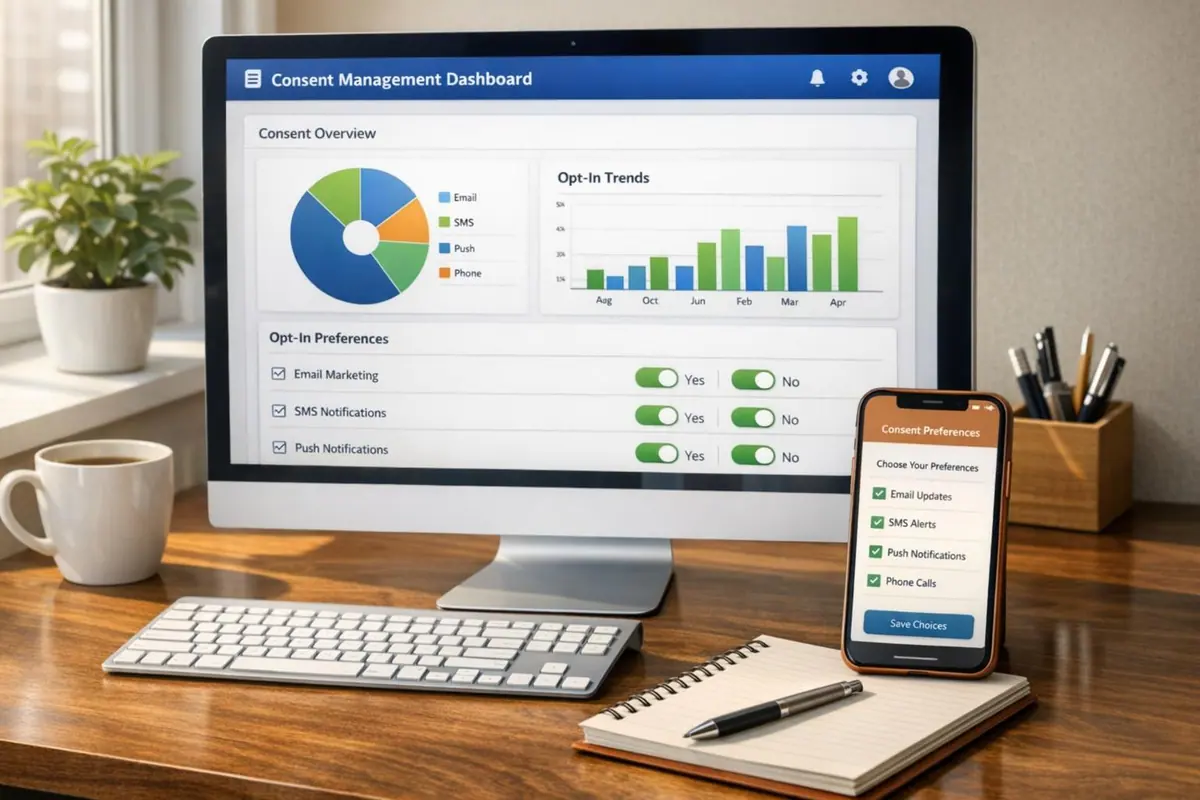
Managing consent effectively in multi-channel campaigns is critical for compliance and building trust with your audience. Non-compliance with regulations like TCPA or GDPR can lead to hefty fines and damage your brand's reputation. For example, TCPA violations can cost $500–$1,500 per unauthorized communication, and companies like Capital One and Steve Madden have faced multi-million dollar lawsuits for failing to secure proper consent. Here's how to get it right:
- Granular Consent Options: Let users choose specific communication channels (e.g., email, SMS, push notifications) instead of bundling permissions into one checkbox.
- Centralized Consent Data: Use a single database to manage and sync preferences across all platforms to avoid errors and ensure compliance.
- User-Friendly Forms: Design clear, mobile-optimized forms with visible disclosures and avoid coercive tactics like pre-checked boxes.
- Regular Audits: Keep detailed records of consent (who, when, and how) and schedule routine compliance reviews to stay ahead of regulatory changes.
These steps not only help you avoid legal risks but also show your audience that you respect their preferences, leading to stronger engagement and loyalty. Start small - focus on one improvement, like centralizing your consent data or updating your forms - and build from there.
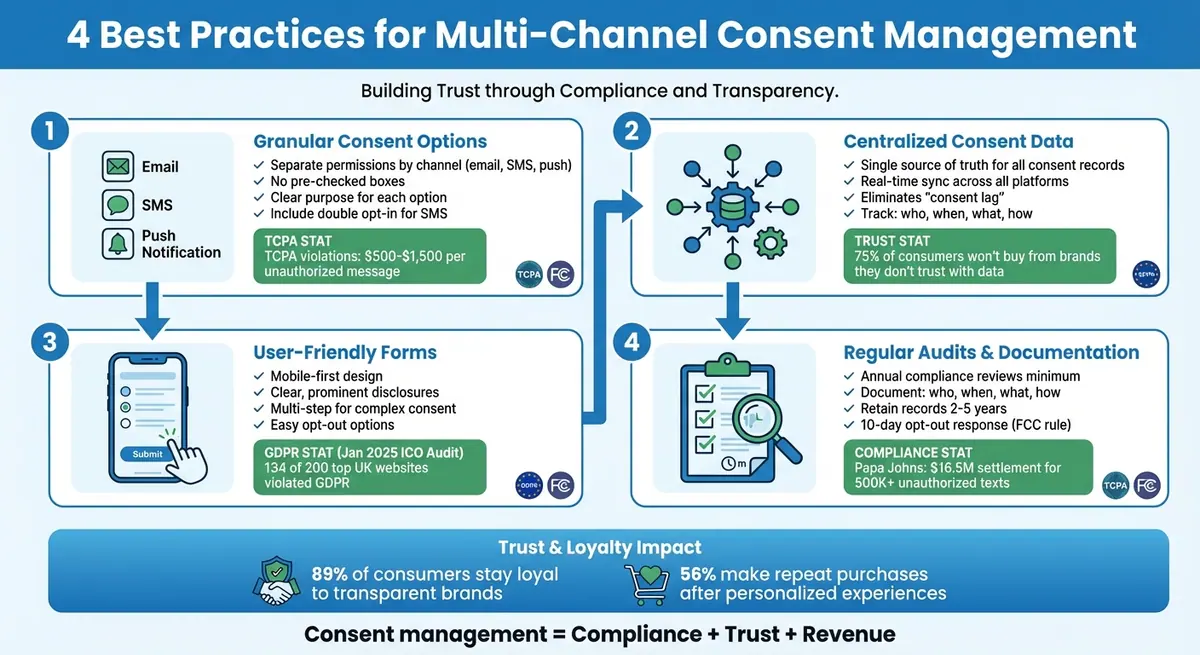
4 Best Practices for Multi-Channel Consent Management Compliance
Multichannel Compliance Consent Method and Content
Offer Granular Consent Options
Under regulations like GDPR and TCPA, bundled consent simply doesn't cut it. A single checkbox that lumps together permissions for email, SMS, and push notifications is considered invalid. Offering granular choices not only ensures compliance but also demonstrates respect for user preferences, which helps build trust. For instance, someone might enjoy receiving your weekly email newsletter but prefer not to get promotional texts. Forcing users into an all-or-nothing decision risks frustrating them or driving them away with unwanted messages.
Customize Consent for Each Channel
To meet compliance standards and respect user preferences, design consent forms that separate permissions by communication channel. For example, include unchecked checkboxes for each type of communication. This setup ensures users actively choose to opt in, rather than being defaulted into receiving messages.
Be strategic with disclosures. For example, if you're collecting SMS consent, include notices like "Msg & data rates may apply" right below the phone number field and above the submit button. Additionally, make sure options like "Reject All" or "Customize" are as visible and accessible as the "Accept All" button. This avoids using coercive design tactics, which can be a compliance red flag.
"You must make your consent requests specific to the purpose. This will generally require providing your subscribers and users with granular options about each purpose you want to use storage and access technologies for."
These principles set the stage for practical, channel-specific consent options.
Examples of Channel-Specific Consent
Here’s how granular consent can work in practice. Instead of a single checkbox saying, "Yes, contact me", break it into clear, purpose-driven options like these:
- ☐ Send me weekly email updates on new products and promotions
- ☐ Send me SMS alerts for flash sales (about 4 messages per month)
- ☐ Send me push notifications for order updates and shipping confirmations
Each option specifies both the channel and its purpose, so users can choose exactly how they want to hear from you. For instance, someone agreeing to receive transactional shipping updates won’t accidentally end up subscribed to promotional marketing.
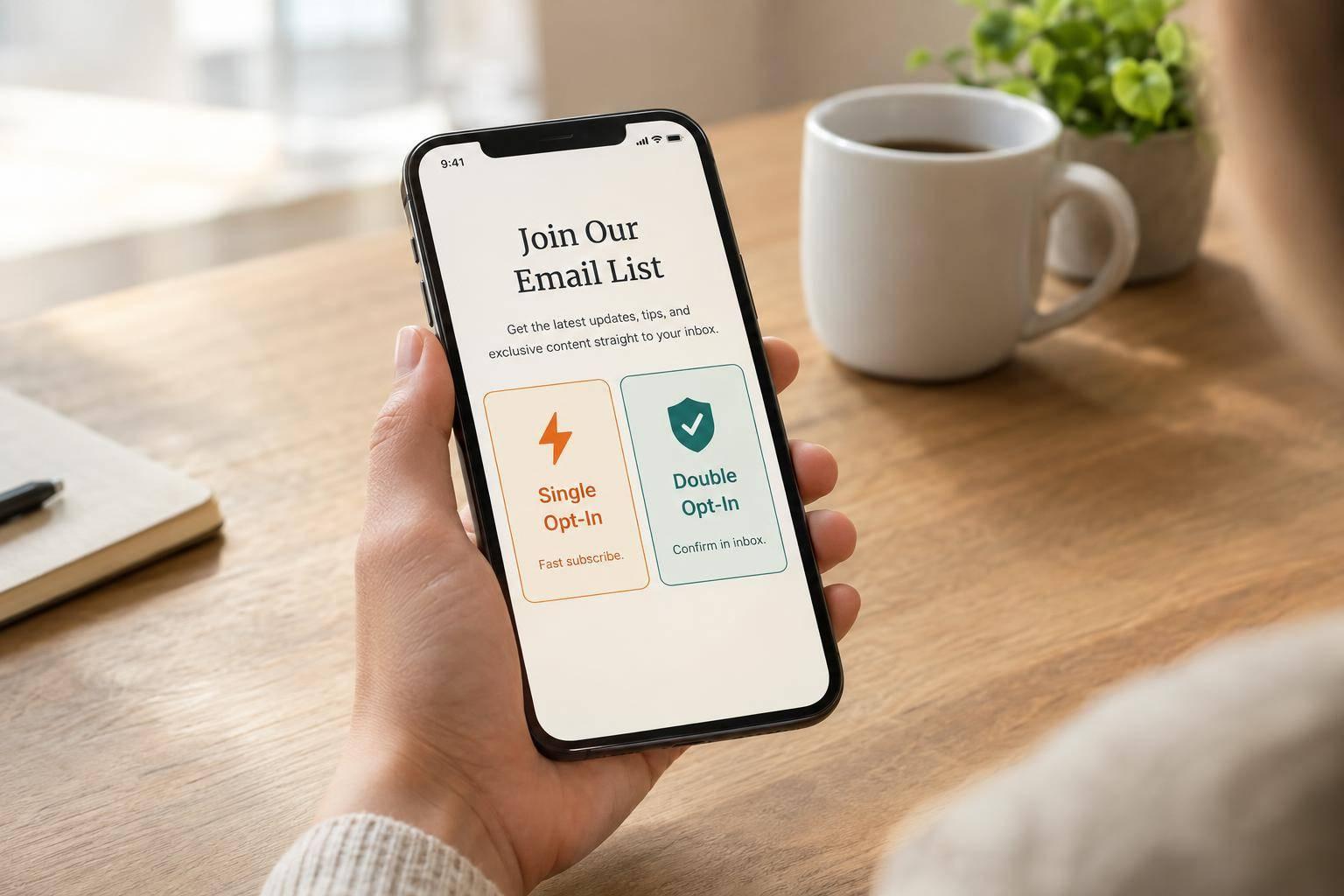
To strengthen compliance and reduce errors, consider adding safeguards like a double opt-in system. For example, after someone selects the SMS option, send a confirmation text that requires them to reply "YES" to complete the sign-up. This extra step not only prevents accidental subscriptions but also creates a stronger compliance record. And with TCPA violations costing $500 per unauthorized text - or up to $1,500 if deemed intentional - these precautions are well worth it.
Centralize Your Consent Data
When consent records are scattered across different channels, it opens the door to compliance risks. Imagine a situation where a user opts out of text messages in your CRM, but that change doesn’t sync with your SMS tool. You’d still be sending unauthorized texts, exposing your business to potential TCPA fines. By centralizing consent data in one place, you ensure that all systems are updated with real-time, consistent preferences. This approach not only reduces errors but also makes compliance audits much easier.
Benefits of a Single Consent Database
A centralized consent database ensures your records stay consistent and audit-ready. For instance, if a user unsubscribes from promotional emails, that update should automatically sync across all tools and channels you use. Without this centralization, you risk fragmented data, inconsistent opt-out statuses, and unauthorized communications.
Having a single database also simplifies audits. Instead of digging through multiple platforms to find proof of consent, you’ll have one detailed record at your fingertips. This record will show who consented, when, what they were told, and how they gave their consent - complete with timestamps, IP addresses, and even the exact form version they saw. This level of documentation is precisely what regulators expect during compliance checks.
And let’s not forget the trust factor. 75% of consumers say they won’t buy from companies they don’t trust to handle their data responsibly. By managing consent transparently and effectively, you demonstrate to your customers that their preferences truly matter.
Connect Consent Tools with Your Marketing Stack
Most marketing automation platforms only offer a basic "yes/no" option for consent, which falls short of today’s compliance standards. As Param Gopalasamy, Consent & Preferences Content Lead at OneTrust, explains:
"Most marketing automation platforms only have a 'yes/no' field for consent – which doesn't scratch the surface of compliance requirements today".
To address this, integrate your consent management system with your CRM and marketing tools using native integrations or APIs. For example, OneTrust offers integration modules for platforms like Salesforce Marketing Cloud, HubSpot, and Marketo, enabling real-time synchronization of consent and preference data across web, mobile, and even Connected TV channels. This seamless synchronization eliminates "consent lag", where a user unsubscribes but continues receiving messages because the systems haven’t updated yet.
If you’re using Reform to collect leads, its built-in integrations with CRMs and marketing platforms automatically transfer consent data as soon as someone submits a form. This real-time sync ensures your marketing efforts only target individuals with valid, up-to-date consent, helping you stay compliant while building customer trust.
sbb-itb-5f36581
Design User-Friendly Consent Forms
Once you've centralized your consent data, the next crucial step is presenting it in forms that are clear and easy to navigate. Think of your consent form as the first real impression of your consent practices. If it's confusing or feels manipulative, trust can erode instantly. The UK Information Commissioner's Office sums it up well: "Consent requests need to be prominent, concise, easy to understand and separate from any other information such as general terms and conditions". By creating forms that respect your users' time and intelligence, you not only encourage higher opt-in rates but also ensure compliance with regulations.
This transparency ties seamlessly into earlier strategies, reinforcing trust and consistency across all your channels.
In January 2025, the UK ICO audited 200 of the country’s most-visited websites and discovered that 134 were violating GDPR cookie rules. Many of these violations stemmed from poorly designed forms, like pre-ticked boxes or consent requests buried in dense legal language. These aren't just compliance failures - they're missed chances to foster meaningful connections with your audience.
Build Mobile-First Consent Forms
The reality is, most users will encounter your consent forms on their phones rather than desktops. If your forms aren’t optimized for mobile, you’re adding unnecessary barriers. A mobile-responsive design isn’t optional; it’s essential.
Use readable font sizes and ensure checkboxes are large enough to tap easily. Avoid low-contrast color schemes that make key information hard to see. For example, place your TCPA consent language just below the phone number input field but above the call-to-action button. This natural placement ensures users notice it as they fill out the form. You can also simplify the process by incorporating mobile-native options like QR codes or "text-to-join" keywords, which meet users in the spaces they already frequent.
Break Complex Consent into Multiple Steps
If you need to collect consent for multiple purposes or communication channels, cramming everything into a single block can overwhelm users. Instead, consider breaking the process into smaller, more digestible steps. A multi-step approach allows you to present each consent request individually, making the experience less daunting.
For instance, start by asking qualifying questions to understand user preferences. If someone shows interest in SMS updates, display the TCPA disclosure for text messages. If they only want email updates, skip the SMS consent entirely. This dynamic, conditional approach ensures users only see the options relevant to them.
Tools like Reform make implementing multi-step forms with conditional routing straightforward. Begin by gathering basic information, then use logic to show only the consent checkboxes each user needs. And don’t forget - it should be just as simple to withdraw consent as it is to give it. Provide clear opt-out instructions from the outset.
Audit and Document Your Consent Practices
Once you've streamlined how you collect consent and centralized your data, the next critical step is building a strong auditing and documentation process. These practices are the backbone of maintaining compliance. Under GDPR Article 7, it's your responsibility to prove that an individual consented to the processing of their personal data. Similarly, for TCPA compliance, proper documentation is your legal safety net. Without it, you could face lawsuits costing anywhere from $500 to $1,500 per unauthorized call or text.
Think of your consent records as your legal insurance. For example, in 2013, Papa Johns faced a $16.5 million settlement after sending over 500,000 promotional texts without proper consent.
Schedule Regular Compliance Audits
Regulations are constantly changing, and your compliance efforts need to keep up. Regular audits help you identify and fix potential issues before they become major problems. Aim to conduct annual compliance reviews, paired with staff training on any regulatory updates. Some companies go even further, opting for quarterly updates to stay ahead of evolving laws.
During audits, ensure your records include all key details:
- Who consented (e.g., name or ID)
- When they consented (timestamp)
- What they were told (specific version of the form or privacy policy)
- How they consented (method used)
Double-check that your disclosure language is clear, concise, and stands out from general terms and conditions. Also, make sure withdrawing consent is as easy as giving it - think one-step processes like "STOP" for SMS or a single-click unsubscribe link for emails.
If you work with third-party vendors, such as marketing agencies or lead providers, verify their compliance practices. Ensure their documentation aligns with the specific leads they’ve provided you. And don’t forget: as of April 11, 2025, the FCC requires businesses to honor opt-out requests within 10 business days.
Keep Detailed Consent Records
Your audit trail should be airtight. Track essential metadata like IP address, device, timestamp, and the version of the consent form used. Store these records securely - ideally with a trusted third party to avoid any perception of tampering. Retain them for 2–5 years to safeguard against potential legal challenges. For web cookies, a retention period of at least 12 months is generally recommended. If you're unsure about the validity of older consents, the ICO advises refreshing them at least every two years.
For added security, consider using cryptographic hash functions to prove that consent records haven’t been altered since they were created. Some businesses are also turning to session replay technology, which captures a visual record of the exact disclosure text a consumer saw before consenting. This creates a tamper-proof audit trail that can be invaluable if you ever need to defend your practices in court.
Conclusion
Effectively managing multi-channel consent does more than just help you avoid fines - it strengthens trust between your brand and your customers. By adopting practices like offering detailed consent options, centralizing data, simplifying forms, and conducting regular audits, you show customers that their preferences truly matter. Consider this: 89% of consumers stay loyal to brands that are transparent about data use, and 56% are likely to make repeat purchases after receiving a personalized experience. But personalization only works when it’s built on genuine, informed consent.
Regulations continue to shift - whether it’s the FCC’s 10-day opt-out rule or emerging state-level "mini-TCPA" laws - but the core principle remains the same: transparent and respectful consent fosters both loyalty and trust. When you empower people to control how they’re contacted, you’re doing more than staying compliant. You’re building trust, which leads to stronger engagement and, ultimately, higher revenue.
Think of consent management as an investment in your brand’s future. Businesses that excel in this area often view privacy as a competitive edge. The way you handle consent directly influences your reputation, customer loyalty, and long-term profitability.
The best way to start? Focus on one actionable step at a time. Maybe it’s adding specific channel options to your forms, centralizing how you manage consent, or setting up your first compliance audit. Each step you take not only improves compliance but also strengthens the trust customers have in your brand.
FAQs
How do granular consent options help ensure compliance in multi-channel campaigns?
Granular consent options give users the ability to choose how they want to be contacted - whether it's through email, SMS, or voice - and for what reasons, like promotions or updates. This method aligns with regulations like GDPR, which demands clear and specific consent for each activity, and TCPA, which requires explicit permission for calls or texts. By using separate toggles or checkboxes for each channel and purpose, businesses not only stay compliant but also establish a clear audit trail.
When users feel in control of their preferences, they're less likely to feel overwhelmed, which can boost retention and engagement. Research shows that customizable options - like letting users pick the frequency or type of content - can cut unsubscribe rates by as much as 30%. Plus, tools like no-code form builders make it easier to include these choices in forms, log consent records, and sync everything seamlessly with your CRM, simplifying compliance management across all communication channels.
Why is centralizing consent data important for your marketing strategy?
Centralizing consent data creates a single, dependable hub for managing customer preferences while staying compliant with regulations like GDPR and TCPA. By keeping all opt-in, opt-out, and preference information in one place, you can ensure every email, text, call, or social interaction respects the latest customer choices. This not only reduces the risk of compliance violations but also makes audits much simpler.
A unified consent system also opens the door to real-time audience segmentation. This means you can send personalized messages through the channels your customers prefer - without the hassle of juggling multiple lists. The result? More relevant campaigns and better ROI. Plus, keeping records or certificates of consent on file provides peace of mind during regulatory reviews and shields your business from potential fines.
Tools like Reform, a no-code form builder, make this process painless. With features like multi-step forms and conditional logic, Reform captures consent right at the start and syncs it automatically with your marketing systems. This ensures your consent data stays accurate and up-to-date, powering both compliant and effective campaigns.
Why is it important to review and update consent practices in marketing?
Regular check-ups on your consent practices aren't just a good idea - they're essential for staying aligned with privacy regulations like GDPR, CCPA, and TCPA. Laws and industry standards shift over time, and relying on outdated consent records or unclear language can put your business at risk of legal troubles, hefty fines, or even damage to your reputation.
Conducting audits does more than just keep you compliant - it helps you maintain a solid record of consent. This not only ensures you're prepared to prove compliance if necessary but also strengthens trust with your audience. Plus, routine reviews give you the chance to fine-tune consent prompts, refresh disclosures, and confirm that your withdrawal mechanisms work seamlessly. All of this keeps your multi-channel campaigns running smoothly and within legal boundaries.
Related Blog Posts
Get new content delivered straight to your inbox

The Response
Updates on the Reform platform, insights on optimizing conversion rates, and tips to craft forms that convert.


Drive real results with form optimizations
Tested across hundreds of experiments, our strategies deliver a 215% lift in qualified leads for B2B and SaaS companies.
