
.webp)
How Consent Data Improves Lead Quality



Consent data ensures businesses target only those genuinely interested in their products or services. By collecting explicit permissions - like opt-ins for emails or calls - you filter out bots, incomplete profiles, and low-intent users. This approach leads to smaller but higher-quality lead pools, improving engagement and conversion rates.
Key points:
- Better leads: Users who opt in are more likely to convert.
- Compliance: Regulations like GDPR and upcoming 2025 FCC rules demand clear, documented consent.
- Smarter segmentation: Group leads by consent preferences (e.g., newsletters, product updates).
- Efficient campaigns: Focus on high-intent contacts, boosting ROI.
Using tools like Reform simplifies consent collection through multi-step forms, conditional options, and real-time validation, ensuring leads are reliable and compliant.
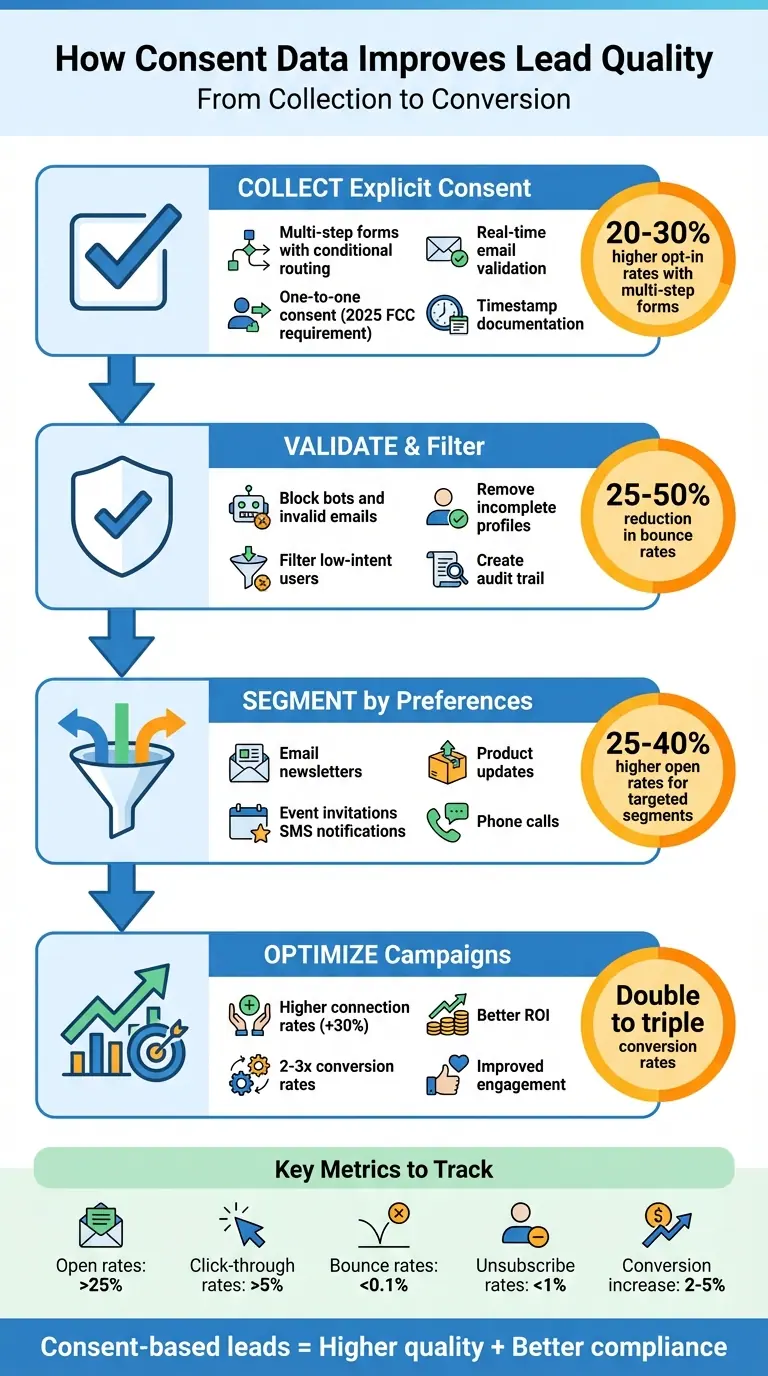
How Consent Data Improves Lead Quality: 4-Step Process
Why Personalization Fails Without Consent and Data Infrastructure
sbb-itb-5f36581
What Is Consent Data in Lead Generation?
Consent data is all about clear, provable permissions that individuals give businesses, allowing them to reach out for specific reasons like marketing or sales. Unlike passive data collection methods, consent data requires people to actively opt in, creating a documented record of what they agreed to, when they agreed, and for what purpose. With the 2025 FCC rules set to ban shared consent forms in favor of one-to-one consent, this level of transparency isn't just a good practice - it’s becoming a legal requirement.
What makes consent data so valuable is the active opt-in process. It shows genuine interest, helping businesses separate serious prospects from bots or incomplete profiles. The result? A smaller but more engaged pool of leads who are far more likely to convert.
Core Elements of Consent Data
To be effective - and compliant - consent data must include these four key elements:
- Explicit Permissions: Users should make a clear Yes/No choice, with no pre-checked boxes to muddy the waters.
- Timestamps: A precise record of when the opt-in happened, which is crucial for audits and accountability.
- Brand-Specific Context: Clear details about what the user is agreeing to, whether it’s a newsletter, product updates, or sales calls.
- Documentation: Proof of how the consent was obtained, which is essential under the upcoming one-to-one consent regulations.
These elements not only help meet regulatory standards but also improve how businesses manage and qualify their leads.
How Consent Data Improves Lead Quality
Using consent data helps businesses focus on leads that are genuinely interested, cutting out unqualified prospects. By prioritizing those who actively opt in, companies can avoid wasting time on broad, unfocused lists. Many businesses that have adopted one-to-one consent report better connection rates and stronger ROI.
Beyond compliance, proper consent practices protect against privacy issues that can harm both finances and reputation. They also ensure your data reflects real customer interest, leading to smarter segmentation, tailored campaigns, and sharper strategic planning.
How to Collect Consent Data
Gathering consent data effectively means balancing compliance with a smooth user experience. The objective is to secure clear, verifiable permissions without creating unnecessary hurdles for users. With the 2025 FCC rules mandating one-to-one consent, it's crucial to design forms that capture specific, brand-linked agreements - vague or generic checkboxes won't suffice.
A smart approach is to break down consent requests into smaller, manageable steps rather than overwhelming users with everything at once. Multi-step forms guide users through a logical sequence, presenting consent requests at appropriate moments during their journey. This method reduces cognitive strain and can increase opt-in rates by 20–30% compared to traditional single-page forms. Privacy expert Kibel explains it best:
Pretend your 80-year-old grandmother is signing up - is she going to understand why she's getting a phone call later?
Conditional routing enhances this process by tailoring consent options to the user's choices. For instance, if someone opts for email updates but not phone calls, they won’t be prompted for SMS consent. This targeted approach avoids irrelevant requests and ensures precise preferences are captured, which improves lead quality for segmentation. These strategies create a solid foundation for using tools like Reform to simplify consent collection.
Using Reform for Consent Collection
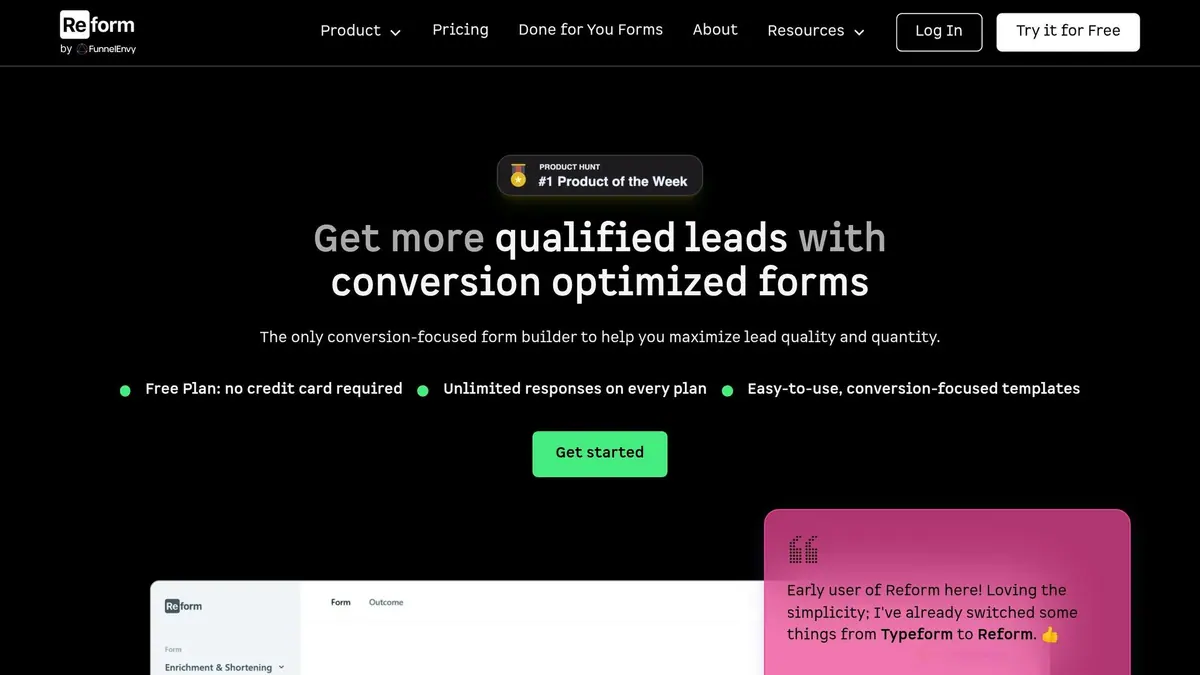
Reform’s multi-step forms allow you to collect consent progressively, presenting requests at natural points in the user journey. For example, a real estate company could first ask about property interests, then direct mortgage-related inquiries to a step requesting call consent - only for those specific leads. This method aligns with best practices for capturing "proof of permission from the first through every moment of capture", reducing invalid leads before they enter your CRM and enabling better lead segmentation.
Reform’s conditional routing further improves opt-in rates by dynamically displaying only relevant consent options. For example, users interested in product demos see demo-related consent requests, while newsletter subscribers encounter email preferences. Each permission is tied to a specific brand and action, meeting the FCC’s one-to-one consent requirements.
Additionally, real-time email validation ensures only valid consents are recorded by filtering out bots. Invalid emails are blocked before submission, reducing bounce rates by 25–50% and maintaining reliable compliance records for audits. This approach doesn’t just increase the number of consents - it ensures you’re collecting valid ones that are more likely to convert.
Form Design Best Practices for Consent
Effective consent collection also relies on well-designed forms that improve lead quality. Use single, prominent opt-in checkboxes with clear, specific language, such as: "I agree to receive calls from [Your Company] about [specific offer]." Place these checkboxes strategically - after demonstrating value, rather than upfront when trust is still being established. Avoid bundling multiple consents together; instead, offer granular options like separate checkboxes for email and phone consent.
Keep forms streamlined by minimizing fields to only what’s essential and using progress indicators in multi-step flows so users know what to expect. Auto-fill known data wherever possible to save time. Regular audits ensure designs remain compliant and can boost conversion rates by 15–20%.
Leverage real-time analytics to identify drop-off points and evaluate consent performance. For example, if phone consent rates drop significantly at step three, you can test simpler phrasing. A/B testing different checkbox wording can lead to a 35% increase in opt-ins, directly linking design adjustments to higher-quality leads with provable, timestamped records.
Using Consent Data for Lead Segmentation
Once you've collected consent data, the next step is to use it for creating targeted audience segments. Instead of blasting the same message to everyone, you can craft campaigns that align with the permissions your leads have granted. This not only keeps you compliant but also boosts engagement by focusing on leads who have shown interest in specific topics.
Since each consent is tied to a specific brand or purpose, your segmentation strategy should reflect these unique opt-ins. Your CRM needs to accurately log what each lead agreed to and when. Businesses that prioritize quality over quantity often see higher connection rates and better ROI by targeting prospects who have expressed genuine interest rather than taking a one-size-fits-all approach. The key is to segment your audience based on the consent choices they've made.
Creating Segments Based on Consent Preferences
Start by grouping leads according to the types of consent they've provided. For example, you can create distinct segments for:
- Email newsletters
- Event invitations
- Product updates
- SMS notifications
- Phone calls
Each segment represents a different level of engagement and interest. For instance, leads who signed up for email newsletters are perfect for nurture campaigns with regular tips, while those who consented to event invitations are ideal for webinar promotions. Similarly, leads who opted into product updates are prime candidates for upselling opportunities. This granular segmentation helps you identify high-intent buyers versus those who need more nurturing.
Targeted campaigns based on consent preferences often perform better. For example, campaigns aimed at product update subscribers can achieve open rates that are 25–40% higher than generic email blasts because the messaging resonates with their interests. However, it's important to avoid pitfalls like relying on outdated consent data or over-segmenting when your data pool is too small. Regular audits - such as expiring consents after 12 months - can keep your segments accurate and effective. This attention to detail ensures your campaigns run smoothly and deliver better results.
Automating Campaigns with Consent Data
Integrating your CRM with automation tools allows you to streamline segmentation and campaign management. Platforms like HubSpot and Zapier can sync consent data directly from forms into your CRM. For example, if a lead selects "Yes, send me product updates", that preference is automatically assigned to the correct segment without requiring manual input.
Once the data is synced, automated workflows can trigger campaigns tailored to each segment. For instance, a lead who consented to event invitations might automatically enter a sequence that sends webinar reminders. Similarly, leads who opted out of phone contact are excluded from call lists. This automation respects user preferences while also maintaining the detailed records needed for FCC compliance.
To gauge success, monitor key metrics such as:
- Open rates (aim for over 25%)
- Click-through rates (above 5%)
- Conversion increases (2–5%)
- Bounce and complaint rates (below 0.1%)
- Unsubscribe rates (under 1%)
When your campaigns are built on verified, one-to-one consent, these numbers tend to improve naturally. After all, you're only reaching out to people who genuinely want to hear from you.
Measuring Lead Quality Improvements from Consent Data
Tracking the right metrics is essential when transitioning to consent-based segmentation. Companies moving away from vendor-provided lists to focus on explicit consent have seen better results and higher ROI. The trick lies in knowing which metrics to monitor and using analytics tools to catch trends early. Let’s break down the metrics that highlight these improvements.
Metrics That Show Lead Quality Improvements
Certain metrics clearly reflect the success of consent-based strategies. For instance, email lists built on consent often achieve 20–30% higher open rates and better click-through rates (CTR), thanks to more engaged recipients. Connection rates can improve by 30%, and conversion rates may even double or triple as unengaged or low-quality prospects are filtered out.
Beyond engagement, keep an eye on cost-per-lead and ROI. Consent strategies help reduce inefficiencies by removing invalid or outdated data, resulting in a cleaner and more efficient sales pipeline.
To measure success, compare your metrics before and after implementing consent-based segmentation. For example, if your email open rate was 15% and increased to 35%, that’s a clear indication that consent data is making a difference. A/B testing segmented lists can further validate these results, as long as your sample sizes are large enough to ensure statistical reliability. These metrics collectively demonstrate the improved quality of your leads.
Using Real-Time Analytics for Optimization
Real-time analytics tools, like Reform’s dashboard, let you monitor lead quality metrics instantly, allowing for quick adjustments. This instant feedback highlights the value of well-designed lead forms and precise segmentation. Instead of waiting weeks for campaign results, you can immediately track metrics like consent rates, form completion rates, and engagement patterns. This helps identify issues, such as low consent rates or sudden drops in match rates, which could signal data problems.
For example, if your consent rates hover around 30–40%, it suggests your sample sizes may be too small or unstable, making analytics less reliable. By experimenting with different consent form designs and tracking the outcomes through Reform’s tools, you can push consent rates above 40%, resulting in better data for decision-making.
Exporting consent data in formats suitable for analysis allows you to track long-term improvements, such as better understanding of consent terms and fewer CRM suppression errors. If anomalies arise, AI-based monitoring can help pinpoint issues like segment mismatches or declining match rates before they disrupt your campaigns. This proactive approach ensures your lead quality remains strong and your campaigns stay on track.
Managing Consent Data Over Time
Keeping consent data accurate and up-to-date is critical for maintaining both lead quality and compliance with privacy laws.
Reviewing and Updating Consent Records
Perform regular audits - ideally every quarter - to ensure that consent records accurately reflect user preferences. Check that your CRM flags and marketing systems are properly aligned to avoid unintended communications. Make sure timestamps for consent and withdrawals are logged correctly to create a reliable audit trail. This is essential for demonstrating compliance with privacy laws like GDPR and CCPA. Having accurate consent records also improves segmentation, which helps fine-tune your campaigns for better results.
Making Consent Withdrawal Easy
GDPR Article 7 requires that withdrawing consent must be as straightforward as giving it. Include one-click unsubscribe links in your emails and make "Manage Preferences" options easy to find. Provide granular controls so users can opt out of specific types of communication while staying subscribed to others. This "opt-down" method often keeps users engaged without forcing them into an all-or-nothing decision. Use CRM flag fields - like Yes/No or dropdown menus - to track consent for each communication type. Ensure that any withdrawal requests are synced immediately across all platforms to prevent accidental contact.
Maintaining Compliance and Quality
Managing consent data effectively is an ongoing task that directly impacts your campaigns' success. Assign a dedicated data steward to oversee consent management and ensure your processes remain compliant as privacy laws change. This person should regularly test withdrawal mechanisms and monitor for any issues. Clearly document your withdrawal processes in your Privacy and Cookie Policies, and include links to these policies in consent banners and email footers. Strong consent data practices not only support compliance but also enhance your segmentation strategies, improving the overall effectiveness of your campaigns. Consistent oversight and clear documentation are key to maintaining trust and driving results.
Conclusion
Consent data helps you focus on prospects who are genuinely interested. By collecting explicit permissions and tracking preferences, you filter out bots and invalid contacts, leaving you with leads that are more likely to convert because they’ve already shown interest.
Segmenting leads based on their specific consent preferences - such as opting in for product updates, newsletters, or promotions - allows for more targeted campaigns. This approach avoids wasted outreach and ensures your analytics remain accurate. Without proper strategies, consent rates can often linger around 30-40%, leading to unreliable data. By creating these refined segments, you lay the groundwork for automated workflows that improve overall performance.
Reform simplifies consent collection while improving lead quality. With features like email validation, spam prevention, and real-time analytics, the platform ensures your data is clean and consented. Multi-step landing page forms and conditional routing make it easy to gather detailed preferences without overwhelming users, and its seamless CRM integrations automatically sync consent records across your systems.
Reform's tracking tools also provide a reliable audit trail for GDPR and CCPA compliance. Plus, with built-in A/B testing, you can refine your consent requests over time, boosting both consent rates and the quality of your leads.
Streamlined consent management is becoming essential for success. By focusing on individual consent and high-quality leads, businesses are transforming how they approach lead generation in 2025. Those who prioritize this approach benefit from stronger customer relationships, greater efficiency, and higher ROI. With Reform handling the complexities of consent collection, you can concentrate on turning those qualified leads into loyal customers.
FAQs
What counts as “one-to-one” consent under the 2025 FCC rules?
Under the 2025 FCC rules, “one-to-one” consent requires businesses to secure a consumer's prior express written consent for each specific seller. This means consent cannot be broad or shared across multiple sellers. Instead, it must be explicitly granted for each individual seller before they are allowed to send marketing calls or texts.
How long should I keep consent records before re-consenting?
Maintaining consent records indefinitely - or at least until re-consenting becomes necessary - is essential. Detailed documentation plays a key role in ensuring compliance with regulations like GDPR and CCPA. It also provides clear evidence of lawful data processing practices.
Which lead-quality metrics improve most after switching to consent-based lists?
Key metrics for assessing lead quality often include data accuracy, lead qualification, and conversion rates. Tools like real-time lead verification and lead enrichment play a crucial role in improving data quality, making it easier to identify and prioritize high-value leads.
Related Blog Posts
Get new content delivered straight to your inbox

The Response
Updates on the Reform platform, insights on optimizing conversion rates, and tips to craft forms that convert.



Drive real results with form optimizations
Tested across hundreds of experiments, our strategies deliver a 215% lift in qualified leads for B2B and SaaS companies.
