
.webp)
FERPA Compliance for SaaS Tools in Education


Schools and universities handle sensitive student data, making FERPA compliance critical when using SaaS tools. FERPA, a federal law, protects student privacy and mandates strict controls over personally identifiable information (PII). Educational institutions - not vendors - are responsible for compliance, even when using third-party tools.
To stay compliant, schools must:
- Use contracts that define data handling, access, and deletion.
- Implement multi-factor authentication, encryption, and audit trails.
- Regularly train staff on privacy practices.
- Ensure SaaS tools like Reform align with FERPA standards, including secure integrations and data access controls.
While tools like Reform simplify data collection with features like conditional forms and integrations, schools must maintain strong oversight and internal policies to safeguard student information.
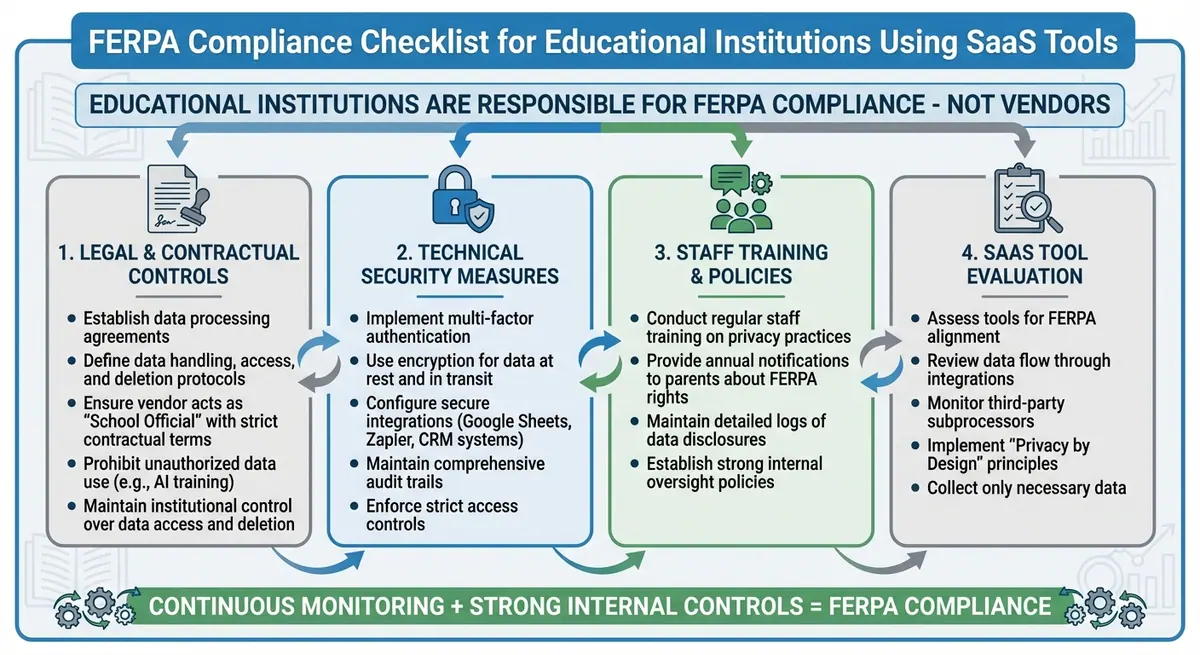
FERPA Compliance Checklist for Educational Institutions Using SaaS Tools
Understanding FERPA Compliance: Safeguarding Student Privacy
1. Reform
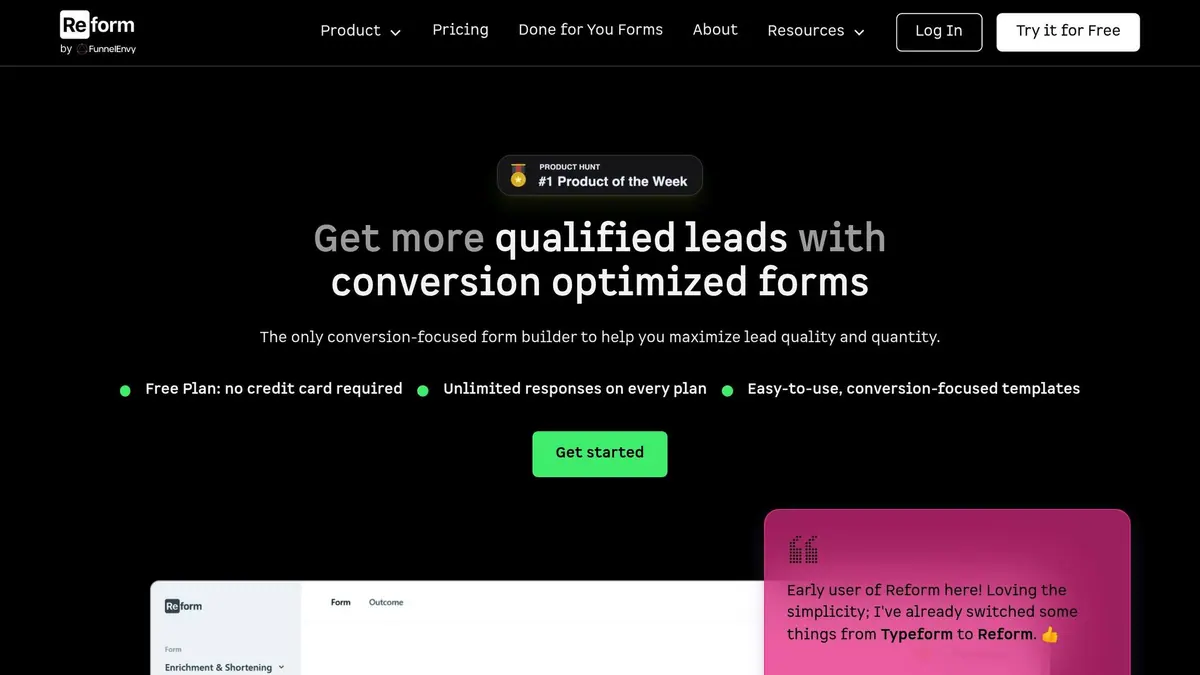
Reform is a no-code form builder designed to streamline the collection of student information, making it a potential tool for schools aiming to meet FERPA standards. With features like multi-step forms, conditional routing, and analytics, it offers a range of options for efficient data gathering. However, schools must carefully assess any SaaS tool, including Reform, to ensure it aligns with FERPA's strict privacy requirements. This section explores the legal responsibilities and technical safeguards necessary for compliance when using tools like Reform.
Governance and Legal Alignment
FERPA places the responsibility for compliance squarely on educational institutions, not the third-party vendors they use. When adopting Reform, schools must establish clear data processing agreements that outline how student information is handled, stored, and deleted. These agreements are critical for addressing FERPA's challenges in the context of cloud-based tools.
Institutions using Reform should ensure they maintain full control over data access, retention, and deletion, irrespective of the platform’s default configurations. A strong legal framework is essential, but it must be paired with technical measures to uphold student privacy and meet FERPA standards.
Data Protection and Security Controls
Reform includes features like spam prevention, email validation, and integrations with CRM systems, all of which can be configured to reduce data exposure risks. For FERPA compliance, schools must carefully review how data flows through these integrations - such as connections to Google Sheets or Zapier - to ensure they meet disclosure rules.
Additionally, institutions should implement strict access controls and auditing practices for any forms collecting student data. For example, Reform’s team access feature allows multiple staff members to manage forms, but schools must closely monitor who has access to sensitive information. Detailed logs of all data handling activities are crucial for maintaining compliance and ensuring accountability.
Privacy By Design in Features
Reform’s advanced features, such as conditional routing and custom CSS, allow schools to create adaptive forms that collect only the data they truly need. However, features like abandoned submission tracking could raise privacy concerns under FERPA and should be used cautiously.
The platform’s headless forms option offers a unique opportunity for schools with technical expertise. This feature enables institutions to implement their own security measures and customize data handling processes, ensuring tighter control over compliance. By building custom integrations, schools can create FERPA-compliant workflows instead of relying solely on Reform’s built-in processing capabilities.
sbb-itb-5f36581
Pros and Cons
Reform brings a range of tools to the table, such as customizable forms, conditional routing, email validation, and spam prevention. These features are particularly useful for educational institutions aiming to simplify data collection while maintaining control over the type of information they gather - an important factor when dealing with sensitive student data.
However, publicly available information connecting Reform's features directly to FERPA compliance is somewhat limited. Since the platform relies on third-party integrations, schools must exercise additional caution to ensure their data handling practices align with FERPA's strict privacy requirements. Reform can serve as a flexible tool for managing data, but institutions should back it up with strong internal policies and regular compliance checks.
In short, while Reform provides helpful features, schools must maintain robust internal controls to ensure full compliance with FERPA regulations.
Conclusion
To wrap up, ensuring FERPA compliance involves a blend of selecting the right tools and maintaining strong institutional practices. When evaluating SaaS tools for data collection, schools must weigh their functionality against the stringent requirements of FERPA. For example, Reform offers features like email validation, spam prevention, and conditional routing, which simplify data collection. However, institutions must pair these tools with rigorous internal measures to stay fully compliant with FERPA regulations.
Under FERPA, any technology vendor acting as a "School Official" is required to adhere to strict contractual terms that limit data use strictly to educational purposes. This calls for detailed data processing agreements. These agreements should clearly define who owns the student data, outline the roles of any subprocessors, and establish ongoing compliance monitoring procedures.
Schools also need to implement strong internal safeguards, such as:
- Annual notifications to parents about their FERPA rights
- Maintaining detailed logs of data disclosures
- Providing regular training for faculty and staff
- Using encryption for data both at rest and in transit
- Enforcing multi-factor authentication
- Keeping comprehensive audit trails
Reform can help manage data collection efficiently, but it’s essential for schools to ensure that vendor contracts include clear FERPA compliance clauses. These clauses should explicitly prohibit unintended uses of data, such as training AI models, and guarantee that the institution retains full control over data access and deletion.
FAQs
How can schools ensure FERPA compliance when using SaaS tools like Reform?
Schools using SaaS platforms like Reform must handle them as an extension of their institution to meet FERPA requirements and protect student data. Start by performing a thorough vendor risk assessment and securing a FERPA-compliant agreement. This agreement should include key safeguards like data encryption, role-based access controls, and audit logs to track how data is managed.
Collect only the data necessary for educational needs, avoiding the storage of excessive personally identifiable information. Tools like data masking or anonymization can add an extra layer of privacy. Additionally, ensure you obtain written consent from parents or eligible students before sharing data outside the institution, and keep a record of these consents for accountability.
Enhance security by implementing multi-factor authentication, adhering to the principle of least privilege, and offering regular FERPA training for staff. Confirm that the platform aligns with your data retention and deletion policies, allows students to access or correct their records, and ensures prompt breach notifications. By integrating these practices, schools can confidently use Reform while safeguarding student privacy and staying FERPA-compliant.
How can schools ensure Reform integrations comply with FERPA requirements?
To ensure compliance with FERPA while using Reform, schools should treat the platform as a service provider subject to strict privacy guidelines. Begin by verifying that Reform’s policies explicitly prohibit sharing student data without consent. Additionally, make sure there’s a signed FERPA-compliant agreement in place that details how data will be used, the security measures applied (like encryption), and access restrictions.
When sharing data, stick to the essentials - only provide information necessary for Reform’s functionality. Avoid sharing unnecessary personally identifiable information (PII). Take advantage of Reform’s built-in privacy tools, such as consent prompts and data-retention controls, to reduce potential risks.
It’s also crucial to maintain ongoing oversight. Conduct regular security reviews, ensure proper breach notification procedures are established, and confirm that Reform continues to follow privacy best practices. By following these steps, schools can confidently use Reform while staying aligned with FERPA requirements.
What are the responsibilities of schools and SaaS vendors under FERPA?
Under FERPA, schools and educational institutions bear the responsibility of safeguarding student data privacy. This involves giving parents and eligible students the right to review and request changes to records, obtaining consent before sharing personally identifiable information (unless specific legal exceptions apply), and putting measures in place to prevent unauthorized access. Additionally, schools must ensure that any third-party service providers they work with adhere to FERPA requirements through formal written agreements.
When it comes to SaaS vendors, they aren't directly governed by FERPA. However, they are considered "school officials" when handling student data. This means they are obligated to use the data strictly for authorized purposes, maintain confidentiality, avoid unauthorized sharing, and inform schools immediately in the event of a data breach. Ultimately, schools are responsible for ensuring these vendors comply with FERPA standards through careful oversight and clear contractual terms.
Related Blog Posts
Get new content delivered straight to your inbox

The Response
Updates on the Reform platform, insights on optimizing conversion rates, and tips to craft forms that convert.


Drive real results with form optimizations
Tested across hundreds of experiments, our strategies deliver a 215% lift in qualified leads for B2B and SaaS companies.
