
.webp)
Public Sector Breach Response Best Practices


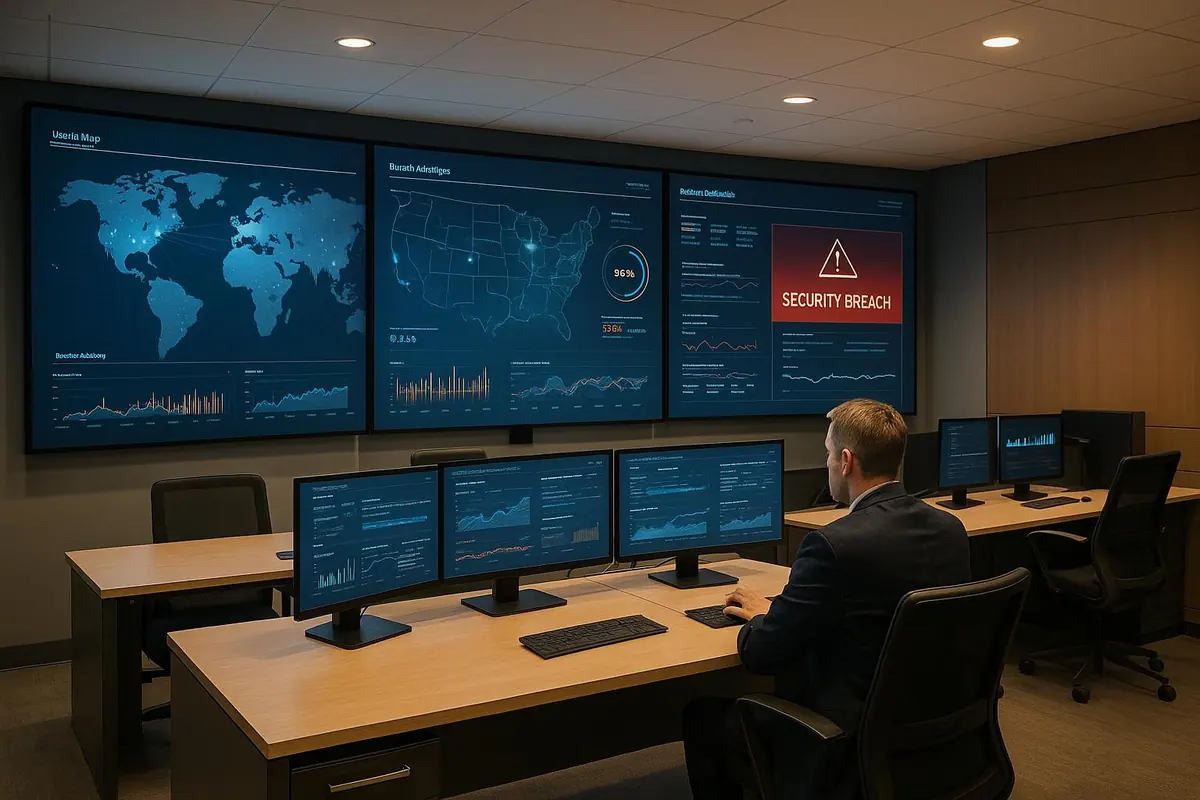
When public sector organizations face data breaches, the stakes are high - ranging from compromised national security to loss of public trust. Here's what you need to know:
- Breach Impact: Breaches can disrupt essential services like emergency response, expose sensitive data (e.g., PII, PHI, FTI), and lead to identity theft or espionage risks.
- Response Protocols: Agencies use frameworks like NIST's five-step process (Identify, Protect, Detect, Respond, Recover) to manage breaches effectively.
- Federal vs. State vs. Local: Federal agencies have centralized resources and strict timelines, while state and local governments face resource constraints and varied regulations.
- Key Challenges: Delayed notifications, inconsistent protocols, and limited budgets hinder effective responses, especially at the local level.
Takeaway: Strong breach response requires clear roles, timely communication, and ongoing improvements. Federal, state, and local governments must adapt to evolving threats while prioritizing public trust and compliance.
What Lessons Did Government Learn From Data Breaches? - CountyOffice.org
1. Federal Government Response Methods
The federal government sets a high standard for breach response in the public sector. Their approach combines strict cybersecurity measures, well-defined team structures, clear notification deadlines, and advanced technology to handle incidents effectively.
Incident Response Team Structure
Federal agencies rely on multi-disciplinary teams to respond to breaches. These teams include experts from IT and cybersecurity, legal, privacy, communications, and business operations. A great example of this is the Centers for Medicare & Medicaid Services (CMS) and its Breach Analysis Team (BAT). The BAT ensures that each team member has a clearly defined role, enabling swift action when incidents occur.
Additionally, federal agencies prioritize collaboration by sharing intelligence across departments and agencies to strengthen their overall response efforts.
Notification Timelines
Once a breach is identified, federal agencies follow strict timelines for notifying affected parties. Federal law requires breach notifications within 30 days of discovery, although delays are allowed if law enforcement deems it necessary for ongoing investigations.
The exact notification process depends on the type and scale of the breach. For example, if a breach involves the protected health information (PHI) of more than 500 individuals in a single state, agencies must notify both the affected individuals and the media within 60 days. For larger incidents affecting over 100,000 individuals, agencies must notify Congress within just seven days.
CMS provides a solid example of how these timelines are managed. During significant breaches, the agency met all notification deadlines while keeping the public informed through its website and call centers. They also handled high call volumes and ensured contractors adhered to approved mitigation plans, showcasing the complexity and precision required in federal breach responses.
Use of Technology
Federal agencies leverage cutting-edge technologies to manage breaches effectively. Automated breach response tools play a critical role by coordinating actions across departments and maintaining detailed audit trails for compliance purposes.
A key element of their strategy is the adoption of zero-trust architecture. This security model requires verification of all users and devices, regardless of their network location, which helps limit access to sensitive data even if a breach occurs.
Forensic tools are another essential component. These tools allow agencies to analyze logs, determine the scope of a breach, and preserve evidence for legal proceedings. Real-time analytics platforms help identify patterns and coordinate responses across multiple systems, ensuring swift action during critical moments.
To maintain compliance throughout the response process, agencies also use automated monitoring tools that track adherence to regulations.
Post-Incident Review
After containment and analysis are complete, federal agencies conduct thorough post-incident reviews. These reviews are treated as opportunities to learn and improve. They include detailed root cause analysis and documentation of both the breach and the response actions taken.
Agencies typically schedule regular review sessions - quarterly or bi-annually - to gather feedback from all stakeholders. The insights gained are then used to update and refine response plans, strengthening their ability to handle future incidents.
Tabletop exercises and simulations are also part of this process. These controlled drills allow teams to practice their responses and identify potential communication or procedural gaps that might not be apparent during actual incidents.
The documentation from these reviews serves multiple purposes. It supports legal and regulatory requirements, aids in audits, and provides evidence for investigations. Combined with proactive measures, these reviews ensure that federal breach protocols are continually improving.
2. State Government Response Methods
State governments have been stepping up their game when it comes to handling data breaches. Many have fortified their cybersecurity measures, with North Dakota and Nevada taking a leading role in 2025 by mandating strong, risk-based cybersecurity programs for financial institutions under state regulation.
Incident Response Team Structure
State-level incident response teams are typically composed of a mix of professionals: a team lead, IT security experts, legal advisors, communication specialists, HR personnel, and risk management representatives. These teams are usually activated through a central security office or the Chief Information Security Officer (CISO). For more severe breaches, states often bring in outside consultants or collaborate with law enforcement agencies for additional support.
A standout example is California's Office of Information Security, which has a detailed protocol for activating cross-agency incident response teams. Their system ensures that specialized expertise can be deployed immediately when a breach occurs.
Similarly, New York's Department of Financial Services has created a dedicated Cybersecurity Incident Response Team to coordinate efforts across various state agencies and departments, ensuring a unified response to incidents.
Notification Timelines
Most states require breach notifications to be sent within 30 to 60 days. For instance, California's SB 1386 sets a 30-day timeframe, while North Dakota's HB 1127 requires notification within 45 days for breaches impacting more than 500 consumers.
In addition to notifying affected individuals, many states also mandate informing state attorneys general or data protection authorities within the same timeframe. When breaches affect a large number of residents, notifications to credit bureaus may also be required. These strict deadlines highlight the urgency states place on addressing data breaches and ensuring timely communication with all stakeholders.
Use of Technology
To tackle breaches effectively, states rely on advanced technology like SIEM systems, EDR tools, and forensic platforms that integrate into automated workflows. These tools help quickly isolate threats and preserve critical evidence. Many states are also adopting zero-trust architectures and continuous monitoring to meet regulatory requirements and enhance security measures.
Advanced endpoint protection and behavioral analysis tools are becoming more common in state breach response strategies. Automated compliance checks and centralized policy controls further streamline response efforts, ensuring consistency across various departments and agencies.
Post-Incident Review
After addressing immediate threats, states focus on learning from the incident. Detailed post-incident reviews are conducted to analyze breach timelines, identify root causes, evaluate containment efforts, and assess the effectiveness of communication strategies. These reviews often lead to updates in response plans to address any identified weaknesses.
Simulations are a key part of this process, helping states test and refine their response strategies. These exercises often reveal gaps in communication or procedures that can be corrected before a real incident occurs.
Metrics are another critical component of these reviews. States track data such as time to detect and contain breaches, the number of individuals affected, adherence to notification timelines, and feedback from those impacted. These benchmarks often align with standards like NIST's incident response guidelines.
Documentation from these reviews serves multiple purposes, from demonstrating compliance during audits to guiding future improvements. Many states conduct these reviews regularly - quarterly or semi-annually - to ensure their procedures stay effective and evolve alongside emerging threats.
sbb-itb-5f36581
3. Local Government Response Methods
In 2024, over 70% of ransomware attacks targeted local governments, with average recovery costs hitting $1.85 million per incident. Despite this alarming trend, only 38% of local governments reported having a fully tested and current incident response plan by 2025. Addressing these challenges requires strategies tailored specifically to the needs and constraints of local governments, which often differ substantially from those at the state or federal level.
Incident Response Team Structure
Local government incident response teams are typically smaller and more adaptable compared to their state and federal counterparts. These teams often include IT security experts, legal advisors, public relations staff, and occasionally personnel from human resources and finance departments. Due to budget limitations, team members frequently juggle multiple responsibilities.
To ensure smooth operations during a breach, local teams must clearly define roles. Key positions include an incident commander, technical leads, and liaisons tasked with coordinating with external agencies and keeping the public informed. This structure provides a clear chain of command and accountability, even when resources are limited.
Many local governments are also proactively partnering with external experts, such as forensic firms and legal advisors, to bolster their capabilities. These pre-arranged contracts bring in specialized knowledge that smaller teams might not have in-house.
Notification Timelines
State laws largely dictate the notification timelines for local governments, generally requiring affected individuals to be informed within 30 to 60 days of a breach being discovered. If the breach impacts more than 500 residents, additional notifications to media outlets and sometimes federal agencies are required.
Meeting these deadlines can be particularly challenging for local governments with limited resources. Unlike state or federal agencies with dedicated communication teams, local governments often rely on small public relations departments or even city managers to handle breach notifications. This makes having pre-established communication protocols critical for maintaining public trust and ensuring legal compliance.
Use of Technology
To improve their ability to detect and respond to breaches, local governments are increasingly turning to technology. Tools such as intrusion detection systems, incident ticketing platforms, and forensic analysis software are commonly used to identify and contain breaches while documenting every step for future investigations.
Emerging technologies like automated alert systems, real-time analytics, and zero-trust architecture are becoming more common. These tools help local governments respond faster to incidents and contain threats more effectively, all while staying aligned with evolving security requirements.
For smaller teams, integrated platforms offering features like incident tracking, automated notifications, and analytics integration are especially valuable. These tools streamline operations and make it easier to manage incidents efficiently.
Post-Incident Review
After a breach, local governments conduct post-incident reviews to evaluate what happened, how the response was handled, and where improvements are needed. While these reviews are becoming more formalized, they often remain less structured than those at the state or federal level.
Tabletop exercises and simulations are gaining traction as a way to test and refine incident response plans. These exercises allow teams to identify weaknesses in communication or processes before an actual breach occurs, which is particularly beneficial for smaller teams with limited breach experience.
Incident ticketing systems play an important role in documenting actions taken during a breach. This documentation not only supports accountability and compliance but also provides valuable insights for post-incident analysis.
Collaboration and information sharing between agencies are also on the rise, allowing local governments to improve their collective threat intelligence and response strategies. Regular review sessions, held quarterly or bi-annually, help refine response plans and training programs, ensuring that local governments are better prepared to handle future threats. These efforts highlight the importance of having efficient and effective breach response protocols in place.
Strengths and Weaknesses Analysis
Each level of government brings its own strengths to breach response while also facing unique challenges. This analysis takes a closer look at how federal, state, and local governments handle breach responses, uncovering areas where they excel and where there’s room for improvement. By understanding these differences, we can identify opportunities to streamline efforts and improve outcomes across the board.
Federal Government: Strong Resources, Slow Processes
Federal agencies benefit from standardized procedures and robust frameworks like HIPAA and FISMA. They also have access to specialized resources, such as the HHS CSIRC, which helps ensure compliance with national regulations. For example, the CMS Breach Response Handbook clearly defines roles, responsibilities, and reporting requirements, making it easier to coordinate efforts.
Cross-agency information sharing is another strength, as it helps improve threat intelligence and speeds up responses. However, federal processes often suffer from delays. Multiple layers of approval, such as obtaining clearance from the HHS PIRT for notification plans, can slow communication with affected individuals and the public. Additionally, the complexity of federal systems and the sheer volume of data involved can make it harder to quickly assess risks and contain threats.
State Government: Adaptable but Uneven
State governments often demonstrate greater adaptability, tailoring their responses to local needs. Some states, like California, have implemented stricter breach notification laws that go beyond federal requirements. California’s emphasis on prompt notifications has proven effective in reducing the impact of breaches by quickly alerting affected individuals.
Despite this flexibility, inconsistency remains a major challenge. Without a unified national framework, protocols vary widely, leading to potential gaps in coverage and response effectiveness. Budget constraints and uneven adoption of best practices also contribute to these disparities.
Local Government: Community-Centered but Underfunded
Local governments excel in community-focused responses. They leverage local relationships to communicate effectively and provide immediate support. For instance, they often notify residents through websites and social media, ensuring timely updates. Additionally, local governments can quickly mobilize resources and partner with community organizations to assist those impacted.
However, limited resources pose significant challenges. Many local governments lack dedicated cybersecurity teams and advanced tools, leaving them vulnerable to sophisticated attacks. The 2019 ransomware attack on Baltimore highlighted both the importance of engaging the community and the struggles caused by insufficient technical capabilities. Research shows that some local agencies take up to 400 days to fully contain a breach, compared to the 280-day average across all sectors.
| Government Level | Key Strengths | Primary Weaknesses |
|---|---|---|
| Federal | Standardized procedures, robust resources, specialized support centers, cross-agency collaboration | Bureaucratic delays, complex approval processes |
| State | Flexible responses, tailored local laws, innovative notification practices | Inconsistent standards, resource disparities, uneven adoption of best practices |
| Local | Community engagement, rapid resource mobilization, direct communication with residents | Limited expertise, financial constraints, longer containment times |
Technology Adoption Patterns
Federal agencies lead the way in adopting advanced cybersecurity measures, including automated compliance monitoring, zero-trust architectures, advanced endpoint protection, and real-time monitoring. State agencies also benefit from some of these tools, but their adoption varies due to differences in funding and resources. Local governments, on the other hand, often rely on more basic cybersecurity measures due to budget and expertise limitations.
Tools like automated alerts, real-time analytics, and zero-trust models are becoming more widespread. Federal agencies frequently conduct tabletop exercises to prepare for breaches, and this practice is slowly being adopted by state and local governments as well. Increased interagency collaboration is helping to close some gaps, but the financial and reputational damage caused by breaches remains a significant concern. Costs often include regulatory fines, legal fees, remediation expenses, and long-term damage to public trust.
Conclusion
The analysis above sheds light on the strengths and challenges faced by federal, state, and local governments in responding to data breaches. Protecting against cyber threats requires a mix of standardized procedures, seamless communication, and flexible strategies. While each level of government has its own capabilities, the most effective responses share certain core principles that can be applied universally.
One of these principles is the importance of clear roles and responsibilities. For example, federal agencies like CMS have shown that having well-defined roles can significantly speed up breach mitigation efforts. This kind of structured approach can be tailored to fit the specific needs and resources of state and local governments.
Another key factor is regular testing and preparation. State and local governments that use automated monitoring tools and conduct routine tabletop exercises have proven to detect breaches faster and limit data loss. These proactive steps allow organizations to uncover and address vulnerabilities before they lead to major incidents.
The push for faster and more transparent reporting is also gaining momentum, driven by regulatory changes.
Investing in automated detection tools and zero-trust architecture is becoming increasingly critical. Leveraging frameworks like the NIST Cybersecurity Framework and ISO 27001 ensures alignment with regulatory standards across all levels of government. Additionally, cross-agency information sharing strengthens collective threat intelligence, enabling smaller agencies to tap into the expertise and resources of larger organizations.
Strong communication and proactive measures are essential to improving breach response protocols. Addressing issues like inconsistent training, unclear roles, and delayed notifications can significantly enhance response effectiveness. Agencies that routinely update and refine their response plans report shorter breach durations and fewer recurring incidents. Metrics such as detection speed, containment time, and the frequency of plan updates play a crucial role in measuring success. By prioritizing these areas and maintaining open communication with stakeholders, organizations can better safeguard public data and uphold citizen trust in an increasingly complex cybersecurity environment.
FAQs
What are the differences in breach response strategies between federal, state, and local governments, and what challenges do they encounter?
Federal, state, and local governments tackle breach response in distinct ways, largely influenced by differences in resources, jurisdiction, and regulatory frameworks. Federal agencies usually benefit from greater resources and well-established protocols, while state and local governments often operate with tighter budgets, smaller teams, and fewer advanced tools at their disposal.
Some of the biggest hurdles include coordinating efforts across multiple agencies, handling public communication effectively, and adhering to a variety of regulatory requirements. For smaller entities, such as local governments, the challenges are even steeper - they frequently rely on outdated systems and lack in-house cybersecurity expertise, leaving them more exposed to potential breaches.
What are the essential steps in conducting a post-incident review, and how can these reviews strengthen breach response strategies?
A thorough post-incident review includes a few essential steps: digging into the root cause of the breach, assessing how well the response process performed, and pinpointing areas that need improvement in both prevention and response strategies. It's important to involve all relevant stakeholders in this process and ensure the findings are well-documented for future use.
These reviews play a crucial role in refining breach response protocols. They shed light on what went smoothly and what fell short during the incident. By addressing these shortcomings and applying the lessons learned, organizations can boost their readiness, shorten response times, and lessen the impact of any future breaches.
What steps can local governments take to address resource challenges while responding to data breaches and maintaining public trust?
Local governments can tackle resource challenges by emphasizing preparedness, teamwork, and open communication. A well-thought-out incident response plan, tailored to the organization’s specific size and capabilities, is a key starting point. This plan should clearly define roles, establish communication protocols, and include regular staff training to ensure everyone is prepared to act effectively when needed.
Partnering with state and federal agencies, along with private sector organizations, can open doors to expertise and tools that might otherwise be out of reach. By pooling resources and exchanging best practices with other agencies, local governments can enhance their ability to respond efficiently while keeping costs in check.
Equally important is maintaining public trust through clear and timely updates. Explaining the breach, detailing the steps being taken to address it, and offering guidance on how individuals can protect themselves shows accountability. Being transparent and proactive underscores a commitment to protecting public data, even when resources are limited.
Related Blog Posts
Get new content delivered straight to your inbox

The Response
Updates on the Reform platform, insights on optimizing conversion rates, and tips to craft forms that convert.




Drive real results with form optimizations
Tested across hundreds of experiments, our strategies deliver a 215% lift in qualified leads for B2B and SaaS companies.
