
.webp)
Top 7 Consent Management Tools for GDPR & CCPA


If your website collects personal data (via cookies, forms, or analytics), compliance with privacy laws like GDPR (EU) and CCPA/CPRA (California) is crucial. Non-compliance risks hefty fines - up to €20M under GDPR or $7,500 per violation under CCPA. Consent Management Platforms (CMPs) simplify compliance by automating consent collection, storage, and enforcement across digital properties. Here are the top 7 CMPs to consider:
- Iubenda: Budget-friendly, ideal for small businesses; supports GDPR and CCPA with location-based consent banners and seamless integrations (Google Analytics, Shopify).
- Usercentrics: Enterprise-grade solution with advanced customization, analytics, and support for global privacy laws.
- OneTrust: Comprehensive platform for large enterprises, combining consent management with privacy governance tools.
- Cookiebot: Affordable, user-friendly, and tailored for small to mid-sized businesses; strong cookie-scanning capabilities.
- TrustArc: Best for regulated industries; integrates consent with vendor risk management and privacy assessments.
- Osano: Focused on ease of compliance for mid-sized businesses; includes a "no fines" guarantee.
- ConsentManager.net: Highly customizable, supports multiple languages, and designed for global businesses.
Quick Comparison
| CMP | Best For | Starting Price | Languages | Google Consent Mode | IAB TCF | Free Plan/Trial |
|---|---|---|---|---|---|---|
| Iubenda | Small businesses | $6.99/month | 30+ | Yes | Yes | Limited free tier |
| Usercentrics | Mid-sized companies | $8/month | 60+ | Yes (certified) | Yes (v2.2) | 14-day trial |
| OneTrust | Large enterprises | Custom quote | 40+ | Yes | Yes | 14-day trial |
| Cookiebot | SMBs, WordPress users | $8/month | 50 | Yes (certified) | Yes (v2.2) | Free for small sites |
| TrustArc | Regulated industries | Custom quote | 45 | Yes | Yes | No |
| Osano | Mid-to-large businesses | $199/month | 30+ | Yes | Yes | No |
| ConsentManager.net | Global SMBs | Contact sales | 30+ | Yes (certified) | Yes (v2) | Varies by region |
Each platform offers unique features tailored to different business sizes and needs. Choose one that aligns with your compliance requirements, user base, and budget.
What is a Consent Management Platform (CMP)?
1. Iubenda
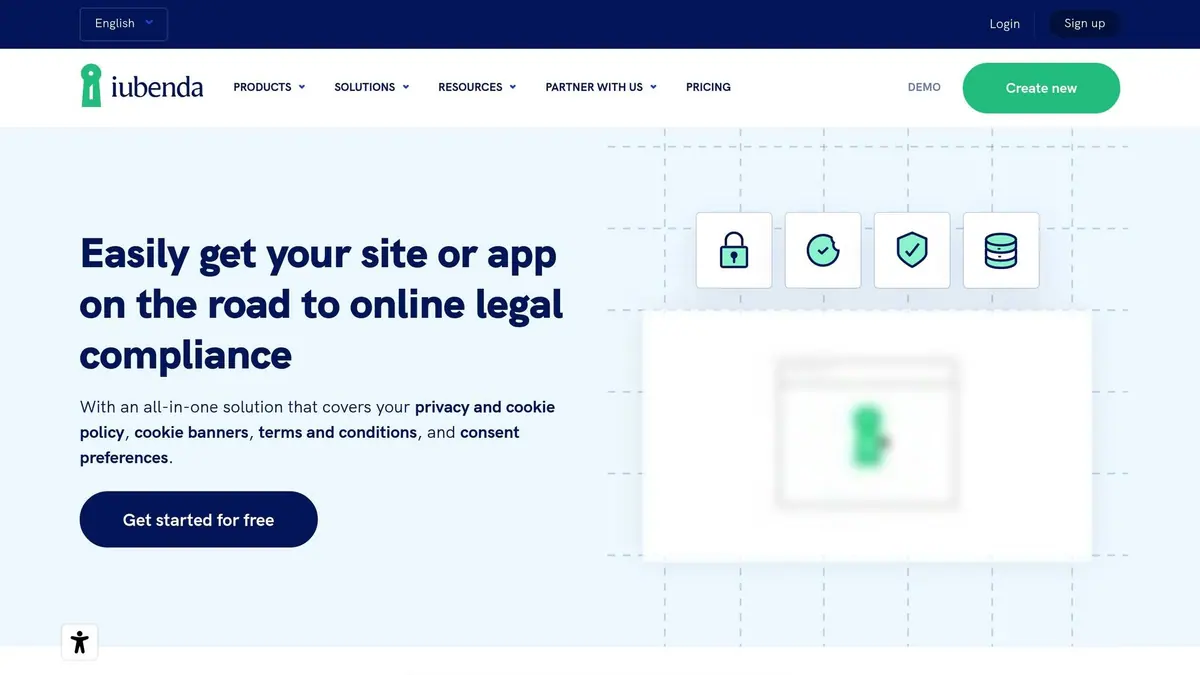
Iubenda is a comprehensive privacy and consent management tool designed to simplify compliance with regulations like GDPR, CCPA/CPRA, and other global privacy laws. It combines cookie banners, consent logs, legal policies, and terms into one easy-to-use platform, making it an ideal choice for small and mid-sized businesses looking to meet legal requirements without incurring high legal or technical costs.
What makes Iubenda stand out is its focus on simplicity and affordability. While some enterprise solutions cater to large-scale governance needs, Iubenda is specifically built for startups, SMBs, and agencies. It offers quick setup, auto-updated legal documents, and hassle-free cookie consent management. Plus, its cloud-based platform supports no-code installation through scripts or plugins for popular platforms like WordPress and Shopify.
GDPR and CCPA Compliance Capabilities
Iubenda is built to handle the core compliance requirements of GDPR and CCPA/CPRA with ease. It offers region-aware consent banners that adapt automatically to the visitor’s location. For users in the EU, the platform displays an opt-in banner that blocks non-essential cookies until consent is given. Meanwhile, visitors from California see compliant opt-out options, including a "Do Not Sell or Share My Personal Information" link as required by law.
The platform also provides pre-built solutions for various data collection methods, such as cookies, tracking technologies, marketing opt-ins (via email or SMS), and data processing activities. By keeping legal documents updated in real time, Iubenda helps businesses - especially those without in-house legal teams - remain compliant as privacy laws evolve.
Integration with Advertising and Analytics Platforms
Iubenda integrates seamlessly with major advertising and analytics tools like Google Consent Mode v2, Google Tag Manager, Google Analytics, Google Ads, and Meta Pixel. This ensures that user consent is respected in real time. When users make consent choices, Iubenda communicates with tag managers to control whether specific scripts are executed. Additionally, the platform supports the IAB Europe Transparency and Consent Framework (TCF), enabling standardized consent signals across the digital advertising landscape.
Its script-blocking and event API features also delay third-party scripts until the necessary consent is obtained, ensuring compliance without disrupting user experience.
Multi-Language and Accessibility Support
Iubenda caters to a global audience with its multi-language support for consent banners and legal documents. These automatically match the visitor's language, which is especially useful for U.S.-based businesses serving international customers. This ensures that users receive privacy information in their preferred language.
On the accessibility side, Iubenda’s consent banners are designed to work with keyboard navigation and screen readers. They can also be customized for contrast, font size, and layout, helping businesses meet U.S. accessibility standards and the Web Content Accessibility Guidelines.
Audit Trail and Consent Record Management
Iubenda maintains detailed, exportable logs that document who gave consent, when, and for what purposes. These logs include information such as the device or IP address used and serve as valuable evidence during regulatory audits. Each record links the consent to a specific banner or policy version, capturing the date, time, and approved purposes or vendors.
The platform also tracks version histories for privacy and cookie policies, ensuring that each visitor’s consent is tied to the exact version they agreed to. For businesses using form builders or lead-generation tools, Iubenda allows easy embedding of consent checkboxes and disclosures into sign-up forms, ensuring consistent consent management across all digital interactions.
Iubenda is often highlighted in industry reviews as a leading consent management solution, with users praising its ease of use, quick implementation, and thorough documentation.
2. Usercentrics
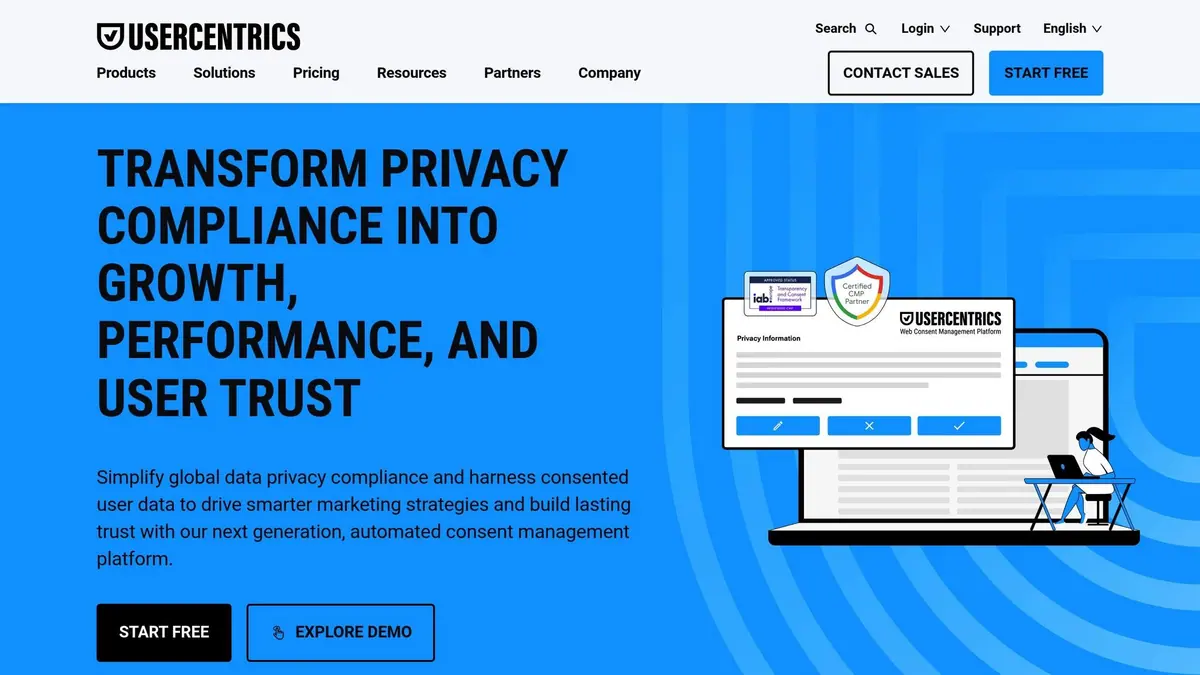
Building on Iubenda's straightforward approach, Usercentrics offers a powerful, enterprise-level solution tailored for businesses that require advanced customization and detailed analytics.
Usercentrics is a Google-certified Consent Management Platform (CMP) designed to handle consent management across websites and mobile apps. It's particularly suited for mid-sized and enterprise-level businesses managing complex marketing systems and navigating varying privacy laws across regions. Unlike basic cookie banner tools, Usercentrics provides extensive customization options, seamless integrations, and in-depth analytics, enabling companies to balance compliance with their conversion goals.
What sets Usercentrics apart is its combination of enterprise-grade features and an easy-to-use interface. Multiple admin roles allow legal teams to establish compliance guidelines while marketing teams can tweak design elements without risking errors. Supporting GDPR, CCPA/CPRA, and other privacy regulations worldwide, Usercentrics is ideal for businesses that need more than a one-size-fits-all solution.
Pricing starts at approximately $8/month per domain, with a 14-day free trial available for new users.
GDPR and CCPA Compliance Capabilities
Usercentrics ensures compliance with GDPR and CCPA/CPRA by offering geo-targeted consent banners that adapt to the visitor's location. For users in the European Union, it displays opt-in banners with detailed toggles for purposes like analytics, marketing, and personalization, while blocking non-essential cookies until consent is granted. For California visitors, it provides opt-out options, including the mandatory "Do Not Sell or Share My Personal Information" link.
The platform supports granular consent management, allowing businesses to configure different legal bases - such as consent or legitimate interest - for various data processing activities. These options are presented clearly to users, ensuring transparency. Usercentrics also integrates with the IAB Transparency and Consent Framework (TCF), a critical feature for companies in the digital advertising space.
By automatically detecting user locations, the platform adjusts banner configurations to meet regional requirements without creating unnecessary friction for users outside those jurisdictions.
Integration with Advertising and Analytics Platforms
As a Gold Tier certified CMP in Google's CMP Partner Program, Usercentrics integrates seamlessly with Google's advertising and analytics tools. It supports Google Consent Mode v2, enabling dynamic control over how Google tags operate based on user consent. Depending on preferences, Google tools can function in full data mode, limited data mode, or be entirely disabled.
Usercentrics also works with major platforms like Google Tag Manager, Google Analytics, Google Ads, YouTube, HubSpot, and Mailchimp. By mapping each service to a consent category, the platform can automatically block or enable scripts and pixels based on user choices. This automation reduces manual errors and ensures that only consented data is shared with marketing tools.
For businesses running complex campaigns, this integration is invaluable. When a user withdraws consent, Usercentrics updates connected platforms automatically, halting data processing for the withdrawn purposes. This feature ensures compliance without the need for manual adjustments across multiple systems.
These capabilities not only simplify compliance but also support efficient consent management and logging.
Multi-Language and Accessibility Support
Usercentrics supports over 60 languages, serving customers in more than 180 countries. For U.S.-based businesses with international audiences, this means you can configure multiple language options - like English, Spanish, French, and German - and set fallback rules. The platform detects a user's preferred language and displays consent notices accordingly, increasing user understanding and reducing legal risks.
This multilingual capability is especially beneficial for businesses targeting both U.S. and Latin American markets. Spanish-speaking visitors can see Spanish-language consent notices, while the primary U.S. audience receives English notices - all managed through a single dashboard.
On the accessibility front, Usercentrics provides customizable consent interfaces that align with brand aesthetics while meeting accessibility standards. These include layouts with proper color contrast, button hierarchies, and support for keyboard navigation and screen readers. Developers can fine-tune features like focus order, labels, and ARIA attributes to create a seamless experience for users with visual, motor, or cognitive impairments, aligning with WCAG standards.
Audit Trail and Consent Record Management
Usercentrics creates detailed consent logs, recording when, how, and for what purposes users provide or withdraw consent. Each log includes timestamps and technical identifiers, offering an audit-ready trail to demonstrate compliance with GDPR and CCPA. These records show exactly which services were active and under what legal basis, providing clear evidence during regulatory reviews or internal audits.
The platform also simplifies access to these logs through dashboards, with options to export data for audits, regulator requests, or data subject access requests. This ensures transparency and accountability, meeting the strict requirements of GDPR and CCPA.
Beyond logging, Usercentrics enables centralized lifecycle management for services and vendors. Privacy and marketing teams can add, update, or remove tools - such as new ad networks or analytics platforms - without requiring heavy coding. When users withdraw consent, the platform automatically adjusts which scripts run and synchronizes changes across connected platforms. For businesses managing multiple domains or apps, Usercentrics synchronizes consent states across properties, reducing the need for users to repeat their preferences.
Additionally, the platform includes an analytics dashboard with A/B testing, allowing businesses to test banner designs, messaging, and timing to improve opt-in rates while staying compliant. Metrics like opt-in rates, rejection rates, and regional differences are tracked, helping businesses refine their strategies. This detailed tracking supports an automated approach to compliance, a hallmark of leading consent management tools.
3. OneTrust
OneTrust provides a robust privacy management platform tailored for organizations with complex compliance needs that span multiple jurisdictions. It’s widely regarded as a go-to solution for consent and privacy management, particularly in regulated industries like finance and healthcare. Unlike simpler consent tools, OneTrust combines its Consent & Preferences product with a comprehensive suite of features, including data mapping, vendor risk management, DSAR workflows, and privacy impact assessments. This makes it particularly well-suited for U.S. enterprises managing numerous websites and apps that operate across state and international borders. Its unified platform ensures precise compliance across diverse digital environments.
The platform’s extensive capabilities allow companies to coordinate efforts across legal, marketing, and engineering teams, streamlining consent management within complex ad-tech ecosystems while maintaining audit-ready records. However, this level of functionality comes at a cost and requires significant implementation efforts. For smaller businesses with straightforward needs, OneTrust might be more than necessary. But for mid-to-large organizations in the U.S. or globally, its scalability and governance tools are hard to beat.
OneTrust offers a 14-day free trial, with pricing determined by the number of domains and modules selected.
GDPR and CCPA Compliance Capabilities
OneTrust helps businesses comply with GDPR, CCPA/CPRA, and other global privacy regulations through configurable banners that adapt automatically based on user location. For instance, EU users see GDPR-compliant opt-in banners with detailed purpose-level consent toggles for activities like analytics, marketing, and personalization. Meanwhile, U.S. visitors encounter CCPA/CPRA-aligned banners, including a "Do Not Sell or Share My Personal Information" link and opt-out options. The platform detects user location, customizes banner configurations, and logs consent details - such as status, timestamp, and purposes - creating an audit-ready trail.
The platform also keeps pace with changing privacy laws by providing regular updates, templates, and workflows. This reduces the workload for in-house legal teams and ensures that consent mechanisms remain compliant, even as regulations evolve.
Integration with Advertising and Analytics Platforms
OneTrust integrates seamlessly with advertising and analytics tools via APIs and tag-based deployments, covering web, mobile, and connected TV platforms. It synchronizes consent signals with tools like Google Analytics, Google Ads, Meta, and programmatic ad networks. APIs ensure consistent consent enforcement across all digital channels, while a centralized vendor list and purpose taxonomy help align multiple tools. Cross-domain synchronization ensures that user preferences on one domain carry over to related properties, promoting a cohesive experience.
Beyond technical integration, OneTrust emphasizes accessibility for global users, ensuring that consent mechanisms are inclusive and functional across various platforms.
Multi-Language and Accessibility Support
Designed for global deployments, OneTrust supports multiple languages, allowing banners, preference centers, and notices to be localized for different markets. For example, a U.S.-based company can set en-US as the default language while adding Spanish, French, or German versions through geo-targeting or browser-language detection. Customizable templates also help organizations meet WCAG guidelines by incorporating features like keyboard navigation, sufficient color contrast, and clear focus states. This ensures that consent experiences are accessible to all users, regardless of ability.
Audit Trail and Consent Record Management
OneTrust keeps detailed, timestamped consent records, tracks banner and policy versions, and generates audit-ready reports on consent trends across platforms. These features help organizations meet GDPR’s accountability requirements and demonstrate compliance during regulatory audits or internal reviews. Additionally, the platform offers advanced A/B testing tools, enabling businesses to experiment with different banner designs and messaging to find the right balance between compliance and user engagement.
For companies using no-code form builders like Reform to capture leads, OneTrust ensures that on-page tracking and data-sharing consent align with overall compliance strategies. For example, it can manage cookies, tags, and vendor settings at the page level while ensuring Reform forms include clear consent checkboxes and privacy notices. This approach ensures that both tracking and structured data collection comply with GDPR and CCPA/CPRA requirements without sacrificing conversion performance.
4. Cookiebot
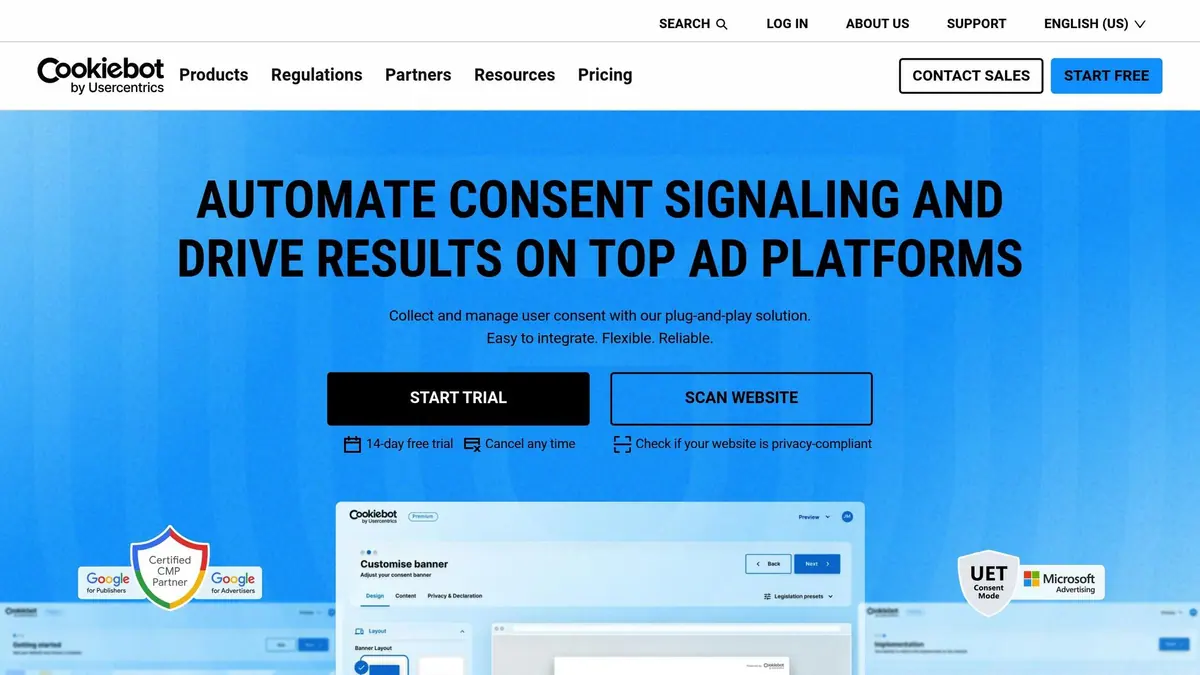
Cookiebot is a Google-certified consent management platform that stands out for its cookie scanning technology and ease of use. It’s tailored for small to mid-sized U.S. businesses and publishers looking for dependable GDPR and CCPA compliance without the complexity of larger privacy tools. With a focus on web consent management, Cookiebot is particularly well-suited for marketing teams leveraging Google tools. The platform offers a free plan for websites with up to 50 pages, while its Premium Lite plans start at about $8 per month per domain. A 14-day free trial is also available. Its compliance features, seamless integrations, and accessibility options make it a strong choice for simplifying web consent management efforts.
GDPR and CCPA Compliance Capabilities
Cookiebot automatically adjusts its consent mechanisms based on the visitor’s location. For users in the EU, it ensures GDPR compliance by blocking non-essential cookies until active consent is given. The consent banner offers clear categories - such as necessary, preferences, statistics, and marketing - allowing users to make granular choices. For California-based visitors, the platform provides a tailored experience, featuring a prominent "Do Not Sell or Share My Personal Information" link and opt-out controls, including support for Global Privacy Control signals.
This geo-targeting capability allows U.S. businesses to manage compliance for both GDPR and CCPA from a single setup. Additionally, Cookiebot supports other regulations like Brazil's LGPD, South Africa's POPIA, and Virginia's VCDPA. Scheduled scans and automatic updates to cookie declarations further reduce the manual work involved in maintaining compliance.
Integration with Advertising and Analytics Platforms
Cookiebot works seamlessly with Google Consent Mode v2 and supports IAB TCF 2.2, ensuring scripts only run after receiving proper consent. When deployed via Google Tag Manager, it maps consent categories to control the execution of scripts accordingly. For businesses using no-code form builders like Reform to gather leads, Cookiebot ensures that conversion pixels and analytics scripts on form pages are triggered only after the user provides appropriate consent.
Multi-Language and Accessibility Support
Cookiebot enhances its functionality with support for almost 50 languages, automatically presenting consent banners in the visitor’s browser language. Its banners are designed to meet WCAG standards, offering features like keyboard navigation, proper focus states, and ARIA attributes for screen readers. The banners also include clear color contrasts and intuitive button labels, making them user-friendly on mobile devices.
Audit Trail and Consent Record Management
Cookiebot keeps detailed, timestamped records of user consent, capturing the status for each category along with anonymized identifiers and the banner version displayed. These audit-ready logs are crucial for demonstrating compliance during GDPR or CCPA reviews. Privacy and legal teams can use a centralized dashboard to export consent data and generate reports confirming that tracking scripts were gated based on user choices. Additionally, visitors can revisit and adjust their consent settings anytime through a persistent "Cookie settings" or "Privacy settings" link in the site footer.
Limitations
While Cookiebot excels in web consent management, it does have some limitations. It lacks a native mobile SDK, which could be a drawback for companies needing consent management across both web and mobile platforms. Additionally, its UI customization options, while effective for most scenarios, are relatively standardized compared to more advanced enterprise solutions.
sbb-itb-5f36581
5. TrustArc
TrustArc is a privacy management platform tailored for enterprises, combining consent management with privacy governance tools. It seamlessly integrates consent collection with other critical functions like vendor risk management, privacy impact assessments, and incident response. This makes it particularly well-suited for large U.S. organizations in regulated industries such as finance, healthcare, and SaaS. These industries often require privacy operations to work as part of a unified system rather than as separate processes. TrustArc offers flexibility with both self-service and managed service deployment options, allowing companies to choose the approach that fits their expertise and resources.
The platform is designed to help businesses navigate complex compliance challenges across various frameworks, including GDPR, CCPA/CPRA, LGPD, and other international regulations. While it provides strong consent management features, its real advantage lies in integrating consent workflows with data inventories, vendor assessments, and regulatory mapping. This approach ensures enterprises can maintain detailed consent records while avoiding practices that could mislead users, thanks to built-in compliance tools and templates.
GDPR and CCPA Compliance Capabilities
TrustArc simplifies compliance for businesses by automating consent collection and policy management with geo-targeted banners. For EU visitors, it enforces GDPR opt-in requirements, while for California and other U.S. state visitors, it displays banners with region-specific features like "Do Not Sell or Share My Personal Information" links and opt-out options.
The platform links consent to user or device identifiers and syncs preferences across web and mobile platforms. This ensures that data use - whether for advertising, analytics, or vendor sharing - remains compliant with regional consent and opt-out rules. U.S. businesses can define categories such as "Advertising", "Analytics", and "Functional", and customize notice text to align with state-specific opt-out requirements.
TrustArc also supports cross-device and cross-domain consent synchronization. By associating consent preferences with user identifiers or account logins, it ensures that changes made on one site are reflected across related domains, subdomains, and apps. This reduces the frustration of repeated consent requests and ensures compliance across all digital touchpoints.
Integration with Advertising and Analytics Platforms
TrustArc works seamlessly with tag managers and mobile SDKs, ensuring that tracking scripts only activate after receiving valid consent. It maps tag categories to consent states, so ad tech partners only receive data when users have explicitly granted permission for targeted advertising.
For businesses using forms, TrustArc’s APIs allow form-based consent to be integrated into centralized consent records, ensuring consistency across all data collection points.
Audit Trail and Consent Record Management
Transparency is a key feature of TrustArc. The platform allows businesses to maintain detailed consent logs, track user preferences, and generate reports that are ready for audits. These records include timestamped logs of banner views, consent actions, opt-outs, and versions of notices shown, along with the categories of processing that users accepted or rejected. Logs can be filtered by jurisdiction - such as EU or California - and exported to demonstrate compliance during regulatory reviews, internal audits, or due diligence processes.
For U.S. organizations, this capability is particularly valuable, as it provides clear evidence that consumers were offered appropriate choices and that their preferences were respected throughout data processing. Privacy and legal teams can use TrustArc’s dashboards to monitor consent rates, analyze banner performance, and assess regional compliance. Insights from these reports can guide adjustments to banner design or messaging for better engagement.
Implementation and Limitations
Implementing TrustArc begins with a cookie and tracker audit to identify all technologies in use, such as those for analytics, advertising, personalization, and essential functions. These technologies are then categorized within TrustArc’s consent framework. Businesses configure region-specific rules to differentiate between GDPR opt-in requirements and CCPA/CPRA opt-out rules. The platform is then integrated with tag managers and SDKs to control script behavior and mobile tracking based on stored consent preferences. Ongoing maintenance includes monitoring regulatory updates, revising notice text, and using reporting tools to ensure compliance and optimize consent rates.
That said, TrustArc does have some limitations. Its mobile SDK support is limited, as it lacks native iOS and Android SDKs, and it doesn’t support connected TV (CTV) applications. This makes it less suitable for organizations with significant mobile or CTV operations. Additionally, as an enterprise-focused solution requiring professional onboarding and managed services, TrustArc may not be the best fit for small or mid-sized businesses looking for a straightforward, out-of-the-box cookie banner solution.
6. Osano
Osano is a U.S.-based consent management platform designed to make privacy compliance easier for businesses. It combines tools for automated consent collection with features like legal policy management and vendor risk monitoring. This makes it a solid choice for small to mid-sized U.S. businesses that need reliable GDPR and CCPA/CPRA compliance without the high costs or complexity of larger enterprise solutions.
Osano stands out by offering enterprise-level compliance tools, even in its premium model. It goes beyond basic consent collection by including auto-updating privacy templates and legal policy management. One unique feature is its "no fines, no penalties" guarantee, which promises customers who follow its guidance won't face compliance-related penalties. While its pricing starts at $199/month and there’s no free trial, the platform delivers advanced features like detailed audit trails, GRC integrations, and fully customizable consent banners that match brand aesthetics while meeting legal requirements.
GDPR and CCPA Compliance Capabilities
Osano simplifies compliance by scanning websites to detect tracking technologies, categorizing them by their purpose (like analytics or advertising), and displaying consent banners tailored to the visitor's region. For EU visitors, it enforces GDPR’s opt-in requirements with detailed toggles, letting users accept or reject specific categories of data processing. For California and other U.S. states, it provides banners with clear "Do Not Sell or Share My Personal Information" links and easy opt-out options, ensuring compliance with CCPA/CPRA.
The platform also uses geo-targeting to automatically adjust consent banners based on the visitor's location, eliminating the need for multiple implementations across jurisdictions.
Integration with Advertising and Analytics Platforms
Osano integrates seamlessly with advertising and analytics platforms, ensuring that tracking scripts only activate when users give their consent. As a Google-certified CMP, it supports Google Consent Mode v2, enabling websites to send consent-based signals to Google Analytics and Google Ads. This ensures privacy-friendly tracking by limiting data collection when users decline consent.
You can deploy Osano through Google Tag Manager, allowing it to conditionally trigger tags based on user consent preferences. Additionally, it supports IAB TCF compliance, enabling organizations working with programmatic advertising to communicate consent signals through the IAB Transparency and Consent Framework. This ensures that advertising partners are informed of user choices in real-time.
Audit Trail and Consent Record Management
Osano provides detailed, timestamped logs of all consent actions, capturing information like user actions, consent categories, and banner versions. These records are invaluable for regulatory audits, internal reviews, and due diligence, offering clear proof that users were given appropriate choices and their preferences were honored.
For U.S.-based organizations, these audit tools are especially helpful in demonstrating compliance with CCPA/CPRA. Teams can export logs to show regulators that California residents were presented with clear opt-out options and that any data sharing adhered to their choices. Osano’s reporting dashboards also allow businesses to track consent rates by region, device type, or banner version, as well as monitor how changes to consent language affect user behavior.
These insights help organizations fine-tune their consent strategies while staying compliant. Any updates to consent processes are logged, providing a clear record of changes and their impact.
Osano’s integration with GRC tools takes compliance a step further by connecting consent data to broader privacy operations, such as data mapping, privacy impact assessments, and vendor risk management. This unified approach reduces manual work and ensures that all records are easily accessible during audits or regulatory inquiries.
7. ConsentManager.net
ConsentManager.net offers privacy compliance tools with extensive customization options, making it a great fit for global businesses that need precise control over their consent banners. Designed to meet both European and U.S. regulations, this platform is well-suited for organizations operating across multiple regions.
What makes ConsentManager.net stand out is its combination of technical adaptability and language support. The platform supports over 30 languages, covering all official languages recognized under the GDPR. It even automatically detects each visitor’s preferred language, ensuring consent notices are displayed in their native tongue.
These features provide a solid foundation for compliance while ensuring a smooth user experience.
GDPR and CCPA Compliance Capabilities
ConsentManager.net goes beyond customization by offering robust compliance features. For European regulations like GDPR and ePrivacy, it incorporates Google certification and integrates with Google Consent Mode, ensuring visitors receive compliant opt-in consent mechanisms. For U.S. privacy laws, the platform supports the IAB Global Privacy Platform (GPP) Standard, making it ready for compliance with laws such as CCPA/CPRA, VCDPA, CPA, UCPA, and CAPDP. It dynamically adjusts consent mechanisms based on the visitor’s location, aligning with the relevant legal framework.
Integration with Advertising and Analytics Platforms
The platform is compatible with over 2,500 advertising and analytics tools, helping businesses manage consent across a diverse range of tracking technologies. As a Google-certified CMP, ConsentManager.net supports Google Consent Mode, enabling privacy-safe signals based on user consent. Additionally, its IAB TCF v2 certification ensures seamless integration into programmatic advertising ecosystems by communicating consent preferences in real time.
Multi-Language and Accessibility Support
Beyond its language capabilities, ConsentManager.net is optimized for various devices and screen sizes, including desktop, mobile, AMP, and in-app environments on Android and iOS. The platform also offers full design flexibility, allowing businesses to customize fonts, colors, spacing, borders, text, and logos to align with their brand identity. This ensures that consent banners not only meet legal requirements but also blend seamlessly with the overall website design.
Feature Comparison Table
Choosing the right consent management platform means understanding how they stack up in areas like compliance, integrations, accessibility, audit tools, and pricing. Here's a breakdown:
| Feature | Iubenda | Usercentrics | OneTrust | Cookiebot | TrustArc | Osano | ConsentManager.net |
|---|---|---|---|---|---|---|---|
| GDPR Compliance | Yes | Yes | Yes | Yes | Yes | Yes | Yes |
| CCPA/CPRA Support | Yes | Yes | Yes | Yes | Yes | Yes | Yes |
| Other U.S. State Laws | Limited | Yes (VCDPA, CPA, UCPA) | Yes (multi-state) | Yes (VCDPA) | Yes (multi-state) | Yes (multi-state) | Yes (VCDPA, CPA, UCPA) |
| Global Regulations | Basic | LGPD | LGPD, POPIA, others | LGPD, POPIA | LGPD, APAC laws | LGPD | Multiple |
| Google Consent Mode | Yes | Yes (certified) | Yes | Yes (certified) | Yes | Yes | Yes (certified) |
| IAB TCF Support | Yes | Yes (v2.2) | Yes | Yes (v2.2) | Yes | Yes | Yes (v2) |
| Google Tag Manager | Yes | Yes | Yes | Yes | Yes | Yes | Yes |
| WordPress Plugin | Yes | Yes | Yes | Yes (free) | Limited | Yes | Yes |
| Shopify Integration | Yes | Yes | Yes | Yes | Yes | Yes | Yes |
| Mobile App SDKs | Limited | Yes (iOS, Android) | Yes (cross-platform) | Yes | Yes | Yes | Yes (iOS, Android, AMP) |
| API Access | Yes | Yes | Yes (extensive) | Yes | Yes | Yes | Yes |
| Languages Supported | 30+ | 60+ | 40+ | Nearly 50 | 45 | 30+ | 30+ (all GDPR languages) |
| Auto Language Detection | Yes | Yes | Yes | Yes | Yes | Yes | Yes |
| WCAG Alignment | Basic | Standard | Advanced | Standard | Advanced | Standard | Standard |
| Consent Logs | Time-stamped | Time-stamped | Time-stamped, detailed | Time-stamped | Time-stamped, audit-ready | Time-stamped | Time-stamped |
| Export Formats | CSV | CSV, JSON | CSV, JSON, API | CSV | CSV, custom reports | CSV, JSON | CSV, JSON |
| A/B Testing | No | Yes | Yes | No | Limited | No | No |
| Analytics Dashboard | Basic | Advanced with role-based admin | Enterprise-grade | Standard | Advanced | Standard | Standard |
| Cross-Domain Sync | Yes | Yes | Yes | Yes | Yes | Yes | Yes |
| Starting Price (USD/month) | $6.99 | $8.00 | Custom quote | $8.00 (Premium Lite) | Custom quote | $199.00 | Contact sales |
| Free Plan/Trial | Limited free tier | 14-day trial | 14-day trial | Free up to 50 pages, 14-day trial | No | No | Varies by region |
| Billing Model | Per domain/features | Per domain/traffic | Per domain/modules | Per domain | Custom enterprise | Per domain | Per domain/pageviews |
| Best For | SMBs, budget-conscious | Mid-market, analytics-focused | Large enterprises | SMBs, WordPress users | Global enterprises | Mid-to-large businesses | Global SMBs |
Key Takeaways
Compliance Coverage
All platforms support GDPR and CCPA/CPRA, but their ability to handle other U.S. state laws varies. For example, platforms like Usercentrics and ConsentManager.net cover laws such as VCDPA, CPA, and UCPA, while Iubenda offers more limited support.
Integrations
Cookiebot shines with its free WordPress plugin and built-in integrations for Google Consent Mode and Google Tag Manager, making it a practical choice for smaller U.S. businesses. Meanwhile, Usercentrics, as a Google-certified CMP, offers advanced analytics and A/B testing to fine-tune consent rates.
Language Support and Accessibility
Usercentrics leads in language support with over 60 options and role-based admin features, while TrustArc supports notifications in 45 languages. For companies managing global user bases, this level of flexibility can make a big difference.
Audit and Reporting Tools
Enterprise-focused platforms like OneTrust, TrustArc, and Osano go beyond basic compliance. They offer advanced features such as data mapping, vendor risk management, and comprehensive privacy governance - essential for businesses that undergo frequent audits.
Pricing
For budget-conscious users, Iubenda starts at just $6.99 per month, while Cookiebot and Usercentrics begin at $8.00 per month, with Cookiebot also offering a free plan for small websites. On the higher end, Osano starts at $199.00 per month, and both OneTrust and TrustArc require custom quotes due to their enterprise-level capabilities.
Who Benefits Most?
Smaller teams with straightforward GDPR and CCPA needs might find Cookiebot or Iubenda a good fit. Larger organizations dealing with multiple regulations and complex vendor ecosystems may need the robust features of OneTrust, TrustArc, or Osano, even if it comes at a higher cost.
Conclusion
Choosing the right Consent Management Platform (CMP) hinges on several factors, including your organization’s size, technical capabilities, regulatory risks, and growth goals. The seven platforms discussed - Iubenda, Usercentrics, OneTrust, Cookiebot, TrustArc, Osano, and ConsentManager.net - all offer essential tools for managing consent, but they vary in pricing, integrations, and the range of privacy features they provide. Understanding these differences is key to making a decision that aligns with your business needs.
For small U.S. businesses, platforms with affordable entry-level plans can cover the basics. These tools often include automated cookie scanning, pre-designed templates, and easy-to-implement scripts that simplify compliance efforts.
Mid-sized companies may require more advanced features, such as customization options and detailed data tracking, to improve consent rates and stay compliant across multiple legal frameworks.
Meanwhile, enterprises and highly regulated industries typically need CMPs that go beyond cookie consent. These organizations benefit from platforms that combine consent management with broader privacy tools, like data mapping, vendor risk assessments, DSAR workflows, and audit-ready reporting. Such features are especially valuable for businesses navigating frequent audits or complex compliance scenarios.
The consent management landscape is in constant motion. Privacy laws are expanding beyond GDPR and CCPA, with more U.S. states introducing their own regulations. Regulators are also paying closer attention to consent practices, cracking down on dark patterns and misleading interfaces. At the same time, platform requirements are evolving - Google Consent Mode v2 is now mandatory for personalized ads in Europe, and updates to the IAB Transparency & Consent Framework are reshaping consent processes. Staying ahead of these changes requires a CMP that can adapt to shifting legal and technical demands.
Adaptability should be a top priority when selecting a CMP. Look for vendors that actively update their platforms to comply with new regulations, participate in industry certifications (like Google’s CMP Partner Program), and offer flexible configuration options. These features can help you avoid the expense and disruption of switching platforms later. The best CMPs don’t just check off compliance requirements - they integrate seamlessly with your marketing tools, protect data quality, and support both legal and business goals.
Before committing to a CMP, take the time to audit your current data trackers, pinpoint user locations, and identify the regulations that apply to your business. Match these needs with a platform’s features, and consider running a trial on a high-traffic site to evaluate its performance, ease of integration, and overall user experience. Involving your legal, marketing, and engineering teams early on will ensure the configuration meets compliance standards while aligning with your business objectives. Assign clear ownership - whether it’s a privacy officer, legal team, or marketing operations - to monitor consent performance, refine banner designs using analytics, and keep pace with regulatory updates.
As privacy expectations grow and regulations become more complex, investing in the right CMP now can help build trust with users, avoid penalties, and maintain the data pipelines that drive modern marketing and analytics. The platforms discussed in this article provide the tools you need to stay compliant while supporting your organization’s growth and long-term success.
FAQs
How can I choose the right consent management tool for my business and industry?
When selecting a consent management tool, it's essential to assess your business's size, the specific requirements of your industry, and the compliance standards you need to meet, such as GDPR or CCPA. This ensures the tool you choose aligns with your legal obligations and operational goals.
Look for platforms that offer features like conditional routing, multi-step forms, email validation, and real-time analytics. These capabilities can help you create tailored solutions that not only meet compliance standards but also improve overall efficiency. Prioritize tools that combine functionality with a user-friendly design, making it easier to integrate them into your existing processes while delivering a smooth experience for both your team and your users.
What are the main differences between GDPR and CCPA compliance to consider when choosing a consent management tool?
When picking a consent management tool, it's crucial to grasp the differences between GDPR (General Data Protection Regulation) and CCPA (California Consumer Privacy Act). While both aim to safeguard user privacy, their rules vary significantly:
- GDPR applies to companies operating in the EU or targeting EU residents. It requires businesses to obtain explicit consent before collecting personal data. Additionally, it grants users extensive rights, including access to their data, the ability to correct inaccuracies, and the option to have their data deleted.
- CCPA, on the other hand, focuses on protecting California residents. It prioritizes transparency and allows consumers to opt out of the sale of their personal information. Unlike GDPR, CCPA doesn’t always demand prior consent for data collection but does require clear communication about how data is used.
Selecting a tool that supports compliance with both GDPR and CCPA helps ensure you meet the legal obligations relevant to your audience and geographic reach.
How can I make sure my consent management platform keeps up with changing privacy laws and technical standards?
To keep your consent management platform aligned with changing privacy laws and technical requirements, opt for a solution that focuses on frequent updates and flexibility. Key features to consider include real-time analytics, easy integration with marketing and CRM tools, and extensive customization options.
These tools not only help you navigate regulatory shifts but also ensure your platform supports the evolving technical demands of your business.
Related Blog Posts
Get new content delivered straight to your inbox

The Response
Updates on the Reform platform, insights on optimizing conversion rates, and tips to craft forms that convert.



Drive real results with form optimizations
Tested across hundreds of experiments, our strategies deliver a 215% lift in qualified leads for B2B and SaaS companies.
