
.webp)
Dynamic Scoring for SaaS Lead Generation



Dynamic scoring is a smarter way to qualify SaaS leads. By using AI to analyze user behavior - like trial usage and feature adoption - it predicts which leads are most likely to convert. This approach can boost conversion rates by 75% and improve lead generation ROI by up to 138%. It also helps sales teams focus on high-intent prospects, reducing wasted effort.
Key Takeaways:
- SaaS companies using dynamic scoring achieve nearly double the industry average conversion rate (6% vs. 3.2%).
- Leads contacted within one hour are 7x more likely to qualify.
- Tools like Reform enhance lead quality early by scoring prospects during form interactions.
Dynamic scoring and tools like Reform work best together. While dynamic scoring adjusts lead evaluations in real time, Reform improves lead quality right at the form submission stage. Together, they create a more efficient qualification process.
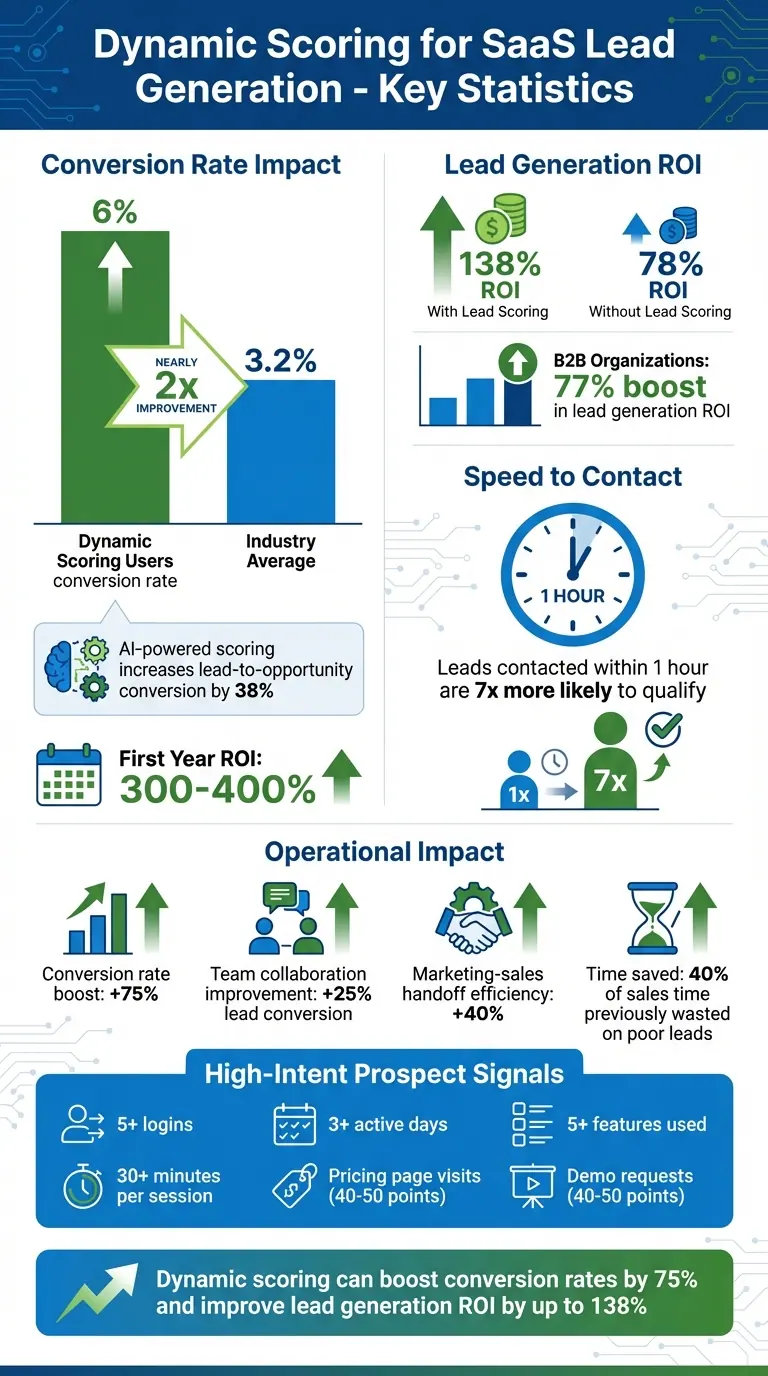
Dynamic Scoring vs Traditional Lead Generation: ROI and Conversion Rate Comparison
1. Dynamic Scoring Systems
Lead Quality Improvement
Dynamic scoring systems dive deep into thousands of data points from successful deals to uncover patterns that predict conversions. Unlike older models that rely on surface-level demographics, these systems focus on SaaS-specific behaviors like login frequency, feature usage, and trial session duration. Without a solid scoring system, sales teams could waste up to 40% of their time chasing leads that don’t pan out.
Machine learning plays a key role here, separating casual interest - like downloading a guide once - from high-intent actions, such as multiple visits to pricing pages. For SaaS companies, setting clear thresholds can make all the difference. Metrics like more than five logins, three active days, and using at least five features often indicate a strong prospect. When implemented effectively, these scoring systems can significantly impact marketing-driven revenue.
Better lead quality naturally paves the way for stronger conversion rates, as explored next.
Conversion Rate Impact
AI-powered scoring can increase lead-to-opportunity conversion rates by 38% and outperform traditional methods by doubling conversion success. Top-performing companies using these tools report a 6% conversion rate - nearly twice the industry average of 3.2%.
Timing also matters. Reaching out to a lead within one hour makes a company seven times more likely to qualify that lead. Dynamic scoring systems enhance team collaboration, boosting lead conversion rates by 25% and improving the efficiency of handoffs between marketing and sales by 40%. These systems also track engagement velocity - the speed at which a prospect’s interactions ramp up - a strong indicator of readiness to buy.
Integration Capabilities
Dynamic scoring systems are designed to integrate smoothly with CRMs through native connectors and APIs. Scores update in real-time as leads interact with emails or website pages, ensuring sales teams always have the latest intent data. Two-way data syncs push these scores back into the CRM, triggering alerts via tools like Slack.
"I think if I took Demandbase away from the sales team, I'd have an uprising on my hands".
Casey Patterson, Manager of Account Based Marketing at Fivetran, underscores how indispensable these integrations can be. By keeping workflows centralized, these systems eliminate the need for constant tool-switching. For example, a lead scoring above 85 might automatically prompt direct outreach from a sales rep.
Customization and Usability
Dynamic scoring systems can be fine-tuned to reflect specific SaaS behaviors, strengthening conversion strategies. Using an interactive multi-step form can further reduce friction while gathering this essential data. They allow users to customize models by selecting variables like lead source, location, or custom tags. Certain actions - like visiting a pricing page - can be weighted more heavily than others, such as reading a blog post. These models retrain automatically every 15 days or after configuration updates, ensuring they stay aligned with evolving buyer behavior.
Explainable AI adds an extra layer of confidence by showing exactly how scores are calculated, making it easier for sales teams to prioritize leads. Manual overrides are also an option, allowing reps to adjust scores for complex deals. To build reliable models, most enterprise systems require historical data spanning three months to two years, along with at least 40 qualified and 40 disqualified leads.
sbb-itb-5f36581
Dynamic Scoring tracks real time engagement to close more sales
2. Reform
Reform leverages real-time behavioral insights from dynamic scoring systems to enhance lead quality right at the form interaction stage.
Lead Quality Improvement
Reform focuses on key decision-stage touchpoints - like demo requests and pricing inquiries - that often carry high point values in dynamic scoring models, typically ranging from 40 to 50 points. The information gathered through Reform forms is directly sent to CRM systems, where it triggers automated scoring updates. For instance, if a C-level executive fills out a form, their score might get a +30 point boost, while prospects from target industries could earn an additional +25 points. By enabling these scoring adjustments in real time, Reform helps SaaS teams distinguish between casual visitors and serious buyers based on intent signals captured during the form interaction.
Conversion Rate Impact
Companies using lead scoring see a 138% ROI on lead generation, compared to just 78% for those without it. Reform ensures lead scores are updated instantly via real-time data delivery through webhooks, so prospects are scored the moment they submit a form. Acting quickly is essential - leads contacted within the first hour are nearly seven times more likely to qualify. Reform also combats form abandonment with sub-second load times, which ensure a steady flow of quality data. This immediate impact on conversions highlights the value of Reform’s technical capabilities.
Integration Capabilities
Reform’s API-first design allows technical teams to programmatically manage forms, while real-time webhooks instantly deliver submission data, triggering lead scoring and routing. Developers can also customize forms with CSS and JavaScript to include tailored logic or tracking scripts for dynamic workflows. Starting at $15 per month on its Basic Plan, Reform was recognized in 2026 as one of the "9 Best Modern Form Builders for SaaS", praised for its performance and developer-friendly features. Its streamlined, conversion-oriented design ensures high completion rates while maintaining the speed necessary to avoid data loss from latency.
Pros and Cons
Dynamic scoring and Reform take distinct approaches to SaaS lead generation. Dynamic scoring thrives on continuous learning, leveraging AI and machine learning to spot patterns and improve accuracy automatically over time - no manual tweaking required. These systems evaluate prospects on two key aspects: "fit" (who they are) and "behavior" (what they do). They also measure engagement velocity to identify leads showing strong purchase intent.
But dynamic scoring isn't without its downsides. If there's not enough historical data to train the system, it can misclassify leads, leading to wasted time and effort on low-quality prospects. Plus, these systems need periodic updates - every 3 to 6 months - to stay aligned with market trends and shifts in buyer behavior.
On the other hand, Reform takes a different route by focusing on the lead capture process itself. Instead of analyzing leads after they've entered the funnel, Reform works to increase the number of qualified leads at the outset. By using server-side tracking (CAPI) and JavaScript triggers, Reform ensures form submissions aren't lost due to modern browser privacy settings - a common issue with traditional pixel-based tracking. With pricing starting at $15 per month, Reform offers immediate improvements in form performance and real-time data delivery.
That said, Reform has its own limitations. It doesn't capture non-visible intent signals from users who browse but don't interact with forms, a gap that dynamic scoring systems fill by tracking user behavior across websites and product usage. Reform collects static data when forms are submitted, while dynamic scoring adjusts lead evaluations in real time as user intent evolves. For businesses with a smaller lead volume, Reform’s straightforward form optimization often proves more practical than deploying complex AI systems that depend on large datasets.
For the best results, combining both approaches could be the way to go. Reform’s efficient lead capture paired with dynamic scoring’s real-time adaptability creates a strong, well-rounded lead qualification process.
Conclusion
Select lead generation strategies that match your SaaS company's stage, data readiness, and sales approach. For early-stage businesses, simple rule-based scoring is a solid start. As your data matures, you can unlock predictive AI scoring, which has been shown to deliver 75% higher conversion rates and a 300–400% ROI within the first year.
Dynamic scoring fine-tunes lead evaluation after capture, but Reform focuses on optimizing the front end of the process. With server-side tracking and enhanced forms, Reform minimizes conversion loss caused by browser privacy settings, ensuring higher-quality leads right from the start.
For product-led SaaS models offering free trials or freemium options, behavioral scoring is especially valuable. Metrics like trial depth - such as users spending 30+ minutes per session or engaging with 5+ features - are stronger indicators of purchase intent than demographic data alone. By combining Reform's optimized lead capture with velocity-based scoring, which tracks how quickly user engagement grows, you can create a comprehensive qualification process that blends these approaches effectively.
Companies that use lead scoring report a 138% ROI, compared to just 78% for those that don't. B2B organizations, in particular, see a 77% boost in lead generation ROI. Start with methods that fit your current lead volume and data capabilities, and introduce more advanced techniques as your funnel evolves.
FAQs
What data do I need to start dynamic lead scoring?
To kick off dynamic lead scoring, start by collecting key data types:
- Demographic and firmographic data: This includes details like job titles, company size, industry, and location.
- Behavioral data: Track actions such as website visits, email interactions, and content downloads.
- Transactional data: Analyze purchase history, deal stages, and reasons behind lost deals.
These insights allow you to fine-tune your scoring models, leading to more effective lead generation strategies.
How do I pick the right actions to weight in a SaaS scoring model?
To build an effective SaaS scoring model, start by identifying the lead attributes and behaviors that best signal conversion potential. Look at your data to pinpoint key actions - like requesting a demo or engaging with specific parts of your website - that correlate with successful conversions. Assign higher weights to these impactful actions within your model.
Make sure to consistently test and adjust these weights based on performance data. This ongoing refinement helps your model stay aligned with your goals and ensures it focuses on leads with the highest likelihood of converting.
How can Reform trigger real-time scoring and routing from form submissions?
Reform integrates data enrichment with automated workflows to deliver real-time scoring and routing. Here's how it works: as soon as a form is submitted, the platform enriches the lead data and instantly directs it to the right team or workflow. This process allows businesses to assess and prioritize leads immediately, enabling faster and more efficient responses.
Related Blog Posts
Get new content delivered straight to your inbox

The Response
Updates on the Reform platform, insights on optimizing conversion rates, and tips to craft forms that convert.


Drive real results with form optimizations
Tested across hundreds of experiments, our strategies deliver a 215% lift in qualified leads for B2B and SaaS companies.
