
.webp)
How AI Chatbots Qualify Leads



AI chatbots are transforming how businesses qualify leads by automating the process, saving time, and improving lead quality. Unlike traditional methods, these bots use natural language processing (NLP) to engage prospects in real-time, ask relevant questions, and instantly assess their potential. This approach reduces delays, eliminates errors, and allows sales teams to focus on high-priority leads.
Key Takeaways:
- Faster Lead Qualification: Chatbots engage prospects 24/7, reducing response times by up to 99%.
- Improved Lead Quality: Real-time data validation and enrichment ensure accurate, actionable insights.
- Higher Conversion Rates: Businesses report 30–50% boosts in lead conversions using AI-driven workflows.
- Efficient Sales Handoff: Tools like Reform integrate with CRMs for seamless lead routing and follow-ups.
By streamlining lead qualification, AI chatbots help businesses identify and prioritize the best opportunities, leading to better sales outcomes and team productivity.
Building An AI Lead Qualifying Chatbot Using Voiceflow (FREE Template)
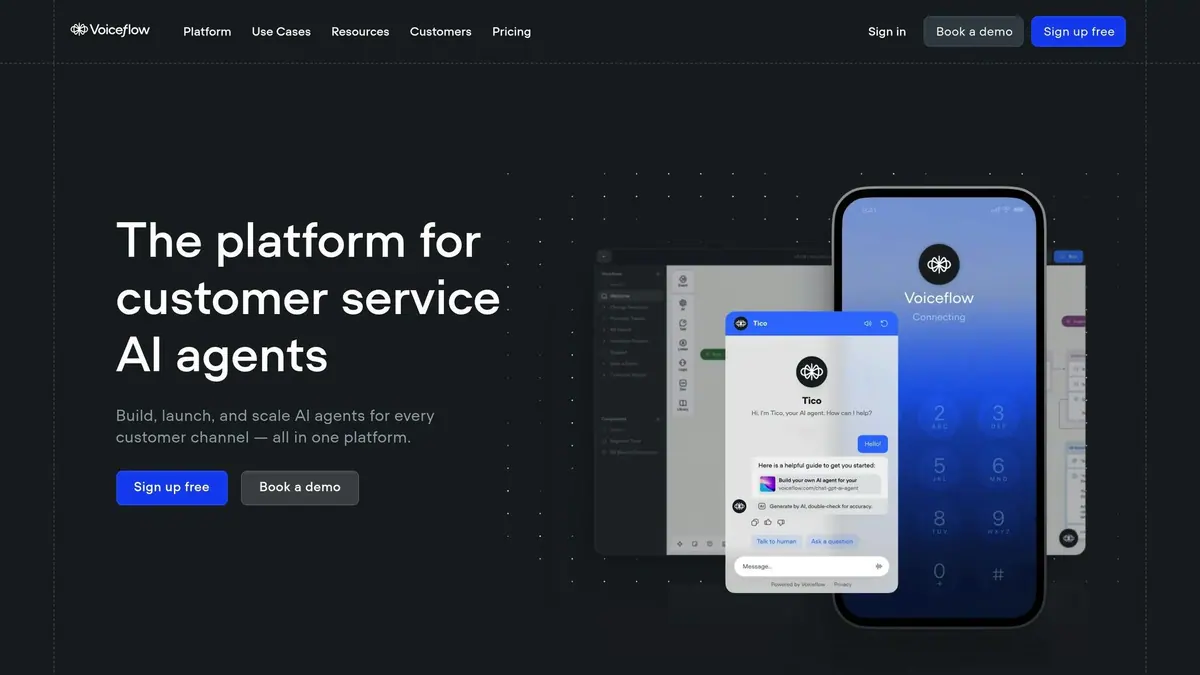
How AI Chatbots Qualify Leads: Core Processes
AI chatbots simplify and speed up the lead qualification process by collecting and analyzing data efficiently. By breaking the workflow into essential stages, these chatbots identify and prioritize the most promising prospects, transforming initial interactions into well-qualified leads.
Lead Data Collection and Enrichment
The process starts with chatbots gathering key information through conversational interfaces. These user-friendly interactions encourage higher completion rates, capturing details such as name, email, company, and job title.
As users provide their information, real-time data enrichment kicks in. For example, when someone enters an email address, the chatbot immediately validates it to catch typos and filter out spam, ensuring only accurate information enters the system. Additionally, chatbots can pull firmographic data - such as company size, industry type, and revenue range - from public sources. This minimizes the need for excessive questions while building a comprehensive lead profile.
Reform takes this step further by integrating multiple data sources simultaneously. It validates email addresses, enriches company details, and incorporates spam prevention tools to ensure only genuine leads move forward in the process.
Chatbots also track engagement metrics like response times and follow-up questions. This behavioral data feeds into scoring models, offering a clearer picture of a prospect's interest and engagement level.
Asking Targeted and Intent-Based Questions
Once the chatbot has verified the basic details, it moves on to targeted questions designed to uncover a prospect’s intent. Using frameworks like BANT (Budget, Authority, Need, Timeline), chatbots gather deeper insights into a prospect’s goals and readiness to buy.
For instance, instead of bluntly asking, "What's your budget?" a chatbot might phrase it as, "What range are you comfortable investing in to solve this issue?" This softer approach makes the conversation feel less intrusive while still gathering vital budget information. Similarly, questions like, "Who else would be involved in evaluating this type of solution?" help determine whether the chatbot is speaking with a decision-maker or someone conducting initial research.
Chatbots also dive into specific challenges by asking about pain points in current processes or the volume of leads managed monthly. Timeline questions, such as "When are you hoping to implement a solution?" help gauge whether the prospect is actively seeking a solution or just exploring options.
Dynamic question adjustments ensure that the conversation stays relevant and engaging, tailoring each inquiry to the prospect’s unique situation.
"Reform makes it easy to send incoming leads down different paths based on rules - maybe one gets a prerecorded demo, while another gets the VIP scheduling link." – Reform
Real-Time Lead Scoring and Prioritization
As prospects respond, the chatbot continuously calculates a lead score based on predefined criteria. With Reform’s integrated analytics, this scoring happens instantly, enabling businesses to make immediate decisions about routing and prioritization.
The scoring model weighs responses differently, giving higher priority to decision-makers or leads from larger companies. Behavioral data, such as how long a prospect stays engaged or how interactive they are, also plays a role in determining the final score.
Based on these scores, prospects are categorized for follow-up actions. High-scoring leads may be flagged as Sales Qualified Leads (SQLs) and routed directly to account executives, while medium-scoring leads might enter Marketing Qualified Lead (MQL) campaigns for nurturing. Lower-scoring leads could receive educational content or be flagged for future outreach.
Reform’s analytics provide a clear view of lead scoring and conversion trends, helping businesses refine their qualification criteria for better results. Instant routing features, like scheduling a call or sending a calendar link when a lead meets a specific threshold, ensure that high-priority prospects get immediate attention.
Benefits of AI Chatbots for Lead Qualification
AI chatbots are changing the game when it comes to lead qualification. They bring speed, precision, and engagement to the process, making it easier for businesses to identify and prioritize potential customers. Let’s dive into how they achieve this.
Faster and Consistent Lead Evaluation
One of the standout advantages of AI chatbots is their ability to handle multiple conversations at once - something human representatives simply can’t match. While a person can only manage one lead at a time, a chatbot can engage with hundreds simultaneously, ensuring no potential customer slips through the cracks. Plus, they’re available 24/7, turning website visits into ongoing opportunities for lead capture.
Chatbots follow a set of predefined criteria to evaluate every lead, eliminating the inconsistencies and biases that can come with manual assessments. This consistency translates into results - businesses using AI chatbots for qualification report sales conversions up to three times higher than those relying on traditional website forms. The key? Instant engagement. Chatbots can score leads based on their responses and immediately pass high-priority prospects to the sales team.
For example, during a conversation, chatbots assign points to a prospect’s answers. If the lead hits the qualification threshold - often set at 50 points - the system automatically notifies the sales team, ensuring no valuable opportunity is missed.
Improved Lead Quality and Time Savings
AI chatbots don’t just qualify leads - they improve their quality. Features like email validation catch errors and filter out spam, ensuring only accurate and actionable contact information makes it into the system. This saves time and prevents sales teams from chasing dead ends.
But it doesn’t stop there. Chatbots can enrich lead data by pulling additional details, such as company size, industry, and revenue, from integrated databases. This creates a more complete profile for each lead, giving sales teams the insights they need to focus on the most promising prospects.
With tools like Reform, chatbots use multiple validation sources to ensure only genuine leads move forward. This layered approach allows sales teams to spend less time sifting through unqualified leads and more time connecting with high-potential customers.
Increased Engagement and Conversion Rates
AI chatbots also excel at keeping users engaged. Instead of overwhelming visitors with long, static forms, they guide prospects through the qualification process one question at a time. This conversational approach feels more natural and significantly reduces the likelihood of form abandonment.
By offering instant feedback and tailoring follow-up questions to each prospect, chatbots keep users interested throughout the process. Breaking down the qualification journey into smaller, manageable steps leads to higher completion rates - and, ultimately, more conversions.
Reform takes this a step further with conditional routing. This feature ensures that each qualified lead is directed to the most relevant next step, whether that’s a product demo, a sales call, or another action. The result? A smoother experience for the user and better outcomes for the business.
sbb-itb-5f36581
Best Practices for AI-Driven Lead Qualification
To make the most of AI chatbots for lead qualification, it's essential to focus on strategies that improve data quality and keep users engaged. When done right, these workflows can result in conversion rates up to three times higher. Here’s how to set up an efficient and effective process.
Define Clear Qualification Criteria
Your chatbot needs a clear structure to identify the best leads. Frameworks like BANT (Budget, Authority, Need, and Timeline) or MEDDIC provide that structure, helping your chatbot ask the right questions and gather meaningful data.
Take BANT as an example - it covers the four key dimensions of lead qualification. A chatbot can use this framework to ask questions like:
- "What is your biggest challenge in [specific area]?" to uncover pain points.
- "What is your budget for this type of solution?" for financial qualification.
- "Who is the decision-maker for this type of purchase?" to identify stakeholders.
- "What is your timeline for implementing a new solution?" to assess urgency.
By aligning these questions with your ideal customer profile, your chatbot can consistently evaluate leads without the inconsistencies that come with manual processes. Choose the framework that fits your sales cycle best and train your chatbot to collect data accordingly.
Use Multi-Step and Conditional Forms
Lengthy forms can feel overwhelming, so break them into smaller steps and use conditional logic to make the experience more conversational. For example, if a prospect mentions budget concerns, the next question could explore those constraints in more detail. This keeps the interaction personalized and engaging.
Platforms like Reform simplify this process with tools for real-time conditional routing.
"Reform makes it easy to send incoming leads down different paths based on rules - maybe one gets a prerecorded demo, while another gets the VIP scheduling link."
This dynamic approach ensures prospects receive follow-ups tailored to their needs, improving both engagement and conversion rates.
Integrate Chatbots with CRM and Analytics Tools
For a smooth lead qualification process, your chatbot should work seamlessly with your CRM and analytics tools. Automatically transferring qualified leads into your CRM, complete with conversation data, allows your sales team to act quickly. Real-time analytics also help refine your approach over time.
Reform supports this level of integration with connections to popular CRM and marketing platforms. Its webhook and API features make it easy to route qualified leads without technical headaches, freeing up your sales team to focus on closing deals instead of managing data.
In some cases, chatbots can even assign lead scores based on their interactions. When a lead shows strong potential or requires a more nuanced approach, the chatbot can hand off the conversation to a human representative. This transfer happens without losing context or data, ensuring that high-value leads get the attention they deserve.
Future Trends in AI-Powered Lead Qualification
AI-powered lead qualification is advancing at an impressive pace, with technology pushing the boundaries of what’s possible. These developments are refining the process, making it more precise and tailored to individual prospects.
Advanced Natural Language Processing (NLP)
Natural Language Processing (NLP) is taking chatbot interactions to a whole new level by allowing them to better understand user intent. Unlike older systems that relied on rigid, scripted responses, modern NLP enables chatbots to engage in fluid, natural conversations. This has had a significant impact - lead conversion rates have jumped by 30%, and 70% of consumers now prefer chatbots that can respond naturally to their questions.
"The future of lead qualification lies in the ability of chatbots to understand and respond to human emotions and intents, making interactions more meaningful." - Dr. Emily Chen, NLP Researcher, AI Innovations
A great example of this is HubSpot’s 2024 NLP-driven chatbot, which increased lead qualification accuracy by 40% in just six months. By incorporating sentiment analysis, the chatbot could adjust its tone and responses based on user emotions, leading to a 25% boost in engagement. Technologies like voice recognition and multi-turn conversations are also being integrated, creating even more natural and interactive experiences.
These advancements are not just about better conversations - they’re paving the way for more precise scoring and tailored interactions, helping businesses connect with prospects on a deeper level.
Predictive Lead Scoring with Machine Learning
Machine learning is transforming lead scoring from a reactive process into a predictive powerhouse. By analyzing both historical and real-time data, predictive models can forecast which leads are most likely to convert. Businesses using these models have reported a 30% improvement in campaign ROI and a 60% increase in sales-qualified leads. In fact, companies leveraging machine learning for lead scoring have seen conversion rates soar by 75% compared to traditional methods.
A standout example is Progressive Insurance, which used predictive lead scoring in 2024 to achieve 90% accuracy in identifying high-potential leads, resulting in $2 billion in new premiums within a year. Similarly, Salesforce’s Einstein platform has helped businesses improve conversion rates by up to 25% by focusing on leads with the highest potential.
"By 2026, over 60% of B2B sales teams will use ML-derived intent scoring as a core component of pipeline qualification." - Gartner
The move toward data-driven selling is picking up speed. By 2025, 60% of B2B sales teams are expected to shift from intuition-based methods to strategies powered by machine learning and predictive analytics. This trend is also fueling growth in the lead scoring software market, which is projected to expand from $2.04–$4.84 billion in 2024 to $8.3–$35.4 billion by 2032.
As predictive scoring becomes more refined, the focus is shifting to delivering highly personalized experiences.
Scaling Personalization in Lead Qualification
The next big leap in lead qualification isn’t just about smarter tools - it’s about creating personalized experiences for every prospect, all while scaling to meet the demands of growing businesses. AI is now capable of analyzing user profiles, behaviors, and preferences to customize interactions in real time. This level of personalization has driven a 215% increase in qualified leads.
Here’s how it works: AI systems can adapt their tone, questions, and qualification criteria based on the individual. For example, a first-time visitor might be greeted with a friendly introduction, while a returning customer could be guided through more detailed questions. Reform’s conditional routing capabilities align perfectly with this trend, as they direct leads through tailored paths based on their responses, making the experience feel personal rather than automated.
Machine learning plays a crucial role here, learning from successful interactions and refining qualification flows automatically. This allows businesses to deliver personalized experiences to thousands of prospects simultaneously without overwhelming their teams. By 2025, it’s expected that 80% of sales interactions will be powered by AI, making personalized, intelligent lead qualification the standard.
These trends point to a future where AI-driven lead qualification isn’t just efficient - it’s deeply human in its approach, bridging the gap between automation and meaningful connection.
Conclusion: The Impact of AI Chatbots on Lead Conversion
AI chatbots are reshaping how businesses qualify and convert leads, with data showing they can triple sales conversions compared to traditional methods. This shift is revolutionizing the way companies interact with prospects, making the process faster, smarter, and more efficient.
By establishing consistent and intelligent qualification processes, chatbots help eliminate human errors and reduce missed opportunities. For instance, B2B and SaaS companies have reported a 215% increase in qualified leads after adopting AI-driven strategies. These chatbots handle the initial stages of qualification - gathering data and scoring leads - before passing well-vetted prospects to sales teams, ensuring every handoff is seamless and meaningful.
The process becomes even more effective with tools designed to streamline each step. Take Reform’s no-code form builder as an example. Its features, like conditional routing and multi-step forms, simplify workflows while improving lead conversion rates. On top of that, real-time analytics and spam prevention tools ensure that lead quality remains high throughout the pipeline.
These advancements don’t just enhance individual tasks - they create a scalable system. Instant lead scoring and automated qualification free up sales teams to focus on the most promising prospects, significantly boosting sales efficiency and team productivity.
For businesses embracing these technologies now, the benefits are undeniable. AI-powered systems offer quicker response times, better-quality leads, and smoother sales processes, giving companies a clear edge in today’s competitive landscape. The result? Sustained revenue growth and a stronger position in the market.
FAQs
How do AI chatbots help businesses qualify better leads?
AI chatbots improve lead quality by leveraging advanced algorithms to evaluate user behavior, preferences, and responses as they happen. Through tailored, one-on-one interactions, they identify and engage with prospects who show genuine interest or intent, ensuring that only the most promising leads move forward.
By automating tasks like gathering data, scoring leads, and handling follow-ups, chatbots streamline the process and minimize mistakes often seen with manual methods. This boosts efficiency and enhances the likelihood of turning top-tier leads into long-term customers.
How do AI chatbots make the lead qualification process more personalized?
AI chatbots transform lead qualification by analyzing user responses on the spot, adjusting conversations to fit individual needs, and collecting the most relevant details. With the help of natural language processing (NLP), these chatbots can understand customer preferences, challenges, and goals, creating interactions that feel natural and engaging.
On top of that, chatbots can tap into data enrichment tools to pull extra details from sources like social media or company databases. This added layer of insight helps businesses zero in on the most promising leads while delivering a more tailored experience to potential customers.
How do AI chatbots use real-time lead scoring to improve the sales process?
AI chatbots make the sales process smoother and smarter by using real-time lead scoring. They assess and rank potential customers based on factors like behavior, responses, and engagement. By analyzing data such as website activity, form submissions, or chat interactions, chatbots assign scores to leads, allowing sales teams to zero in on the most promising opportunities.
This approach doesn’t just save time - it ensures businesses can connect with the right leads more effectively, boosting conversion rates and overall productivity. Tools like Reform can take this a step further by enriching lead data and simplifying the qualification process, driving even better outcomes.
Related Blog Posts
Get new content delivered straight to your inbox

The Response
Updates on the Reform platform, insights on optimizing conversion rates, and tips to craft forms that convert.




Drive real results with form optimizations
Tested across hundreds of experiments, our strategies deliver a 215% lift in qualified leads for B2B and SaaS companies.
