
.webp)
Impact of Privacy Laws on SaaS Data Transfers



Privacy laws are reshaping how SaaS companies handle data transfers. If your business relies on cloud providers like AWS, integrates tools like Salesforce, or operates with global teams, you're likely navigating regulations like GDPR, CCPA/CPRA, PIPL, LGPD, and PIPEDA. These laws demand strict safeguards for cross-border data transfers, impacting everything from vendor management to customer data rights.
Key takeaways:
- GDPR: Requires mechanisms like SCCs or adequacy decisions for transfers outside the EU. Recent fines (e.g., Meta's €1.2B) highlight risks.
- CCPA/CPRA: Focuses on opt-out rights, requiring visible "Do Not Sell" links and compliance with GPC signals.
- PIPL (China): Enforces strict localization rules and mandates explicit consent for transfers.
- LGPD (Brazil): Recently aligned with the EU on adequacy but maintains strict requirements for non-adequate countries.
- PIPEDA (Canada): Flexible but holds companies accountable for third-party processors.
Global compliance isn't one-size-fits-all. SaaS providers must audit data flows, choose the right legal tools (e.g., SCCs, DPAs), and align with regional requirements to avoid penalties, delays, and operational disruptions.
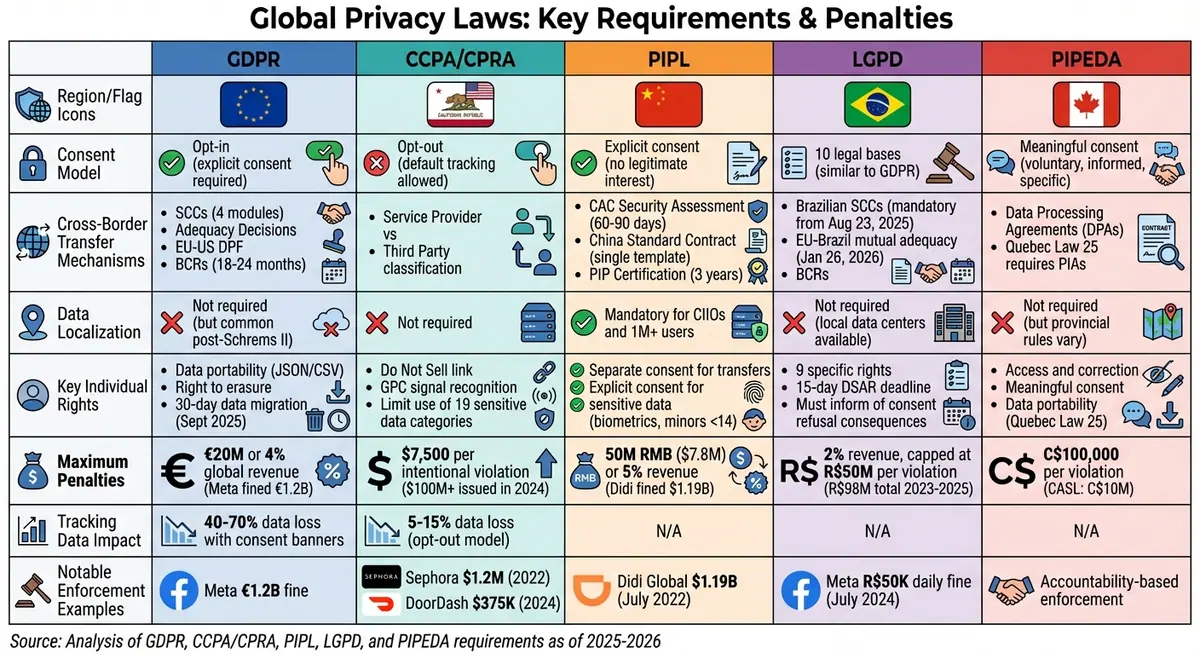
Global Privacy Laws Comparison: GDPR, CCPA, PIPL, LGPD, and PIPEDA Requirements
1. GDPR
Cross-Border Transfer Mechanisms
The GDPR outlines several legal methods for transferring personal data outside the European Economic Area (EEA). One of the simplest options is through Adequacy Decisions (Article 45). If the European Commission determines that a country's privacy laws are on par with GDPR standards, data can flow freely without additional documentation. Countries like the UK (approved until 2031), Japan, Canada (for commercial organizations under PIPEDA), and Brazil (approved in December 2025) fall under this category.
For SaaS companies, Standard Contractual Clauses (SCCs) are the most commonly used mechanism. The modular SCC framework introduced in 2021 addresses four transfer scenarios: Controller-to-Controller, Controller-to-Processor (e.g., using a US-based cloud provider), Processor-to-Processor (e.g., hiring a sub-processor in India), and Processor-to-Controller. Another option is the EU-US Data Privacy Framework (DPF), introduced in 2023. This framework allows US companies to self-certify for adequacy-based transfers. By mid-2024, over 2,800 businesses had joined, with 70% being small and medium-sized enterprises. However, the DPF is currently facing legal scrutiny ("Schrems III"), so it’s wise for companies to maintain SCCs as a backup.
For multinational corporations, Binding Corporate Rules (BCRs) provide a way to manage internal data transfers. However, getting BCRs approved can take 18–24 months. When relying on SCCs, SaaS providers must also complete a Transfer Impact Assessment (TIA). This involves assessing whether the destination country's laws - like US surveillance regulations - could compromise the contractual protections. If risks are identified, companies need to implement additional safeguards, such as end-to-end encryption, ensuring that data importers cannot access decryption keys.
These mechanisms are just one piece of the puzzle. GDPR also grants individuals specific rights, which SaaS providers must address to remain compliant.
Individual Rights
Under GDPR, individuals have the Right to Data Portability (Article 20), which requires SaaS platforms to offer personal data in machine-readable formats like JSON or CSV. Adding to this, the EU Data Act, effective September 2025, will require providers to support seamless data migration between competitors within 30 days. Starting in January 2027, exit fees will also be phased out, effectively granting customers the ability to terminate services without financial penalties.
The Right to Erasure adds another layer of complexity to data management. When users request their data to be deleted, SaaS platforms must ensure that the information is removed not only from their primary systems but also from any third-party services, such as cloud providers or analytics tools located in other countries. Meeting this requirement often involves setting up automated workflows to cascade deletion requests across the entire vendor network.
Compliance Challenges for SaaS
These individual rights make GDPR compliance even trickier, especially when it comes to managing the sub-processor chain. SaaS providers are held accountable for their vendors' compliance, including any third-party services. For example, if a cloud provider replicates data to a server in a country without an adequacy decision, additional transfer requirements may come into play.
Another challenge is choosing the correct SCC module. Using the wrong module - like applying Controller-to-Controller clauses in a Controller-to-Processor relationship - can lead to compliance errors. Additionally, Article 13(f) mandates that SaaS providers explicitly list the countries involved and the safeguards in place within their privacy notices. To simplify compliance, many SaaS companies are now adopting data localization strategies, keeping EU data within EEA-based servers to avoid the complexities of cross-border transfers.
"Signing SCCs is not enough. You must assess the destination country's laws, implement supplementary measures where needed, and be transparent." – Kukie.io Team
sbb-itb-5f36581
International Data Transfers and Onward Transfers | Privacy PowerUp #7
2. CCPA/CPRA
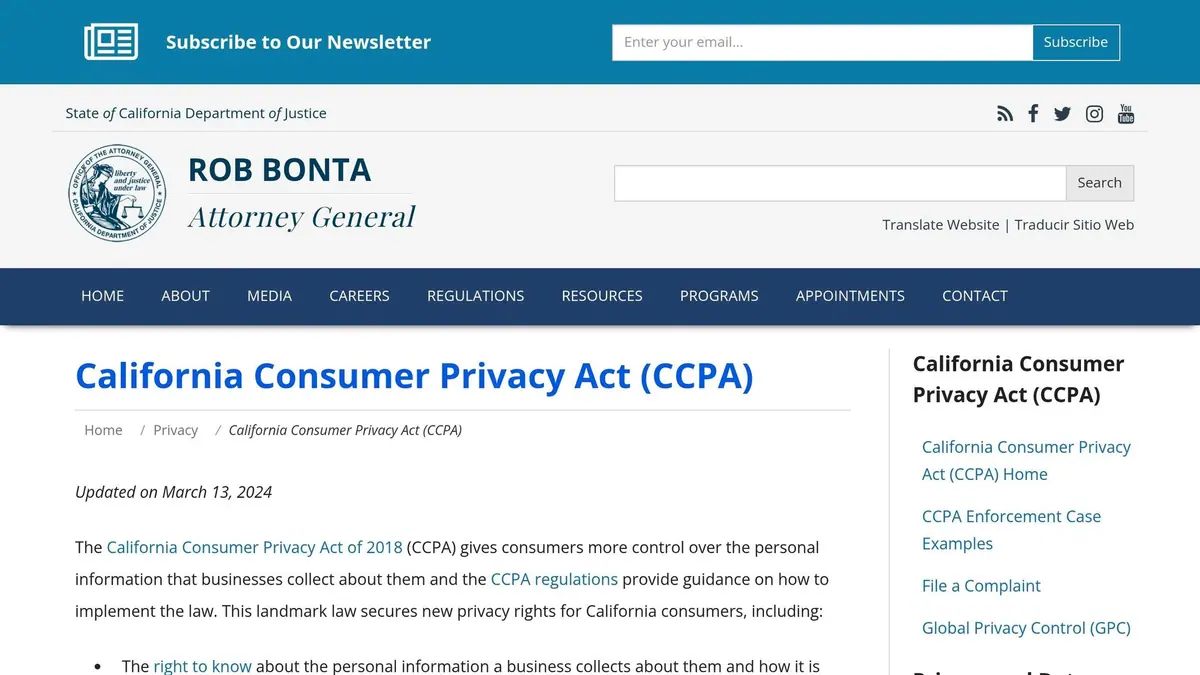
Unlike GDPR's opt-in approach, CCPA/CPRA rely on opt-out mechanisms for managing data sharing.
Individual Rights
Under CCPA/CPRA, companies must adopt an opt-out model, requiring a visible "Do Not Sell or Share My Personal Information" link and automatic recognition of Global Privacy Control (GPC) signals. Regulators now treat GPC signals as legally binding, meaning your backend systems - not just cookie banners - must respect these browser-level signals across all downstream partners.
The Right to Limit Use of Sensitive Personal Information is another critical feature. CPRA identifies 19 categories of sensitive data, such as precise geolocation, genetic information, and Social Security numbers. Consumers can limit the use of this data to only what's necessary for service delivery. For SaaS companies, this means carefully assessing which data points are essential before transferring them to third-party tools, ensuring compliance strategies differ from those under GDPR.
Compliance Challenges for SaaS
One significant hurdle is classifying vendors - distinguishing "Service Providers" from "Third Parties." Transfers to third parties often qualify as "sales" or "sharing", which trigger opt-out requirements. Even widely used tools like Google Analytics or Meta Pixel may fall under CPRA's broader definition of "sharing", which includes cross-context behavioral advertising.
Recent enforcement actions highlight the risks. In August 2022, Sephora paid $1.2 million after failing to honor "Do Not Sell" opt-out signals and not disclosing data "sales" via third-party tracking pixels. Similarly, DoorDash settled for $375,000 in 2024 for sharing customer data with a marketing co-op without proper notice or opt-out options. These cases underline the importance of monitoring third-party scripts. Simon Wijckmans, CEO of cside, explains:
"Vendor inventories that live in general compliance tools are a good start. But they do not monitor code execution in the browser. We've talked with enterprises that realized they still had live code processing data on their website from vendors that were terminated months ago".
Stricter data minimization rules introduced in 2026 require companies to justify cross-border data sharing as strictly necessary for service delivery. For example, physical addresses should be excluded if you're providing only digital services. Before transferring data to overseas teams or vendors, a necessity test is essential. In 2024 alone, the California Privacy Protection Agency (CPPA) issued over $100 million in enforcement actions, with penalties ranging from $2,500 per standard violation to $7,500 for intentional violations or those involving minors.
These evolving requirements highlight the importance of strict data minimization practices and robust vendor oversight to stay compliant.
3. PIPL
China's Personal Information Protection Law (PIPL) places national security above consumer privacy. Unlike GDPR, PIPL does not allow "legitimate interest" as a basis for data processing. Instead, companies must rely on explicit consent, contract fulfillment, or human resources management to process personal information.
Cross-Border Transfer Mechanisms
PIPL outlines three legal ways to transfer data outside China: a security assessment overseen by the Cyberspace Administration of China (CAC), Personal Information Protection (PIP) Certification, or the China Standard Contract. The choice depends on the scale of data and the nature of the business.
Critical Information Infrastructure Operators (CIIOs) and companies handling data for over 1 million individuals must complete a mandatory CAC security assessment before transferring data abroad. This process typically takes 60–90 working days but may extend to 6–12 months. The same requirement applies if a company has transferred data of 100,000 individuals - or sensitive data of 10,000 individuals - since January 1 of the current year.
For smaller-scale transfers, the China Standard Contract serves as an alternative. Unlike GDPR's modular Standard Contractual Clauses (C2C, C2P, P2P, P2C), PIPL uses a single, non-modifiable standard template. Companies must sign this exact template, file it with their provincial CAC within 15 working days, and ensure it adheres to Chinese law. Amigo L. Xie, a partner at K&L Gates LLP, highlights the challenges this poses:
"China Standard Contract, however, only has one template to be entered into by a 'China data controller' with an 'overseas data recipient.' Obviously, it can apply to modules of C2C and C2P. Where the data exporter in China is a personal information processor (i.e. P2P and P2C transfers)... there are some ambiguities as to how to use the China Standard Contract".
PIP Certification is often preferred for intra-group transfers between subsidiaries or affiliates. Valid for three years, it requires renewal applications six months before expiration. The certification process includes technical verification and on-site reviews by CAC-approved institutions.
In June 2023, a Beijing-based online data service provider became the first to successfully file under the China SCC, transferring credit reference data to a Hong Kong recipient within 15 working days of the measures taking effect.
These mechanisms operate alongside strict domestic data localization rules.
Data Localization Requirements
PIPL requires CIIOs and companies managing data for over 1 million individuals to store all personal information collected in China locally. Exporting such data is only permitted after passing the CAC security assessment.
These localization rules have led some SaaS platforms to either adjust their operations in China or withdraw from the market entirely.
Individual Rights
PIPL enforces separate consent for cross-border data transfers, which is stricter than GDPR's general consent approach. A single-step form with one "I Agree" button isn't enough - you must provide clear, separate opt-ins for international transfers and third-party sharing.
This consent-first model also applies to high-risk activities, such as processing sensitive data like biometrics, financial details, health records, precise location data, or information about minors under 14. Each category requires its own explicit consent.
These individual rights create additional hurdles for SaaS providers to address.
Compliance Challenges for SaaS
For SaaS companies, one of the toughest challenges is complying with PIPL’s international scope. If you process personal data of individuals in China - even without a physical presence there - PIPL applies to you. This means appointing a local representative or establishing an entity in China to handle regulatory matters.
In May 2025, Shanghai penalized a multinational company for transferring user data without proper assessment, certification, or contract filing.
The consequences of non-compliance are severe. Violations can result in fines up to 50 million RMB ($7.8 million) or 5% of annual revenue. For instance, in July 2022, the CAC fined Didi Global 8.026 billion RMB (approximately $1.19 billion) for 16 violations, including collecting facial recognition and precise location data without adequate notification or consent.
Another challenge lies in Article 41, which bans providing personal information to foreign judicial or law enforcement agencies without prior CAC approval. This creates conflicts for SaaS companies subject to U.S. or EU discovery requests. As PrivacyCache explains:
"Unlike GDPR, which allows controllers to self-assess adequacy using SCCs, PIPL requires government approval or certification for most significant transfers".
SaaS providers acting as "entrusted parties" (processors) face additional difficulties. The absence of a processor-to-processor (P2P) module in the China Standard Contract complicates compliance. Xie elaborates:
"The overseas data recipient is actually heavily involved and, to some extent, subject to the jurisdiction of the CAC. The China Standard Contract specifies that the overseas data recipient must agree to be subject to supervision and management by the CAC".
To stay compliant, companies must integrate these transfer mechanisms into their overall strategy. This includes maintaining an accurate count of Chinese users to determine if they meet the 100,000-person threshold for mandatory CAC assessment. Additionally, they should conduct and document a Personal Information Protection Impact Assessment (PIPIA) for all cross-border transfers and retain these records for at least three years.
4. LGPD
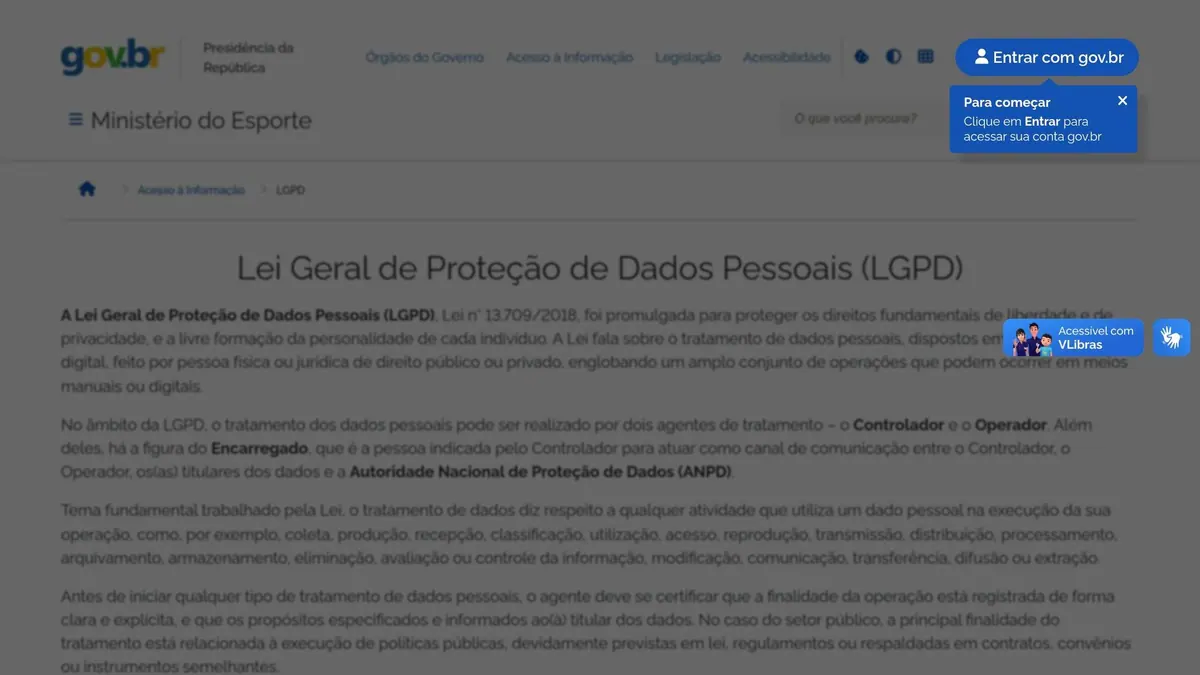
Brazil's LGPD has similarities to the GDPR but includes some distinct requirements, such as 10 legal bases for data processing and a 15-day deadline for Data Subject Access Requests (DSARs). Non-compliance can result in fines of up to 2% of annual revenue, capped at R$50 million per violation.
Cross-Border Transfer Mechanisms
On January 26, 2026, Brazil and the European Union agreed on mutual adequacy decisions. Brazil's ANPD Resolution No. 32/2026 recognizes the EU/EEA as having adequate data protection standards, while the European Commission has determined the same for Brazil. This alignment allows seamless data transfers between the EU and Brazil, reflecting a growing global push toward unified data protection practices.
For transfers to countries without adequacy decisions, like the United States or China, Brazilian Standard Contractual Clauses (SCCs) are required. Starting August 23, 2025, the ANPD's SCC template becomes mandatory for such transfers. Ana Leticia Allevato of Mayer Brown emphasizes:
"From this point on [August 23, 2025], international data transfers will only be valid if the SCCs are implemented or if other mechanisms previously approved by the Brazilian Data Protection Authority ('ANPD') are used".
Unlike the GDPR's modular SCCs, Brazil's regulation mandates using the ANPD's SCC text in its entirety, which can clash with the custom templates often favored by global SaaS companies. Article 33 also allows transfers using Binding Corporate Rules (BCRs), specific consent, or contractual necessity. It's important to note that adequacy does not extend to subsequent transfers; if a Brazilian recipient sends data to another country, a new transfer mechanism must be documented.
Individual Rights
LGPD provides nine specific rights to individuals, including a unique requirement for controllers to inform individuals about the consequences of refusing consent. The law's 15-day deadline for responding to access and confirmation requests places significant demands on SaaS companies' operations. Additionally, controllers must appoint a Encarregado (Data Protection Officer) and make their contact information publicly available.
Compliance Challenges for SaaS
LGPD applies to any SaaS company processing data from individuals in Brazil or offering services to the Brazilian market, regardless of the company's location. This extraterritorial reach mirrors the GDPR but introduces Brazil-specific complexities. For example, the 15-day DSAR deadline often requires SaaS providers to implement automated tools for data retrieval. Between 2023 and early 2025, the ANPD imposed fines totaling R$98 million, signaling a shift to active enforcement.
In July 2024, the ANPD ordered Meta to halt the processing of personal data for AI training in Brazil and imposed a daily fine of R$50,000 for non-compliance. This action highlighted the ANPD's readiness to use operational restrictions alongside financial penalties.
Another challenge involves unintentional international data transfers. SaaS platforms may unknowingly transfer data abroad through telemetry, remote support, or automated cloud backups. Under Brazilian SCCs, data importers must notify both the ANPD and affected individuals of any security breaches within three days.
Jessica Fernandes Rocha, Senior Privacy Lawyer at Viseu Advogados, explains:
"Adequacy simplifies the legal mechanism used to transfer data, but it does not, by itself, make the underlying processing compliant".
SaaS companies should re-map their data flows to determine which transfers can leverage the 2026 EU–Brazil adequacy decision and which still require SCCs. While major cloud providers like AWS (sa-east-1), Azure (Brazil South), and Google Cloud (southamerica-east1) offer local data centers in São Paulo, secondary services such as CDNs and analytics may still involve international transfers. These LGPD-specific challenges add complexity to the broader issues of cross-border data transfers, requiring careful planning and evaluation.
5. PIPEDA
Canada's Personal Information Protection and Electronic Documents Act (PIPEDA) takes a flexible, principle-based stance on data transfers. Instead of enforcing rigid rules like the GDPR, PIPEDA requires organizations to ensure a "comparable level of protection" for personal data through contractual safeguards - whether the data stays in Canada or moves abroad.
Cross-Border Transfer Mechanisms
PIPEDA emphasizes accountability. Essentially, the organization collecting the data remains responsible for it, even if processing happens elsewhere. To manage this, PIPEDA relies on Data Processing Agreements (DPAs), which outline security measures and data-handling protocols for third-party processors. Additionally, organizations must inform Canadian users about potential cross-border transfers and the possibility of exposure to foreign law enforcement or national security inquiries.
Quebec’s Law 25 introduces stricter, GDPR-like rules. For instance, before transferring data outside Quebec, companies are required to conduct a Privacy Impact Assessment (PIA) to ensure the receiving jurisdiction offers "adequate protection." This creates a patchwork of privacy requirements across Canada, as provinces like Quebec, Alberta, and British Columbia enforce their own, often stricter, rules. While PIPEDA governs inter-provincial and international transactions, this provincial variation shifts focus toward accountability rather than rigid transfer protocols.
Individual Rights
PIPEDA gives individuals the right to access and correct their personal information. Consent must be "meaningful" - voluntary, informed, and specific. In Quebec, Law 25 extends these rights further by introducing data portability and the right to be forgotten (de-indexing). Breach notifications under PIPEDA are required only when there is a "real risk of significant harm" to individuals, a standard that is more subjective compared to GDPR’s strict 72-hour reporting rule.
Compliance Challenges for SaaS
For SaaS companies, managing cross-border data flows under PIPEDA presents unique challenges. These businesses are not only responsible for their own data practices but also for those of every sub-processor they use - whether it’s a cloud provider, analytics platform, or marketing tool. Unified.to captures this complexity well:
"PIPEDA compliance is not about where data is stored - it is about who is responsible for it. Every integration expands that responsibility."
With each additional integration, the scope of compliance grows, increasing both the risk of breaches and the difficulty of managing obligations. This creates indirect pressures for data localization. While PIPEDA doesn’t mandate that data remain in Canada, the intricate requirements tied to provincial adequacy assessments and cross-border agreements often push companies toward local data storage as a simpler solution.
Between 2017 and 2021, global data localization restrictions surged, climbing from 67 barriers across 35 countries to 144 restrictions across 62 countries. On top of that, violations of Canada’s Anti-Spam Legislation (CASL) can lead to fines of up to C$10 million for organizations. These factors add to the growing complexity of compliance for SaaS providers operating in Canada.
Advantages and Disadvantages
Let’s break down the trade-offs for each privacy regulation and how they impact SaaS companies.
Privacy laws like GDPR, CCPA/CPRA, PIPEDA, PIPL, and LGPD each come with their own set of challenges and benefits. For instance, GDPR has become the gold standard for data protection worldwide. A GDPR-first compliance strategy often satisfies other global privacy laws. GDPR-compliant websites saw a boost in user engagement metrics by 12–18% in 2024, with transparent privacy policies leading to 19% longer average session times. However, the downside is steep - poorly implemented GDPR consent banners can result in a massive 40–70% loss of tracking data. Additionally, the technical demands are high, requiring Transfer Impact Assessments (TIAs) and Standard Contractual Clauses (SCCs) for non-EU data transfers, even when using frameworks like the EU–US Data Privacy Framework.
CCPA/CPRA, on the other hand, is less stringent. Its opt-out model allows companies to track users by default, leading to only a 5–15% data loss compared to GDPR's opt-in model. Interestingly, conversion rates jump by 34% when users actively opt in to data sharing. However, this regulation has its own quirks - personalized search snippets under CCPA/CPRA have shown a 22% drop in click-through rates, and companies are required to prominently display "Do Not Sell or Share My Personal Information" links across their platforms.
"Schrems II permanently changed the international transfers landscape... Data localization (keeping EU personal data within the EU) has become a more common data architecture choice".
PIPEDA offers a middle-ground approach. Its principle-based framework, combined with partial EU adequacy status, makes commercial data transfers from the EEA to Canada simpler. Smaller businesses benefit from this flexibility, but accountability for data transfers remains solely with the organization. Quebec’s Law 25 adds another layer of complexity by introducing GDPR-like rules, such as requiring Privacy Impact Assessments for data transfers outside the province.
Meanwhile, PIPL and LGPD align closely with GDPR in their frameworks, making global compliance more uniform. However, they bring their own challenges, including stricter rules for cross-border data transfers and local data residency.
Here’s a quick comparison of the key advantages and disadvantages for these regulations:
| Regulation | Key Advantage | Key Disadvantage | Max Penalty |
|---|---|---|---|
| GDPR (EU) | High trust; sets global standards | 40–70% tracking data loss; complex | €20M or 4% of global turnover |
| CCPA/CPRA (US-CA) | Lower data loss (5–15%); easier tracking | Must display "Do Not Sell" links | $7,500 per intentional violation |
| PIPEDA (Canada) | Flexible for smaller businesses; partial EU adequacy | Accountability remains with the company | $100,000 per violation |
| PIPL (China) | Aligns with GDPR standards | Strong data localization requirements | Varies by violation severity |
| LGPD (Brazil) | International alignment | Complexity similar to GDPR | Varies by violation severity |
Key Takeaways for Compliance
To maximize compliance while minimizing costs, consider geo-targeting your consent banners. For example, applying GDPR opt-in rules globally isn’t necessary. By focusing on CCPA-style opt-out links for U.S. visitors, you could recover 40–60% of tracking data. Additionally, maintaining both DPF certification and SCCs can ensure smoother data transfers to the U.S..
"Just because your data lives in AWS, GCP, or Azure doesn't mean transfers are lawful. You need contractual safeguards between your organization and cloud providers that align with applicable privacy laws".
These strategies can help SaaS companies navigate the complex web of global privacy regulations while staying compliant and minimizing data loss.
Conclusion
Global privacy laws require a compliance approach that's flexible and scalable, not a one-size-fits-all method. The GDPR sets a high benchmark, while laws like CCPA/CPRA introduce opt-out models, and others like PIPL, LGPD, and PIPEDA bring their own regional nuances. The takeaway? Privacy needs to be central to your business strategy - not just a legal formality. As Nathan Thompson aptly states:
"Treat privacy as part of how you sell, not a legal afterthought, to protect revenue and speed up deals".
Start by auditing your data flows to stay ahead of potential risks.
Review every tool that interacts with customer data - whether it’s your CRM or marketing platforms. This process helps uncover shadow IT and map out data flows, reducing the chance of compliance issues. Given that the average global cost of a data breach now surpasses $4.88 million, proactive prevention is far more cost-effective than dealing with the aftermath.
To simplify privacy-compliant workflows, tools like Reform offer no-code form builders with features like multi-step forms, conditional logic, and field-level analytics. These tools help you reduce unnecessary data collection while improving conversion rates. For example, breaking forms into smaller steps and tracking where users abandon can pinpoint areas needing stronger privacy measures - all without hurting lead quality.
Beyond data mapping and collection, streamline your processes. Relying on manual management for tasks like Data Processing Agreements or subprocessor notifications isn’t scalable. By automating workflows, you can cut legal review times from weeks to minutes and reduce manual effort by as much as 70%. Strategies like maintaining a public subprocessor list, offering a self-service trust center, and using Standard Contractual Clauses for international transfers can further enhance efficiency.
Lastly, adapt your consent strategy to fit regional requirements. A global, uniform approach often falls short. Instead, align consent mechanisms with local regulations and business needs. By combining data mapping, automation, and region-specific consent strategies, you’ll strengthen compliance while maintaining operational efficiency. The ultimate goal? Build trust through privacy practices that protect data without harming conversion rates.
FAQs
When do SaaS data transfers count as “cross-border”?
When it comes to SaaS, cross-border data transfers occur whenever data is moved outside the country or region where it was initially collected. For instance, sending data from the U.S. to another country - or the other way around - brings privacy regulations like GDPR and CCPA into play. These rules outline strict measures to safeguard data and ensure compliance throughout the transfer process.
Do I need SCCs if my cloud vendor says it’s compliant?
When it comes to GDPR compliance, relying solely on your cloud vendor's claims isn't enough. You need to evaluate if Standard Contractual Clauses (SCCs) are required for your data transfers. These clauses play a crucial role in ensuring legal compliance when personal data is moved outside the EU or EEA, especially given recent legal changes and court decisions. Take a close look at your vendor's practices to confirm they meet regulatory demands and safeguard data privacy effectively.
How do I handle opt-outs like GPC across all my vendors?
To manage opt-outs, such as those signaled by the Global Privacy Control (GPC), it's crucial to ensure your data transfer practices align with this standard. GPC enables users to opt out of the sale or sharing of their data. Here's how to handle it effectively:
- Integrate GPC recognition into your consent management systems to automatically detect and act on the signal.
- Stop data sharing immediately upon receiving a GPC signal to comply with user preferences.
- Verify vendor compliance by ensuring that any third-party partners also honor the GPC signal.
- Document compliance by establishing clear processes to track and confirm adherence to opt-out signals, as required by privacy regulations.
By embedding these practices, you can better meet legal requirements and respect user privacy preferences.
Related Blog Posts
Get new content delivered straight to your inbox

The Response
Updates on the Reform platform, insights on optimizing conversion rates, and tips to craft forms that convert.



Drive real results with form optimizations
Tested across hundreds of experiments, our strategies deliver a 215% lift in qualified leads for B2B and SaaS companies.
