
.webp)
Why Transparent Data Usage Boosts Conversions


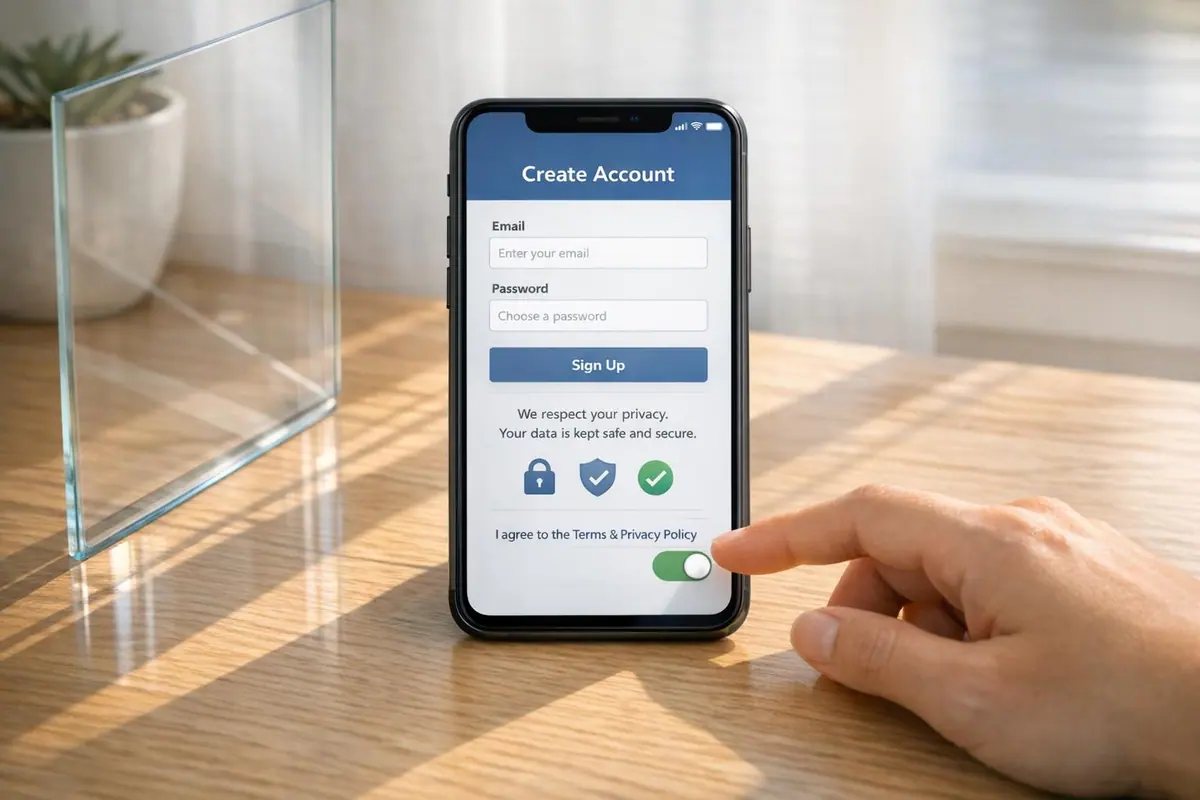
Want better conversions? Be transparent about data usage.
Here’s why it works:
- 39% of consumers say clarity about data use is their top trust factor - beating legal compliance.
- 17% of shopping carts are abandoned due to data security concerns.
- Sites with clear privacy practices see conversion rates double compared to those that don’t.
When people understand how their data is handled, they’re more likely to trust your brand and complete actions like filling out high-converting lead forms or making purchases. Lack of clarity, on the other hand, leads to hesitation and lost revenue.
Key takeaway: Explain your data practices in plain language, make consent options simple, and show users how their data benefits them. This not only builds trust but also improves your bottom line.
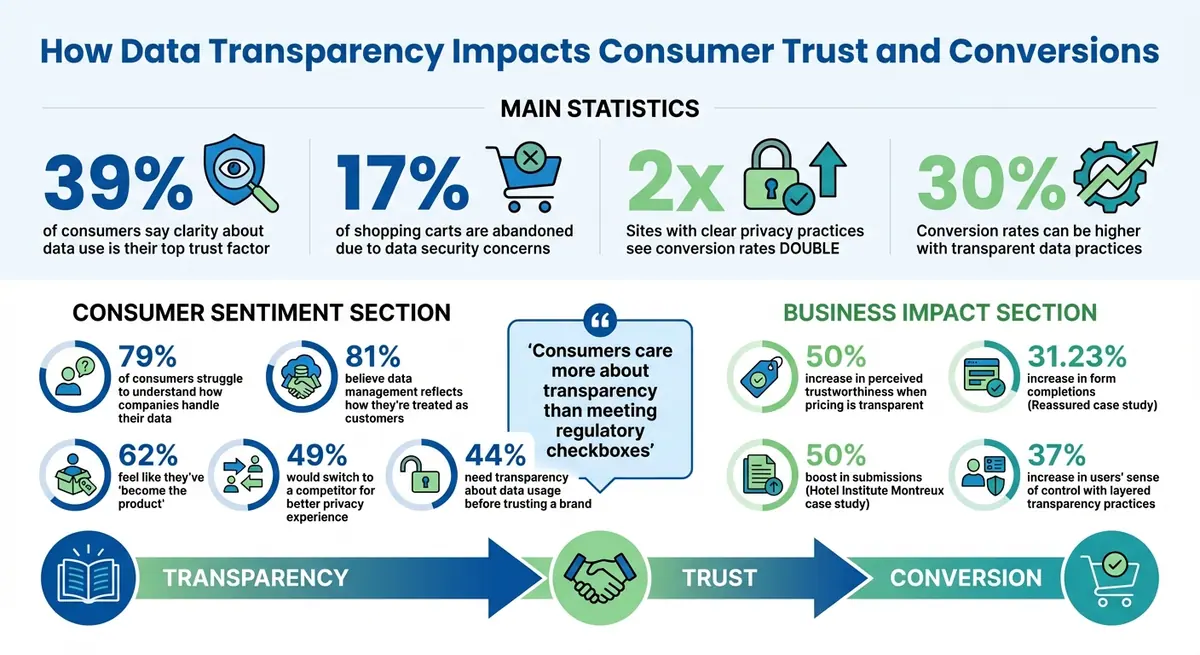
How Data Transparency Impacts Consumer Trust and Conversions
What Transparent Data Usage Means
Defining Transparent Data Usage
Transparent data usage is all about being upfront and clear about how you collect, use, and safeguard customer information. Instead of burying details in legal jargon, it explains data practices in plain, easy-to-understand language.
Traditional methods often collect large amounts of data without giving users a clear picture of what’s happening. Transparent practices, on the other hand, aim to make data interactions "Meaningful, Memorable, and Manageable" by showing users exactly what they’re getting in return for their data, reminding them what they’ve shared, and offering simple tools to manage their preferences.
Here’s something to think about: 79% of consumers say they struggle to understand how companies handle their data. This confusion doesn’t just frustrate users - it can stop them from completing landing page forms or making purchases altogether.
Why Customers Care About Transparency
How a company handles data says a lot about how it values its customers. For example, 81% of consumers believe the way their data is managed reflects how they’re treated as customers. If your data practices feel vague or unclear, customers may assume you’re hiding something.
This lack of clarity can have real consequences. Nearly half (49%) of consumers said they’d switch to a second-choice brand if it provided a better privacy experience. And 62% of people feel like they’ve "become the product", making them hesitant to share personal details unless they fully understand why it’s necessary.
"I truly want to know exactly what you are doing with my information. Just be straightforward and use plain English".
This quote sums up what many customers are thinking: they want honesty and simplicity.
How Trust Affects Conversions
Being transparent doesn’t just build trust - it can directly boost your business outcomes. When people understand your data practices, they’re less likely to hesitate or abandon forms. In fact, 44% of consumers say they need transparency about data usage before they’ll trust a brand.
The logic is simple: when users feel uncertain about how their data will be used, they’re more likely to walk away. But when you’re clear and upfront, that uncertainty disappears, and conversions improve. As Maria Helena Marinho, Senior Research & Insights Manager at Google, puts it:
"When customers feel more in control, brands see increased levels of trust and preference, and advertising is more effective".
That sense of control starts with transparency. When you explain what data you’re collecting and why, it shifts the experience from feeling intrusive to feeling empowering. And that shift can turn skeptical visitors into loyal customers. These ideas set the foundation for actionable steps to make transparency a core part of your approach.
sbb-itb-5f36581
Research on Data Transparency and Conversions
Studies on Transparency and User Behavior
Data shows that people care more about understanding how their personal information is used than they do about companies simply meeting privacy regulations. This preference directly influences their willingness to engage with a brand or complete a transaction. Robert Waitman, Director of Privacy Center of Excellence at Cisco, explained it well: "Consumers care more about transparency than meeting regulatory checkboxes”.
When companies fail to clearly communicate their data practices, the consequences are immediate. Users who feel unsure about how their data is handled often abandon forms, avoid making purchases, or switch to competitors who provide clearer explanations. This unease over potential data misuse is a major factor driving higher rates of form abandonment.
How Transparency Reduces Form Abandonment
Clear communication about data practices can significantly improve form completion rates. For example, in 2026, Reassured, a UK-based insurance company, revamped its life insurance quotation form to make it more transparent and user-friendly. The result? A 31.23% increase in completed submissions. Similarly, Hotel Institute Montreux in Switzerland added a transparent student testimonial above its lead generation form, which led to a 50% boost in submissions. These examples underscore how transparency builds trust, encouraging users to take action.
Why Clear Messaging Increases Conversions
Clear messaging doesn’t just reduce form abandonment - it also drives higher conversions. Businesses that prioritize data transparency see conversion rates that are 30% higher than those that don’t. Transparency builds trust and enhances a brand’s reputation. In fact, when companies openly share pricing details, perceived trustworthiness jumps by 50%. Moreover, 81% of consumers believe that how a company handles their personal data reflects the respect that company has for its customers.
Sure Oak Marketing demonstrated this in early 2024 by launching a transparency initiative. They shared their top 10 KPIs in real time with their executive team and used this data to resolve bottlenecks. The result? A 15% increase in top-line revenue in just one quarter. Transparency fosters trust, and trust motivates people to act.
How to Implement Transparent Data Usage
Writing Clear Privacy Disclosures
Privacy disclosures should be simple and straightforward - ditch the legalese. Explain why you collect data and how it benefits your users in plain language. For example, instead of saying, "We collect data to improve services", try something like, "We use your browsing history to recommend products you'll love." This kind of clarity helps users feel informed, not overwhelmed or misled.
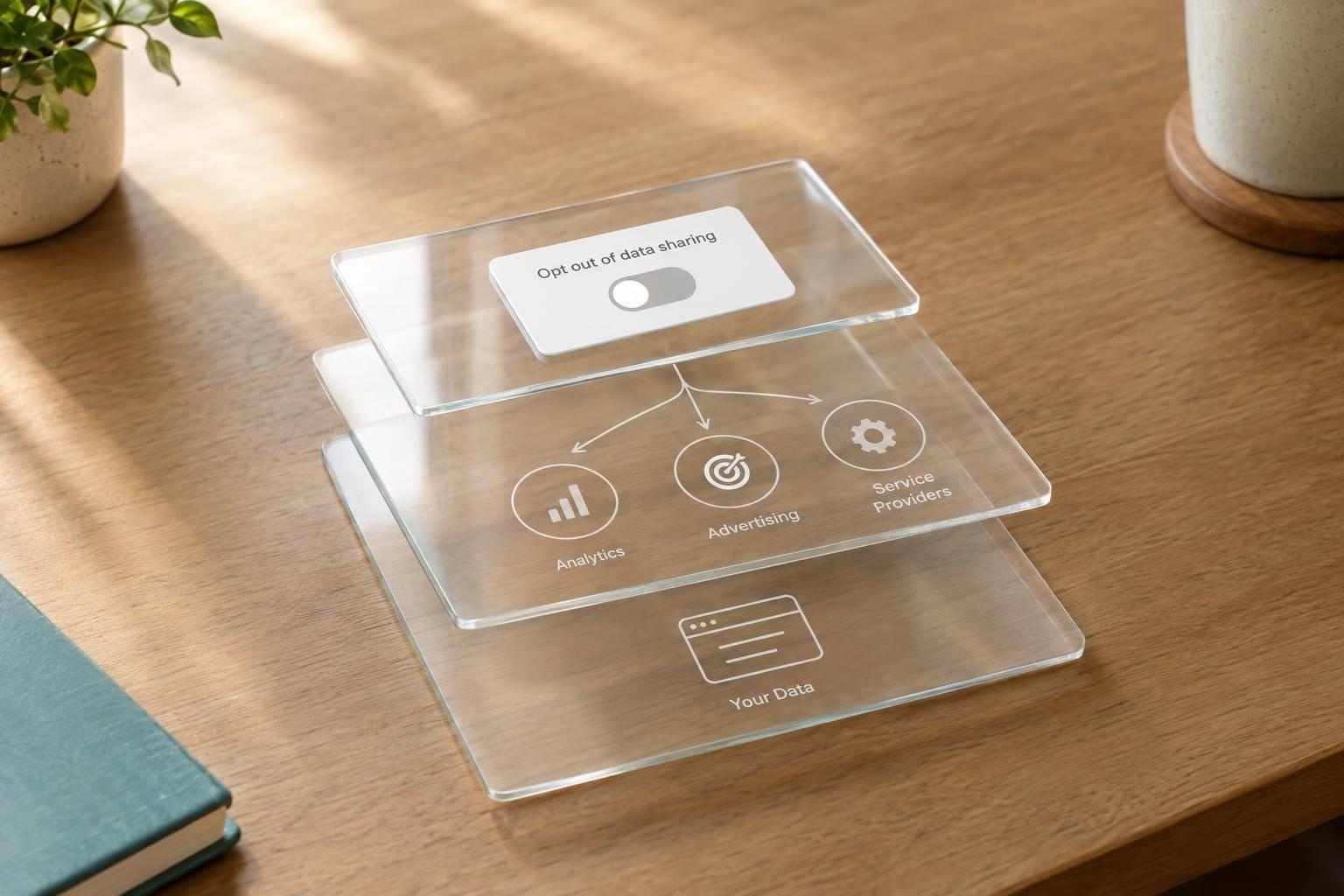
Make your privacy policy easy to find - don’t bury it behind multiple clicks. Avoid using manipulative designs or confusing consent popups that frustrate users. Instead, offer granular options for consent. Let users decide what data they’re comfortable sharing and allow them to update their preferences anytime. This approach not only empowers users but also encourages trust and engagement.
Clear, accessible disclosures don’t just inform users - they also demonstrate your brand’s dedication to respecting privacy.
Making Transparency Part of Your Brand
Transparency isn’t just a nice-to-have; it’s a trust-building tool. In fact, 39% of consumers identify data transparency as the most important step a company can take to earn their trust. By weaving privacy into your brand messaging, you show customers that you value integrity and respect their concerns.
Promote your transparent data practices in your marketing efforts. Use landing pages, ads, and other materials to highlight privacy certifications or third-party audits as trust signals. You could also go a step further by offering an interactive privacy dashboard - sometimes called a "My Data Center" - where users can view, edit, or delete their data in real time.
Transparency works best when it’s layered. Combining multiple practices - like privacy reminders, email summaries of data-sharing preferences, and clear consent language - can amplify results. For example, studies show that these combined efforts can increase users' sense of control by 37%. As Vanessa Bruns and Maxwell Minckler from Google explain:
"When your customers feel in control of their data, they trust your brand with their data. When customers trust your brand, they prefer to do business with your brand".
Using Form Tools That Support Transparency
To simplify your data collection processes, use form tools designed with transparency in mind. Look for features like customizable privacy statements, clear consent checkboxes, and multi-step forms that explain data usage at each stage.
For instance, Reform’s form builder is equipped with tools to make data practices clearer. You can add privacy disclosures directly into forms, create step-by-step explanations for data usage, and include consent options that users can easily understand. Plus, real-time analytics help you identify points where users hesitate or abandon the form, so you can address any transparency gaps quickly.
Seamless integration with your CRM and marketing tools is another key factor. When your forms work smoothly across platforms, you create a consistent experience that reinforces trust. This consistency shows users that you prioritize their privacy at every stage of their journey.
Why NOT Showing Prices on Your Website is Costing You Patients (Data-Backed!)
Conclusion
Being upfront about how you use data does more than meet legal requirements - it directly impacts conversions. Many consumers now expect transparency, and by clearly explaining your data practices, you can build the trust needed to keep visitors engaged with your brand instead of turning them away.
The numbers back this up. Websites that emphasize trust signals see conversion rates more than double compared to those that don’t. Transparency can even push conversion rates up to 24 times higher. Plus, nearly half of consumers (49%) say they’d consider switching brands if another company offers a better data privacy experience. These stats show that clear and honest data practices aren’t just ethical - they’re good for business.
Trust isn’t just a nice-to-have - it’s the deciding factor in whether someone fills out a form or bounces off your page. When people feel they control their data, they’re more likely to trust your brand, opt-in, and stick around. This leads to fewer abandoned forms and stronger, lasting customer relationships.
The growing focus on privacy-first marketing is a chance to stand out. With 77% of consumers admitting they don’t fully understand how their data is used, brands that simplify and educate will rise above the noise. Think of data collection as a fair exchange: explain the benefits users get in return for sharing their information, and you’ll create a win-win scenario.
FAQs
What data should I disclose at checkout or on a form?
When collecting data, it's essential to explain clearly how that information will be used and who it might be shared with. Make sure to obtain informed consent from users, giving them a full understanding of what they're agreeing to. Providing options to opt out or withdraw consent is equally important. This approach not only ensures transparency but also helps comply with privacy laws. Plus, it fosters trust between you and your users.
Where should privacy and consent info appear to boost conversions?
Privacy and consent details should be displayed prominently in areas like privacy statements, consent banners, or preference centers. Making this information easy to find not only promotes transparency but also helps establish trust - an essential factor that can positively impact conversion rates.
How can I measure if transparency is improving conversion rates?
Transparency can directly influence conversion rates, and you can measure this impact by digging into metrics like consumer trust levels and the performance of transparency initiatives. For example, clear and honest data disclosures often lead to higher trust among users. Studies have consistently shown that when users feel more confident in a brand's transparency, they are more likely to engage and convert. This connection between trust and behavior underscores the value of transparency in driving meaningful results.
Related Blog Posts
Get new content delivered straight to your inbox

The Response
Updates on the Reform platform, insights on optimizing conversion rates, and tips to craft forms that convert.

Drive real results with form optimizations
Tested across hundreds of experiments, our strategies deliver a 215% lift in qualified leads for B2B and SaaS companies.
