
.webp)
Top Tools for ISO 27001 Documentation Management


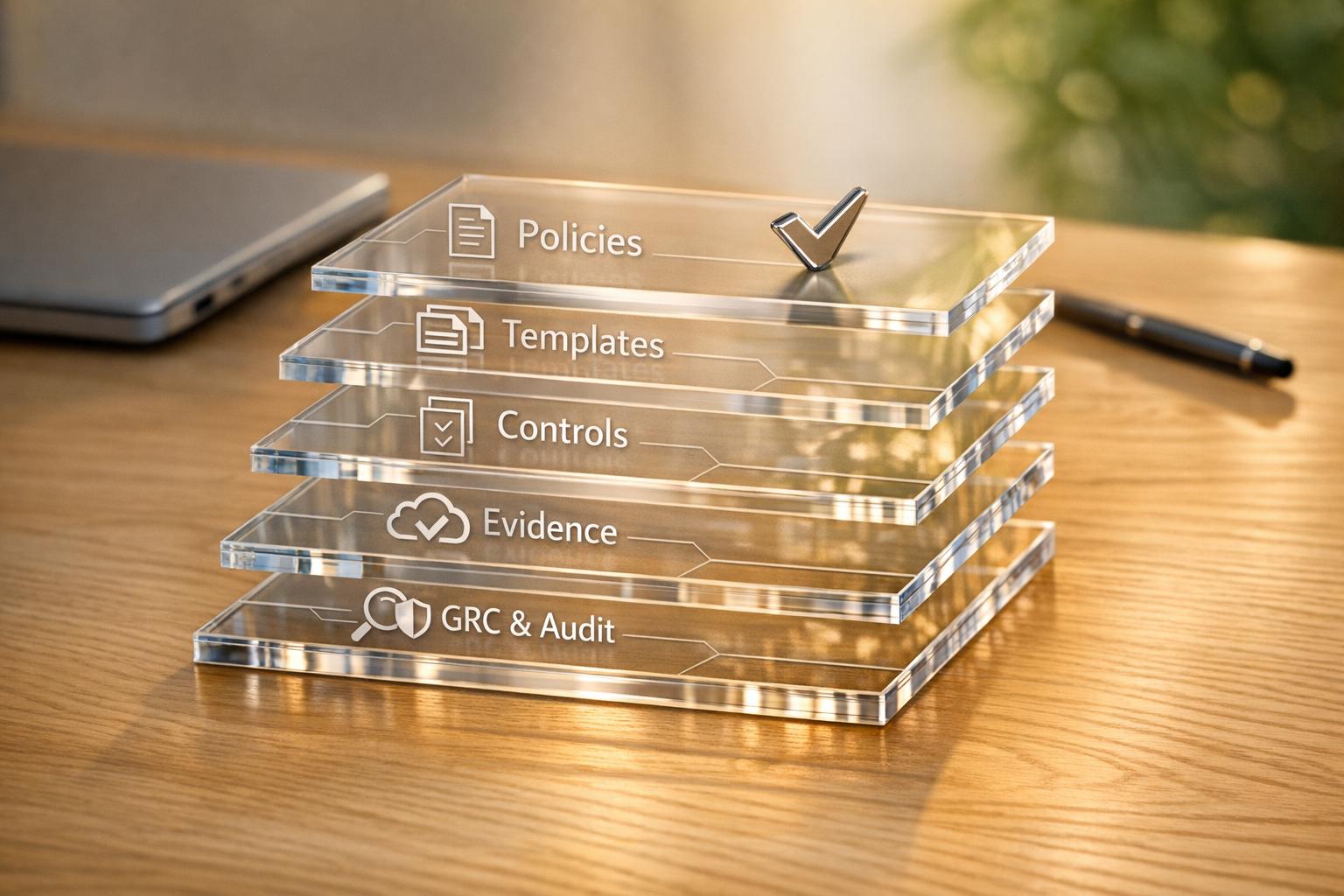
ISO 27001 compliance demands thorough documentation, from policies to audit evidence. Without the right tools, managing this can be time-consuming and error-prone. Here’s a breakdown of the best tools to simplify ISO 27001 documentation:
- Reform: Focuses on structured data intake with branded, no-code forms, ideal for small to mid-sized teams.
- Responsum: Centralizes risk and evidence management with live workflows linked to Annex A controls.
- Hyperproof: Supports multi-framework compliance with automated evidence collection and cross-framework mapping.
- Scrut: Automates compliance with prebuilt templates, daily control tests, and secure auditor access.
- Formalize: All-in-one GRC platform embedding the ISO 27001:2022 standard with AI-powered compliance management.
- Valiido: Offers pre-filled documentation templates and features like "AuditMagic" for auditor-ready SOPs.
Quick Comparison:
| Tool | Best For | Key Features | Limitations |
|---|---|---|---|
| Reform | Data intake for small teams | Branded forms, conditional routing | Limited to form-based workflows |
| Responsum | ISMS management | Risk repository, live workflows | Limited automation for technical evidence |
| Hyperproof | Multi-framework compliance | Automated evidence collection, control mapping | Requires integrations for full automation |
| Scrut | Fast compliance automation | Prebuilt templates, daily control tests | Focused on evidence, less on ISMS setup |
| Formalize | Comprehensive GRC management | Embedded ISO standard, AI task execution | May feel broad for ISO-specific needs |
| Valiido | Template-led setup | Pre-filled documents, "AuditMagic" feature | Templates may require customization |
Choosing the right tool depends on your organization's size, compliance stage, and whether you need data intake, evidence automation, or full ISMS management.

Top ISO 27001 Documentation Tools Compared
ISO 27001 Documentation Simplified | DocumentKits
sbb-itb-5f36581
Comparison Table: Top ISO 27001 Documentation Tools
ISO 27001 tools serve different purposes: some focus on automating evidence collection, others streamline risk workflows, and a few make audit preparation easier. Below is a comparison of the leading ISO 27001 documentation tools.
| Tool | Primary Use Case | Core Documentation Strength | Automated Workflows | Audit Readiness |
|---|---|---|---|---|
| Reform | Form-based documentation intake | Structured, branded intake forms for ISMS data collection | Conditional routing and real-time validation | Consistent, clean data capture for audit trails |
| Responsum | ISMS management | Centralized risk and evidence repository linked to Annex A controls | Live risk treatment workflows | Continuous evidence mapping to controls |
| Hyperproof | Multi-framework GRC | Cross-framework control mapping (ISO 27001, SOC 2, NIST) | Automated evidence collection via integrations | Centralized auditor request tracking |
| Scrut | Fast-track compliance automation | Prebuilt, audit-approved policy templates | Daily automated control tests | Read-only auditor portal for secure evidence review |
| Formalize | All-in-one GRC | Official ISO/IEC 27001:2022 standard embedded natively | AI-powered task execution and recurring reviews | Continuous compliance via automated recurring activities |
| Valiido | Template-led setup | Pre-filled library of 40+ mapped documents | One-click document copying with auto-linked controls | "AuditMagic" feature with pre-filled auditor-ready SOPs |
Some tools, like Scrut and Hyperproof, use technical integrations to automate tasks and testing. This approach can reduce audit timelines by as much as four weeks and cut compliance work by 30%. Others, such as Valiido and Reform, emphasize structured documentation from the outset.
When choosing a tool, focus on your specific needs - whether it's documentation intake, organization, evidence collection, or audit preparation. Each tool has its own strengths and limitations, so aligning your choice with your operational priorities is key. The following sections provide detailed insights into each tool to help guide your decision.
Reform: Form-Based Documentation Intake for ISO 27001

Reform takes a focused approach to ISO 27001 documentation, ensuring all submitted data aligns with specific ISO 27001 controls. Rather than managing a full ISMS, Reform zeroes in on gathering clean, structured data - addressing common challenges like inconsistent file naming and missing metadata that often complicate audits.
Core Documentation Strengths
Reform's multi-step forms are designed to capture key ISO 27001 metadata, such as Control IDs, document owners, and evidence dates. Using conditional routing, the platform automatically directs submissions to the correct control areas - for example, leadership-related evidence goes to Annex A.5, while operational data is routed to A.12.
In addition to its structured data capture, Reform supports branded forms for consistent policy acknowledgment and employs built-in email validation to ensure records are tied to verified contacts. This feature is particularly useful when gathering evidence from employees or third parties. These capabilities make Reform a practical tool for organizations that need a reliable and efficient way to standardize their data capture processes.
Best Fit For
Reform is a great option for small to mid-sized organizations looking for a simple, no-code way to standardize documentation and evidence collection across teams. It’s especially helpful for security or compliance leads who want to roll out policy acknowledgment forms, vendor questionnaires, or risk intake workflows without needing developer support. For teams just starting to build an ISMS, Reform provides an easy-to-use solution for collecting clean, consistent data without requiring extensive training.
Main Limitation
Reform’s functionality is limited to form-based data intake. It doesn’t include broader ISMS features such as Annex A control mapping, risk treatment tracking, or audit report generation. Organizations needing a complete ISMS management solution might need to pair Reform with other platforms to cover those additional requirements.
Compliance Management Platform: Centralizing ISMS Documentation
While Reform focuses on managing structured data intake, a centralized compliance platform takes charge of organizing all your policies, controls, and audit evidence. Instead of hunting through scattered storage locations, teams gain access to a single, governed workspace for all ISMS documentation. This setup not only simplifies storage but also ensures clear accountability throughout the document lifecycle.
Core Documentation Strengths
These platforms excel at managing the document lifecycle with controlled processes and role-based access control (RBAC). Policies move seamlessly from creation to archiving, while access is restricted to authorized users, reducing the risk of errors like confusing file names or unauthorized edits. For example, platforms like Hyperproof directly map all 93 Annex A controls from ISO 27001:2022 to associated risks and evidence, and they can generate a Statement of Applicability (SoA) on demand. Features like automated review cycles and alert systems also help keep policies up to date between audits.
Byron Thomas, Solutions Architect and ISMS Manager at Glance Networks, shared his experience:
"With Hyperproof, we reduced time spent on ISO 27001 compliance processes by 30%."
Similarly, Mike Caldwell, Senior Program Manager of GRC at Outreach, highlighted:
"With Hyperproof, we've stood up five different programs and added nearly 1,000 controls across those frameworks, all linked to 1,500 pieces of evidence."
Best Fit For
This type of platform is a great choice for mid-sized to enterprise organizations that need strong governance over a large number of policies and controls. It's particularly well-suited for compliance or GRC teams managing multiple frameworks - like ISO 27001, SOC 2, and GDPR. Many platforms enable mapping a single control across multiple standards, cutting down on duplicate efforts. Teams that regularly face internal or external audits will appreciate features like continuous evidence collection and real-time readiness dashboards.
Main Limitation
Despite their strengths in managing documentation, centralized compliance platforms are not built for advanced technical automation. If your team requires API-driven evidence collection - such as pulling system logs, monitoring configurations, or detecting misconfigurations - these platforms might not meet your needs. In such cases, tools designed with automation as a priority are better suited to handle technical integrations.
Audit and Evidence Management Platform: Getting Ready for ISO 27001 Audits
While centralized compliance platforms help organize policies and controls, audit and evidence management platforms take things further by guiding you through the audit process itself. The key difference lies in traceability: every piece of evidence is timestamped, tied to a specific Annex A control, and made accessible to auditors via a dedicated portal - no need for manual file transfers. This level of traceability connects your daily operations directly to audit preparation.
Core Documentation Strengths
One of the standout features of these platforms is automated evidence collection. Instead of scrambling to gather screenshots and logs before an audit, these tools integrate with your cloud infrastructure to automatically collect and timestamp updates. This creates an unchangeable audit trail that’s perfectly suited for Stage 2 audits. Every update, approval, and task is logged and timestamped, ensuring nothing is overlooked.
Another major advantage is streamlined collaboration with auditors. External assessors can securely access mapped controls and monitor live control health through dedicated auditor portals. This eliminates the need for manual file sharing or last-minute document requests. For example:
"Our audit timeline for ISO 27001 was reduced by about 4 weeks... Scrut has been a phenomenal partner that's allowed us to move from just compliant to secure." - Matt Black, Director of Information Security, ContentStack
Real-time readiness dashboards further enhance the process by identifying untested controls or missing approvals before the audit begins. If a continuous monitoring test fails, automated workflows assign remediation tasks to the appropriate team - whether it’s IT, HR, or Legal - ensuring quick action.
Best Fit For
These platforms are a perfect match for security and compliance teams preparing for ISO 27001 certification or surveillance audits. They’re particularly useful for organizations juggling evidence across multiple frameworks like SOC 2 or GDPR. With cross-framework mapping capabilities, a single piece of evidence can satisfy requirements for several standards, cutting down on repetitive tasks.
For teams accustomed to the chaos of point-in-time compliance - where everything is rushed together right before an audit - this shift to continuous readiness can be transformative. The audit-focused features not only simplify evidence management but also ensure ongoing compliance, a recurring theme in this discussion.
Main Limitation
These platforms shine brightest during Stage 2 audits, where auditors assess whether your controls are functioning as intended. However, if your organization is still in the early stages of developing ISMS policies (Stage 1), you may need additional tools or external consultants to handle policy creation and gap analysis. The focus on Stage 2 readiness makes these platforms more of a complement to broader governance tools rather than a one-stop solution.
Automation-First Compliance Tool: Reducing Repetitive Documentation Work
Managing ISO 27001 documentation can be a time-consuming process, especially when it involves repetitive tasks like policy reviews, access approvals, and control attestations. Automation-first compliance tools are designed to tackle these routine tasks, freeing up hours that would otherwise be spent on manual work. Unlike audit-focused platforms that primarily handle evidence traceability, these tools focus on cutting down the repetitive workload that doesn’t require in-depth human judgment.
Core Documentation Strengths
While audit platforms ensure evidence is ready for inspections, automation-first tools go a step further by simplifying ongoing compliance tasks. They integrate directly with your existing tech stack - like AWS, Azure, GCP, Jira, or GitHub - to automatically pull and timestamp evidence. This creates an up-to-date, audit-ready repository without manual intervention.
These tools also streamline policy workflows by automating approval cycles, enforcing review deadlines, and sending reminders before documentation expires. Some even use AI to scan your control library for gaps, offering suggestions for remediation. This shift from reactive to proactive compliance management can save teams a significant amount of time each month.
Another standout feature is cross-framework mapping. If your organization is managing multiple compliance frameworks, such as SOC 2 or GDPR, these tools allow you to use a single piece of evidence to meet requirements across different standards. This eliminates duplicate documentation tasks and enhances efficiency.
Best Fit For
Automation-first compliance tools are ideal for organizations that already have an established ISMS and are looking to maintain it efficiently throughout the year. They’re also a great choice for teams juggling multiple compliance frameworks, as the ability to reuse evidence across standards significantly reduces redundant work.
Main Limitation
While these tools excel at maintaining an existing ISMS and reducing repetitive tasks, they’re not designed to help with initial policy creation or gap analysis. If your organization is just starting out with ISO 27001 or needs to draft its first set of policies, you may need a more documentation-intensive tool or external consulting support before automation can take over ongoing compliance management.
GRC and ISMS Platform: Managing Governance and Compliance Together
While automation-first tools focus on maintaining an existing ISMS, GRC and ISMS platforms take a broader approach. These platforms bring together governance, risk management, and compliance documentation into one centralized system. Instead of juggling risks in one spreadsheet, controls in another, and policies in a shared drive, everything is unified and continuously updated. This streamlined setup creates a solid foundation for integrating risks and controls effectively.
Core Documentation Strengths
One of the standout features of a good GRC platform is risk-to-control mapping. When a risk is identified, the platform links it directly to the relevant Annex A controls, tracks the treatment decisions, and even calculates residual risk automatically. This seamless connection eliminates the common gap between risk registers and control documentation, a frequent stumbling block during audits.
Another valuable capability is multi-framework cross-mapping. For organizations needing to comply with frameworks like GDPR, SOC 2, NIS2, or PCI DSS, a GRC platform allows you to implement a control once and map it across all relevant frameworks. This reduces redundant documentation efforts. Platforms like Formalize - rated 4.9/5.0 on G2 and trusted by over 8,000 companies - go a step further by embedding the official ISO/IEC 27001:2022 standard directly into the interface. This ensures teams work from the actual standard instead of simplified versions, lowering the risk of compliance gaps during audits.
Best Fit For
With these capabilities, GRC platforms are ideal for organizations looking for an integrated approach to governance, risk, and compliance - not just documentation management. They are particularly useful for security teams managing multiple frameworks simultaneously or companies that have outgrown spreadsheets and need a dynamic ISMS where risks, assets, controls, and evidence are interconnected. Fernando Sanz de Galdeano, CISO at Arcano Partners, explained this transformation perfectly:
"We went from being reactive to being proactive. Now we can anticipate changes in risk thresholds and act before they become a problem."
Main Limitation
The main trade-off with GRC platforms lies in their depth. Since they are designed to handle multiple frameworks and governance needs, their ISO 27001-specific features might not feel as specialized. While these platforms offer broad integration, users may find that creating detailed ISO 27001 policies still requires significant manual effort. Without dedicated expert support, tailoring policies and controls to fit a specific environment can be challenging. For organizations primarily focused on ISO 27001 policy drafting, a tool more focused on documentation might be a better starting point.
Template and Toolkit Provider: Starting ISO 27001 Documentation from Scratch
For organizations just beginning their ISO 27001 journey, template and toolkit providers offer a practical way to tackle documentation management. Starting from scratch can feel overwhelming, but these providers simplify the process by offering pre-made documentation sets. These include policies, procedures, risk registers, and more - giving organizations a clear and structured starting point. While some platforms focus on automation and advanced control mapping, template toolkits are ideal for those taking their first steps with ISO 27001.
Core Documentation Strengths
The best toolkits come with a comprehensive document library that covers all 93 Annex A controls in the ISO 27001:2022 standard. For instance, CertiKit provides over 190 individual documents, while Iseo Blue offers more than 140 UKAS-audit-tested templates for a one-time fee of $85. These kits often include features like:
- Tooltips and step-by-step guides
- Pre-filled sample content, including over 80 common risks
- Gap analysis tools to identify missing measures quickly
With these resources, even a small team can follow an implementation roadmap and use task trackers to be audit-ready in just 3–6 months - much faster than the typical 1.5 years.
Best Fit For
Template toolkits are ideal for small businesses and first-time ISO 27001 implementers. Paul Hughes, a small business owner who used the Iseo Blue toolkit, shares:
"The pack is very comprehensive and easy to use. It has saved our small business a great deal of time in preparing our documentation to meet the required standards of our partners."
By using these kits, organizations can save on consultant fees, follow a clear structure, and fast-track their certification process. One provider even reports a 98.7% success rate for first-time audit attempts among toolkit users.
Main Limitation
The biggest challenge with template toolkits is the risk of "template dumping" - submitting documents that look complete but don’t reflect the organization’s actual practices. Auditors often identify these inconsistencies, particularly during surveillance audits. As GRC Solutions cautions:
"The toolkits are not an out-of-the-box solution. Depending on your implementation project, you will need to add details to the templates that match what your organization does and should be doing."
While these toolkits work well for straightforward environments, they may not be suitable for more complex organizations. Teams managing multi-site operations or highly tailored workflows might benefit more from platforms offering dynamic risk-to-control mapping.
Conclusion: Picking the Right ISO 27001 Documentation Tool
Choosing the best ISO 27001 documentation tool depends heavily on your organization's specific needs and current compliance setup. There's no universal solution - what works for one team might not fit another. The ideal tool depends on factors like your stage in the ISO 27001 process, how your team collaborates, and the number of frameworks you need to manage.
If you're just beginning and need a solid starting point, template toolkits can help you get up to speed, though they often require a fair amount of tweaking to meet audit standards. For teams deeply integrated with Microsoft 365, ISOPlanner is a natural fit because it works seamlessly with tools like SharePoint, Teams, and Outlook. On the other hand, organizations juggling multiple compliance frameworks may find Hyperproof or Scrut invaluable - users have reported saving 30% on compliance time and cutting audit durations by about four weeks.
For teams needing structured data collection, Reform offers a focused solution. It’s particularly useful for gathering inputs like risk assessments, incident reports, or supplier questionnaires. While it’s not a full compliance platform, Reform fills an important gap in data intake workflows.
To help you make a quick decision, here’s a summary table that matches common scenarios with the best tools:
| Your Situation | Best-Fit Approach |
|---|---|
| First-time ISO 27001 implementation | Template toolkit + customization |
| Microsoft 365-heavy team | ISOPlanner for native integration |
| Managing 3+ compliance frameworks | Hyperproof or Scrut for control reuse |
| Need structured data intake for ISMS | Reform for form-based documentation workflows |
| Complex technical operations | Fluency for live, auto-generated SOPs |
| Enterprise GRC with legal emphasis | Formalize for embedded official standard text |
The right tool can make your ISO 27001 journey smoother, whether you're laying the groundwork or refining an advanced compliance program.
FAQs
Which ISO 27001 documents should we standardize first?
To achieve ISO 27001 certification, there are six key documents you absolutely need. Missing any of these will result in an audit failure, so make sure these are in place:
- ISMS Scope: Clearly defines the boundaries of your Information Security Management System (ISMS).
- Information Security Policy: Outlines your organization's commitment to managing information security.
- Risk Assessment Methodology: Describes the approach you'll use to identify and evaluate risks.
- Risk Assessment Results: Documents the findings from your risk assessment process.
- Risk Treatment Plan: Details the actions you'll take to address identified risks.
- Statement of Applicability: Lists the controls you’ve chosen to implement (or not) and explains why.
Once you've taken care of these, focus on organizing additional materials such as procedures, registers, and evidence of operational activities. These will be essential for maintaining compliance over time.
How can I tell if we need evidence automation or just better intake forms?
If your team is bogged down by the time-consuming task of manually gathering artifacts like screenshots, logs, or reports, evidence automation can be a game-changer. It not only saves time but also ensures compliance with continuous, timestamped records.
On the other hand, if your primary hurdle is collecting information from staff or stakeholders, a no-code form builder such as Reform can simplify the process. It allows you to streamline data collection without the need for a comprehensive GRC automation tool.
What should we capture in each evidence submission for audits?
To show that security controls are functioning as intended, each evidence submission must clearly illustrate consistency and reliability. Be sure to include these details for traceability: the Control ID, the designated owner, how often the evidence is collected (e.g., monthly or quarterly), and the specific evidence period it covers.
Maintain clear audit trails by using consistent file naming conventions and version histories. Key pieces of evidence to gather include system logs, approval tickets, reports, timestamped screenshots, and signed records. Make sure each piece of evidence is directly tied to the relevant control to ensure accountability and clarity.
Related Blog Posts
Get new content delivered straight to your inbox

The Response
Updates on the Reform platform, insights on optimizing conversion rates, and tips to craft forms that convert.



Drive real results with form optimizations
Tested across hundreds of experiments, our strategies deliver a 215% lift in qualified leads for B2B and SaaS companies.
