
.webp)
Best Tools for Education Data Privacy Compliance


Managing student data privacy is increasingly complex, with schools using thousands of EdTech tools and facing stricter regulations like FERPA, COPPA, and GDPR. High-profile breaches, such as PowerSchool (62M students) and Illuminate Education (10.1M students), highlight the risks. Compliance is critical, especially with updated COPPA rules effective April 22, 2026.
Here’s a quick guide to the best tools for simplifying compliance:
- OneTrust: Tracks data flow, automates requests, and provides regulatory updates. Flexible pricing and strong ROI.
- BlockSurvey: Zero-knowledge encryption for surveys, ensuring only schools access data. Affordable plans start at $39/month.
- Qualtrics: Ensures survey security with redaction, automated retention policies, and strong compliance features.
- Reform: Easy-to-use form builder with secure data handling and parental consent workflows. Starts at $15/month.
- BigID: Automates data mapping, breach prevention, and access requests for large institutions.
- TrustArc: Centralized privacy management with automated compliance tools and real-time regulatory updates.
Quick Tip: Smaller schools may prefer cost-effective tools like BlockSurvey or Reform, while larger districts benefit from advanced platforms like OneTrust or BigID.
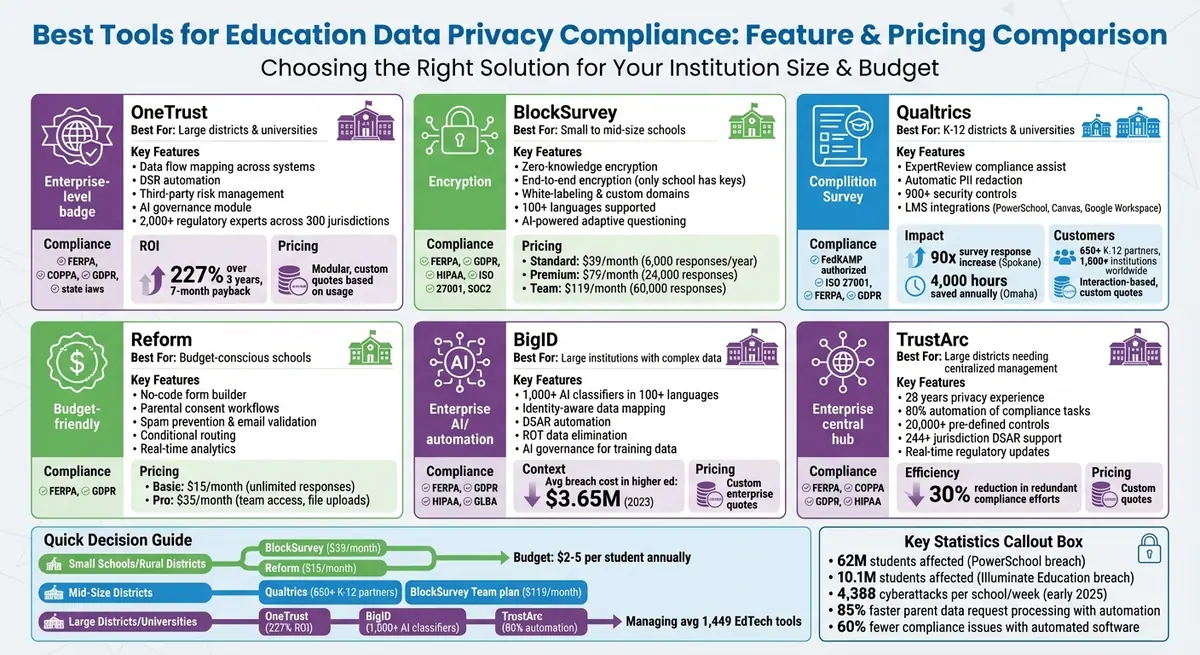
Education Data Privacy Tools Comparison: Features, Pricing, and Best Fit by Institution Size
1. OneTrust
Privacy Management Features
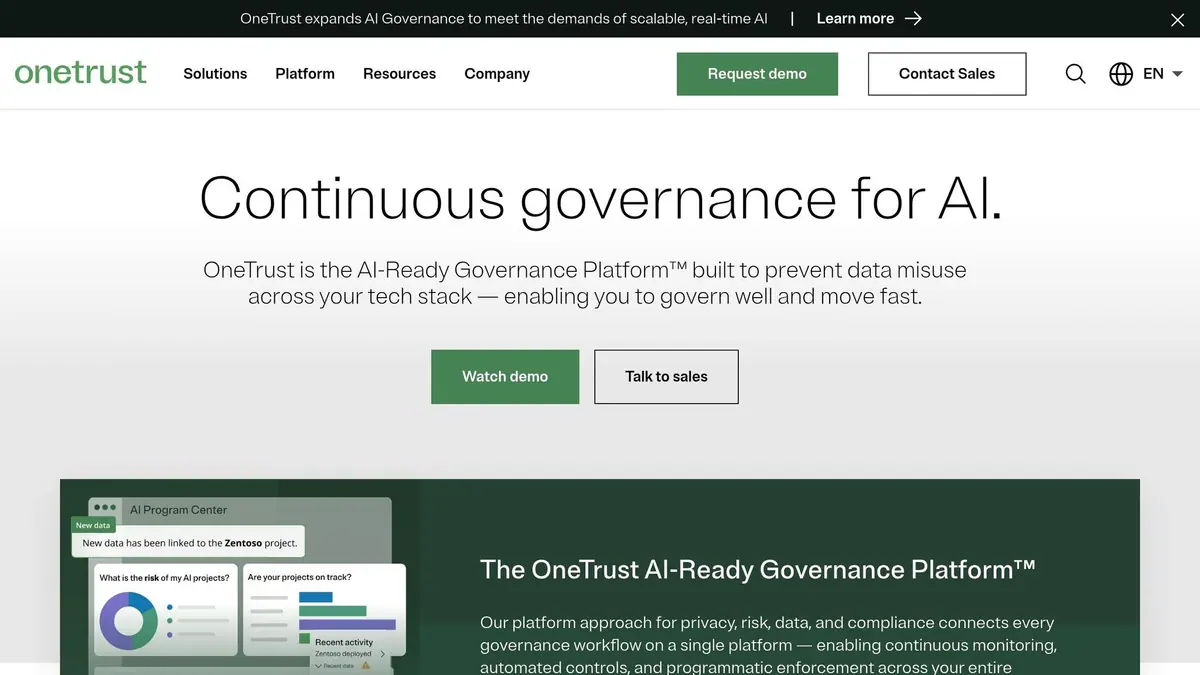
OneTrust is a comprehensive privacy automation platform designed to simplify the challenge of managing student data across various systems. It creates dynamic maps that track how personal information flows - from student information systems to learning platforms and even third-party EdTech tools.
The platform’s Data Subject Request (DSR) automation streamlines the entire process, from intake to securely delivering requested data. Its Third-Party Risk Management module automates vendor onboarding, conducts risk assessments, and provides ongoing monitoring. Additionally, OneTrust includes incident management tools that detect personal data breaches, assess their impact, and automate regulatory notifications.
Regulatory Compliance (FERPA/GDPR)
Navigating multiple regulatory frameworks is a complex task, and OneTrust simplifies it with its DataGuidance feature. This regulatory intelligence portal offers same-day updates from over 2,000 experts across 300 jurisdictions, ensuring schools stay up-to-date with FERPA, COPPA, GDPR, and various state-specific laws.
The platform also automates the creation of Records of Processing Activities (ROPA), a GDPR Article 30 requirement, and provides pre-built templates for Privacy Impact Assessments. As more schools adopt AI-driven learning tools, OneTrust’s AI Governance module integrates compliance measures across the AI lifecycle, addressing risks associated with emerging "Shadow AI" tools. The Forrester Wave™: Privacy Management Software, Q4 2025, highlights this approach:
OneTrust's approach of "tying together privacy, governance, and AI risk management, is comprehensive and pragmatic - delivering more than the sum of its parts".
These built-in compliance tools make it easier for schools to scale their privacy efforts effectively.
Pricing and Scalability
With over 14,000 customers worldwide, OneTrust offers a modular pricing model based on specific usage metrics rather than fixed rates. Pricing for privacy and third-party risk management depends on factors like the number of admin users and the size of the inventory being managed (e.g., assets or vendors). Schools can start with basic features and expand as their requirements grow, with flexibility to adjust tiers during a contract if usage exceeds limits.
The platform’s automation tools provide tangible efficiency gains. Customers have reported a 227% ROI over three years, with a payback period of just seven months. Productivity improvements of up to 75% and faster implementation of privacy initiatives (up to 87%) have also been noted. Marta Cañas Miralles, Data Protection Officer at Iberia Airlines, shared her experience:
"We now have full control over the processing of personal data that we do, with an intuitive tool that facilitates risk assessment and reporting".
sbb-itb-5f36581
2. BlockSurvey
Privacy Management Features
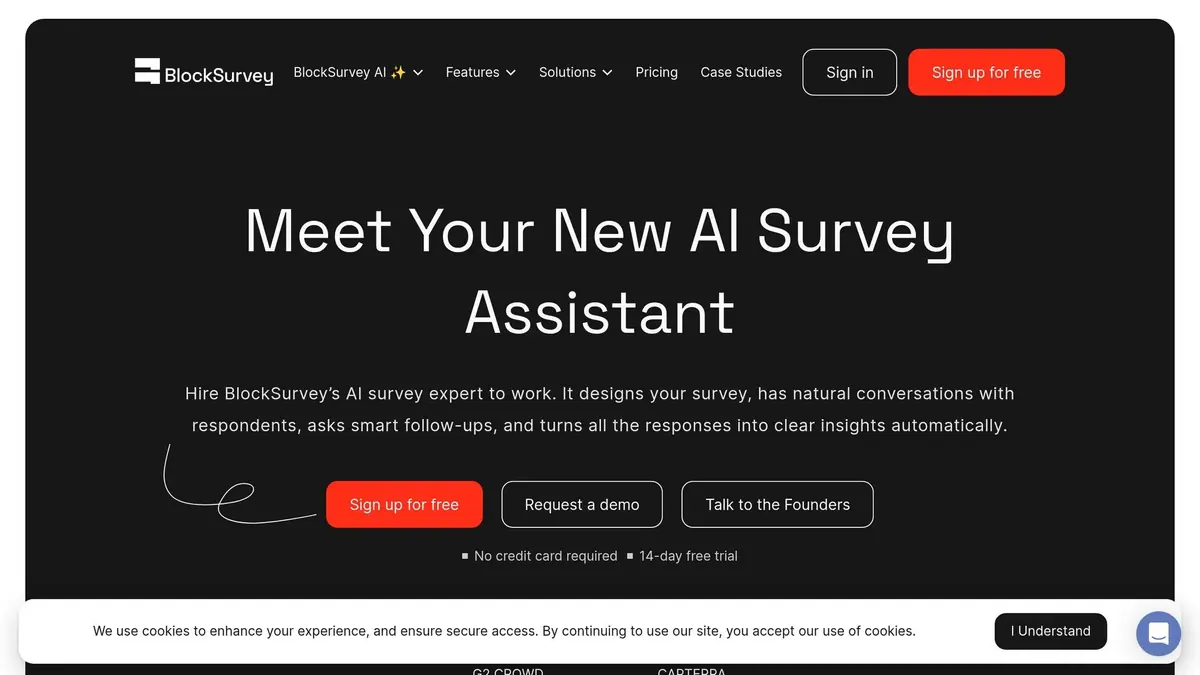
BlockSurvey takes privacy seriously with its zero-knowledge approach. This means that only the school account owner has access to the encryption keys, ensuring the platform itself cannot view any survey responses. All data is protected through end-to-end encryption. Trevor L., a Chief Information Security Officer, highlights this commitment:
"BlockSurvey puts privacy and security above anything else. The use of end-to-end encryption is not a gimmick as in many products; it's a core feature enabling privacy and security."
The platform also offers white-labeling and custom domain options, which help build trust with families by ensuring data flows directly to the institution rather than through third-party services. These features make it easier for schools to align with privacy expectations and legal requirements.
Regulatory Compliance (FERPA/GDPR)
BlockSurvey’s secure infrastructure ensures it complies with major regulations like FERPA, GDPR, HIPAA, ISO 27001, and SOC2. Schools using the Team plan, priced at $119/month (billed annually), receive essential legal agreements like DPAs and BAAs. The zero-knowledge design also simplifies international data handling by keeping encrypted information inaccessible to the service provider.
Pricing and Scalability
BlockSurvey provides flexible pricing tiers based on the number of responses needed annually:
- Standard plan: $39/month (billed yearly) for 6,000 responses.
- Premium plan: $79/month for 24,000 responses, including custom branding.
- Team plan: $119/month for 60,000 responses, AI-driven data analysis, and compliance documents.
- Enterprise plan: Custom pricing for unlimited seats and high-volume needs.
These options allow schools to scale their operations while maintaining strong data privacy protections. Additionally, BlockSurvey supports over 100 languages and includes AI-powered adaptive questioning, which tailors follow-up questions based on student responses, making surveys more engaging and insightful.
3. Qualtrics
Privacy Management Features
Qualtrics includes ExpertReview – Compliance Assist, a tool designed to enhance survey security. This feature flags potentially risky questions during survey creation, issues warnings to respondents, and permanently redacts sensitive information such as Social Security numbers. Once redacted, this data cannot be retrieved, ensuring that survey administrators never have access to it.
The platform also enforces automated retention and anonymization policies, allowing organizations to delete or anonymize data across the board - both retroactively and on a set schedule. Educational institutions can use the Personal Data tab to address "Right to Erasure" requests, which delete all data tied to a specific email address across surveys, tickets, and contact lists in one step. Additionally, Qualtrics employs over 900 security controls to safeguard user data.
These privacy features help institutions meet rigorous regulatory standards with ease.
Regulatory Compliance (FERPA/GDPR)
Qualtrics is FedRAMP authorized and holds ISO 27001 certification, providing a security framework that aligns with both FERPA and GDPR requirements. The platform supports workflows for Data Subject Requests (DSRs), enabling users to manage GDPR rights such as access, rectification, erasure, and data portability. Notably, when data is deleted, all associated backups are permanently removed within 90 days.
"Qualtrics is GDPR (General Data Protection Regulation) compliant and provides technology that enables our customers to be GDPR-compliant also."
For international data transfers, Qualtrics offers data isolation capabilities, which ensure institutional data remains contained within a virtual environment. Data is encrypted during transit to meet cross-border transfer requirements. Under FERPA, Qualtrics acts as a "school official", processing student data under the direct control of the institution for approved educational purposes.
These measures demonstrate Qualtrics' focus on meeting the specific security and compliance needs of educational institutions.
Education-Specific Functionalities
Qualtrics tailors its platform to the education sector, helping schools and universities make informed decisions while maintaining strict privacy standards. It supports more than 650 K-12 education partners across the U.S. and over 1,800 educational institutions worldwide. The platform offers pre-built solutions for tasks like course evaluations, student well-being monitoring, faculty engagement, and alumni feedback. It also integrates seamlessly with popular Learning Management Systems (LMS) and tools, including PowerSchool, Infinite Campus, Canvas, and Google Workspace for Education.
The impact of these features is evident in real-world examples. Spokane Public Schools saw survey responses jump from 99 to over 9,000 - a 90x increase - after implementing Qualtrics. Similarly, Omaha Public Schools saved 4,000 staff hours annually thanks to the platform's automation capabilities. Jace Dallman, Research Data Scientist at Omaha Public Schools, shared:
"With Qualtrics we've got the data when we need it, where we need it, to make actionable decisions."
Pricing and Scalability
Qualtrics operates on an interaction-based pricing model, charging for each completed and recorded survey response. Administrators can track usage through an Interaction Usage Report, which helps monitor license consumption. Pricing is typically tiered based on the institution's student population and feature needs, with customized quotes provided to match specific requirements.
4. Reform
Privacy Management Features
Reform is a no-code form builder tailored for educational institutions to create secure, branded forms for collecting sensitive data from students and parents. It comes with built-in spam prevention and email validation, which help maintain data accuracy and reduce the risks associated with compromised information. These automated safeguards are key to avoiding compliance pitfalls.
The platform also includes features like conditional routing and multi-step forms, which allow schools to streamline data collection while limiting the exposure of personally identifiable information (PII). On top of that, Reform's real-time analytics provide administrators with instant insights into form submissions, enabling quick action if privacy concerns arise. These tools align closely with regulatory standards by reducing the chances of PII mishandling.
Regulatory Compliance (FERPA/GDPR)
Reform makes compliance easier by offering customizable parental consent forms that adhere to both FERPA and GDPR standards. Its flexibility allows schools to design consent workflows that meet the specific requirements for cross-border data transfers under these regulations.
With the education sector facing an average of 4,388 cyberattacks per school each week in early 2025, secure platforms like Reform are crucial. They replace risky, unvetted third-party applications that could jeopardize compliance efforts.
Pricing and Scalability
Reform combines its strong feature set with flexible pricing options to accommodate school districts of different sizes. The platform uses a subscription model, starting at $15 per month (or $150 annually) for the Basic plan. This plan includes unlimited responses and conditional logic. For larger districts, the Pro plan is available at $35 per month (or $350 annually), offering team access and file upload capabilities - ideal for managing operations across multiple campuses.
Thanks to its scalable design, Reform can handle the needs of both small private schools and large public districts managing thousands of student records. This makes it a practical choice for institutions of all sizes.
5. BigID
Privacy Management Features
BigID takes automation and compliance to the next level, catering to the complex data needs of educational institutions. This enterprise-grade platform specializes in managing large-scale data privacy and is particularly effective in handling sensitive student information. It automatically identifies and catalogs data like personal identifiers, academic records, and health information across legacy systems, cloud platforms, and other data sources. With over 1,000 AI-driven classifiers available in more than 100 languages, BigID ensures precise data identification.
The platform’s identity-aware data mapping links personal data directly to individuals - whether students, faculty, or parents - providing administrators with a clear view of where data resides. It also simplifies the handling of Data Subject Access Requests (DSAR) by automating the entire process, from discovery to fulfillment, while incorporating verification steps and audit trails. Additionally, BigID reduces liability and storage costs by detecting and eliminating redundant, obsolete, and trivial (ROT) data.
Regulatory Compliance (FERPA/GDPR)
BigID supports compliance with major regulatory frameworks relevant to education, including FERPA, GDPR, HIPAA, COPPA, GLBA, and various state laws. The platform continuously monitors international data flows, ensuring adherence to cross-border transfer rules under regulations like GDPR, Schrems II, and the EU-U.S. Data Privacy Framework.
For FERPA, BigID automates the discovery and classification of student data across systems such as HR tools and legacy databases. It streamlines processes like obtaining student consent, fulfilling access requests within the mandated 45 days, and enforcing least-privilege access policies for digital records. Dynamic templates for Privacy Impact Assessments (PIAs) and Data Protection Impact Assessments (DPIAs) further enhance compliance by maintaining up-to-date audit trails.
With the average cost of a data breach in higher education hitting $3.65 million in 2023 - and ransomware accounting for 30% of these breaches - BigID’s comprehensive tools aim to mitigate such risks and avoid costly incidents.
Education-Specific Functionalities
BigID doesn’t just stop at compliance. It tackles unique challenges faced by educational institutions. For example, the platform helps schools govern AI systems by cleaning training data of sensitive information to meet guidelines like those outlined in the EU AI Act. It also simplifies compliance management for State, Local, and Education (SLED) organizations, even across hybrid and complex infrastructures.
Pricing and Scalability
BigID is built to handle the needs of large school districts and higher education institutions managing thousands of records. It adapts to various environments, supporting structured, unstructured, and semi-structured data across on-premises and cloud systems. Pricing is tailored to each institution’s specific requirements, and interested organizations must schedule a personalized demo with BigID’s data security team to learn more, as public pricing tiers are not provided.
Student Data Privacy in Action: Lessons from K-12 Leaders
6. TrustArc
TrustArc provides a comprehensive solution for managing education data privacy compliance, offering tools and features designed to simplify complex privacy tasks.
Privacy Management Features
With over 28 years of experience in the privacy sector, TrustArc has built a reputation for supporting educational institutions effectively. Its PrivacyCentral platform serves as a centralized hub, automating up to 80% of privacy compliance and data risk management tasks. This platform operates on a controls-based framework, featuring over 20,000 pre-defined controls aligned with more than 125 global privacy and security standards.
The Data Mapping & Risk Manager simplifies the creation of data inventories and Records of Processing Activities (ROPA), pinpointing where personal student data is collected and highlighting potential risks. Additionally, the Assessment Manager facilitates privacy, vendor, and AI risk assessments through automated scoring and workflows. Schools can use pre-built templates that are continuously updated, reducing the burden of manual legal work. This level of automation is especially valuable given the frequent changes in cross-border data transfer regulations.
Arc Intelligence further enhances daily workflows by evaluating evidence quality and providing contextual recommendations, all without relying on customer data for model training. Emerson Pang, Compliance Analyst at QAD, highlighted its efficiency:
"Using AI Evidence Analyzer, we can quickly identify areas that need attention without having to dive deep into each assessment manually".
The platform also automates Data Subject Access Requests (DSARs) across 244+ jurisdictions. Unlike many tools that focus solely on processing requests, TrustArc's AI analysis prioritizes intelligent evidence evaluation. These features make regulatory compliance more manageable for schools.
Regulatory Compliance (FERPA/GDPR)
TrustArc’s tools align with key education privacy regulations, including FERPA and COPPA, as well as broader standards like GDPR, HIPAA, and various U.S. state laws. The platform streamlines FERPA compliance by helping schools manage annual notifications, hearing procedures for record corrections, and mandatory retention of access request records. By using shared controls across frameworks, schools can cut redundant compliance efforts by up to 30%.
FERPA-specific resources, such as operational templates, sample policies, and checklists, help schools maintain up-to-date security practices. Meanwhile, the Nymity Research tool offers real-time updates on global privacy laws and regulations, ensuring schools stay informed about changes.
Pricing and Scalability
Designed for large-scale operations, TrustArc adapts to organizational needs by scaling across teams and processes rather than just data volume. It offers organizational configurability, allowing schools to upload hierarchy maps and customize workflows for different teams or departments. This flexibility is ideal for large districts requiring centralized oversight while maintaining individual school accountability.
JaNeen Allen, Senior Manager of Privacy and Cybersecurity Compliance at Post Holdings, shared her experience:
"Arc will help my team and me work smarter... from speeding up vendor onboarding to quickly surfacing what matters most".
TrustArc does not offer fixed pricing publicly. Schools interested in the platform must reach out directly for a tailored quote.
Strengths and Limitations
When it comes to navigating cross-border data transfer rules, education-specific and enterprise platforms each bring distinct advantages and challenges to the table.
Education-specialized tools are designed with a strong focus on FERPA compliance. They excel in understanding key requirements like the "school official exception", directory information protocols, and the 45-day deadline for parent access to records. These platforms streamline processes significantly, enabling schools to handle parent data access requests 85% faster compared to manual methods. Schools using automated privacy software also report 60% fewer compliance issues overall. However, cost can be a hurdle for smaller districts, as FERPA-specific software typically ranges from $2 to $5 per student annually. While these tools shine in addressing education-specific workflows, they may lack the broader regulatory coverage that some organizations require.
Generic enterprise platforms, on the other hand, are built to support a wide range of global regulations like GDPR and CCPA, making them a better fit for large-scale organizations. They are adept at handling multiple jurisdictional requirements but often need customizations to manage education-specific needs, such as classifying student records or implementing the "school official" exception. As Secure Privacy points out:
"Manual approaches using spreadsheets and document folders cannot scale to modern educational technology complexity".
This highlights a key limitation of generic platforms: they often rely on manual workarounds for workflows unique to education.
Integration capabilities also set these tools apart. Education-focused platforms typically come with pre-built connectors for popular systems like PowerSchool and Canvas, ensuring smoother integration with existing workflows. Generic platforms, however, are more commonly designed to integrate with CRM and ERP systems, which can sometimes lead to increased reliance on manual data entry. This is a critical consideration, given that school districts use an average of 1,449 different EdTech tools, many of which handle sensitive student data.
Ultimately, enterprise platforms offer scalability and flexibility for broader organizational needs, while education-specific tools excel in managing workflows tied directly to student data. Each has its place, depending on the unique needs of the institution or organization.
Conclusion
Choosing the right data privacy tool depends on your institution's size, budget, and technical needs. For smaller schools or rural districts with tight budgets, per-student pricing models - ranging from $2 to $5 per student annually - can help meet FERPA requirements effectively. Before committing to any software, take advantage of free tools like CoSN's checklists or technical assistance from the U.S. Department of Education to identify areas where compliance may be lacking.
Larger institutions, especially districts managing an average of 1,449 EdTech tools, need more advanced solutions. Automated discovery systems with API-based integrations are essential for managing complex infrastructures. These tools can significantly improve efficiency, cutting response times for parent data requests by up to 85%. With recent high-profile data breaches, maintaining continuous monitoring and strong oversight is more important than ever.
At the classroom level, prioritize tools with FERPA and COPPA compliance certifications. Avoid using consumer versions of AI tools like ChatGPT or Gemini for handling student data, as they often use the information for training their models. For tasks like collecting parent consent or managing data requests, platforms like Reform offer FERPA-compliant solutions with features such as conditional routing, email validation, and real-time analytics.
FAQs
How do I choose the right privacy tool for my school’s size and budget?
When selecting a privacy tool, it's essential to evaluate your school’s specific needs. Start by identifying the types of data that require protection and ensure the tool aligns with legal requirements like FERPA (Family Educational Rights and Privacy Act) and COPPA (Children’s Online Privacy Protection Act).
Scalability matters, too. For larger school districts, you may need a more comprehensive solution that can handle higher volumes of data and users. Smaller schools, on the other hand, might benefit from tools that are simpler to use and manage.
Budget is another key factor. Focus on the protections your school absolutely needs. You can also explore free or low-cost tools that, when combined with strong security practices - like enforcing strict access controls and conducting regular audits - can provide effective data protection without breaking the bank.
What should I look for to handle parent/student data requests and consent correctly?
To handle parent and student data requests effectively while ensuring proper consent, it's essential to use tools designed for this purpose. Digital parental consent forms with features such as conditional logic, email validation, and secure storage can make the process smoother and safer. A no-code form builder, like Reform, can streamline this task with multi-step forms that help maintain compliance with laws such as COPPA and FERPA. Prioritize platforms that provide secure templates, digital signatures, and clear documentation to safeguard student data and adhere to legal standards.
How can schools manage cross-border data transfers with all their EdTech tools?
Schools can navigate the complexities of cross-border data transfers by focusing on robust data privacy measures. One key step is using platforms to carefully vet and approve EdTech tools, ensuring they meet the requirements of regulations like FERPA and COPPA. This helps maintain compliance while protecting student information.
To further safeguard data, schools should implement measures such as encryption, role-based access controls, and conducting regular audits. These steps ensure that sensitive information remains secure and only accessible to authorized personnel.
Having clear vendor agreements is another critical aspect. These agreements should clearly outline how data will be used and ensure vendors meet compliance standards. Additionally, leveraging tools like no-code form builders can streamline security processes and make it easier for schools to handle compliance when managing cross-border data transfers.
Related Blog Posts
Get new content delivered straight to your inbox

The Response
Updates on the Reform platform, insights on optimizing conversion rates, and tips to craft forms that convert.



Drive real results with form optimizations
Tested across hundreds of experiments, our strategies deliver a 215% lift in qualified leads for B2B and SaaS companies.
