
.webp)
E-Commerce Data Transfers: Compliance Checklist


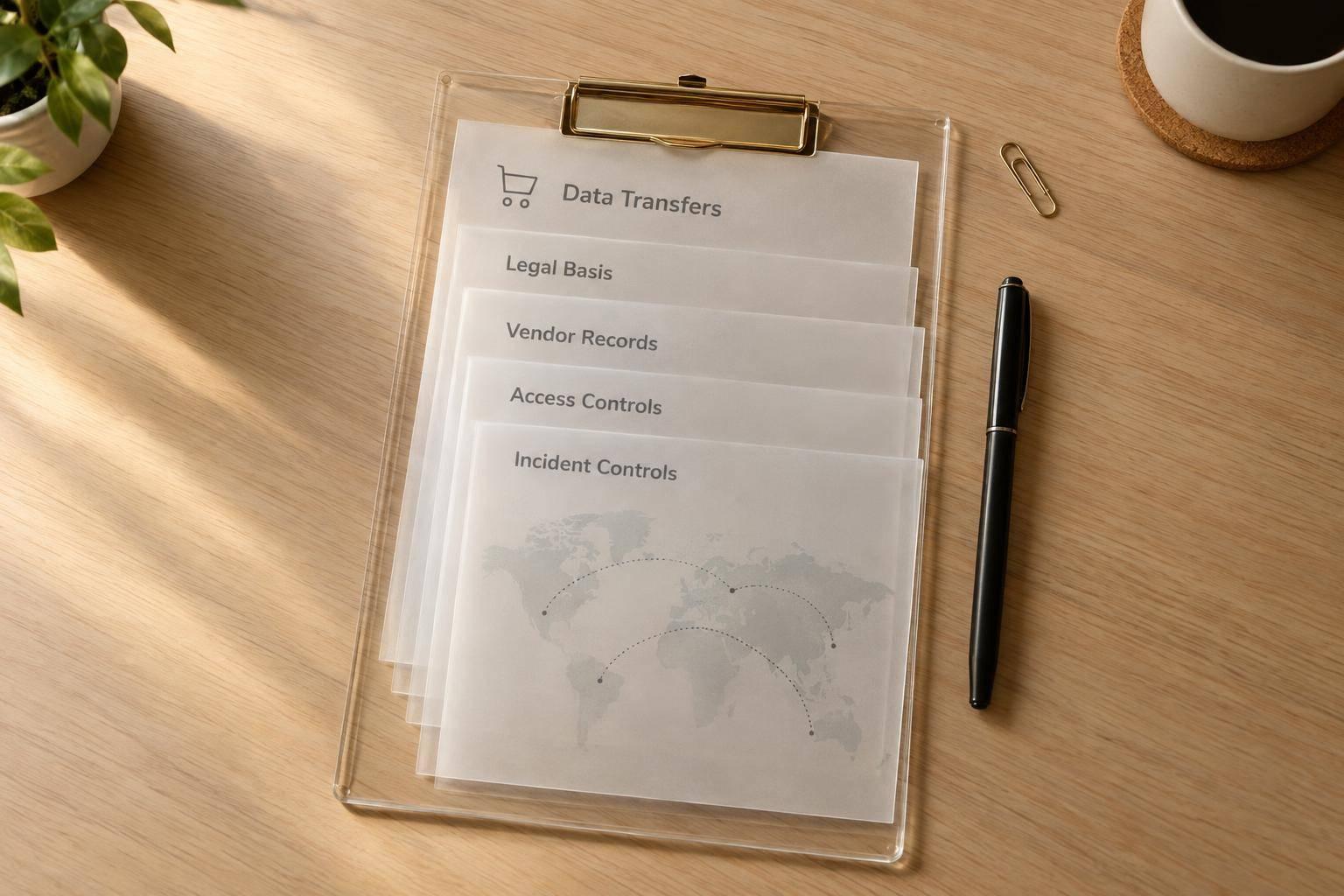
I start with one rule: know where customer data goes - and who can access it. For every transfer, I record an owner, status, review date, and link to supporting records. A vendor’s compliance claim alone isn’t enough.
My checklist covers five areas:
- Map data flows: Track destinations, overseas access, backups, and connected tools.
- Check transfer rules: Verify legal mechanisms, risk assessments, contracts, and subprocessors.
- Match notices and choices: Check landing page forms, consent records, privacy disclosures, and deletion requests against actual data use.
- Test incident response: Confirm who can stop transfers, contact vendors, and assess notification deadlines.
- Fix and review: Keep one register, assign deadlines, and close gaps only after checking the supporting records.
I review the data map quarterly and the full transfer records at least annually, plus after relevant changes. The goal is <u>documented checks that match actual data flows</u> - not a claim of legal certification.

E-Commerce Data Transfer Compliance Checklist
Cross-Border Personal Data Transfers Explained | Privacy & GRC
sbb-itb-5f36581
2. Review Transfer Rules and Vendor Contracts
Connect each mapped transfer to the rule that applies, its legal mechanism, risk assessment, and signed agreements. Review U.S. state obligations separately from EU and UK transfer requirements. A vendor’s “GDPR compliant” statement doesn’t prove your specific transfer is covered.
Verify Transfer Mechanisms and Assess Risks
For GDPR Chapter V transfers, document the applicable mechanism: adequacy, SCCs, or the EU-U.S. Data Privacy Framework. Rely on the Framework only if the importer is active in the official register. For UK transfers, use the UK IDTA or UK Addendum where required. Marketing consent does not replace a transfer mechanism.
For each restricted transfer, assess destination-country law, government access, the importer’s ability to comply, and supplementary safeguards. For SCC transfers, complete a transfer impact assessment and record whether the safeguards reduce access risk. Keep the assessment, approvals, fixes, and reassessment triggers together. This review is separate from any GDPR DPIA or U.S. state-law risk assessment.
Check Processing Agreements and Transfer Terms
Check that signed agreements cover scope, term, purpose, data categories, confidentiality, security, assistance, deletion or return, audit rights, and breach notice. Make sure annexes reflect the actual processing and technical and organizational measures. Flag any gaps between the contract terms and the controls in use.
Track Vendors and Subprocessors
Link each vendor to its contract, data categories, and transfer assessment. Record subprocessor roles, processing locations, and onward-transfer safeguards. A primary vendor’s certification doesn’t settle every downstream transfer.
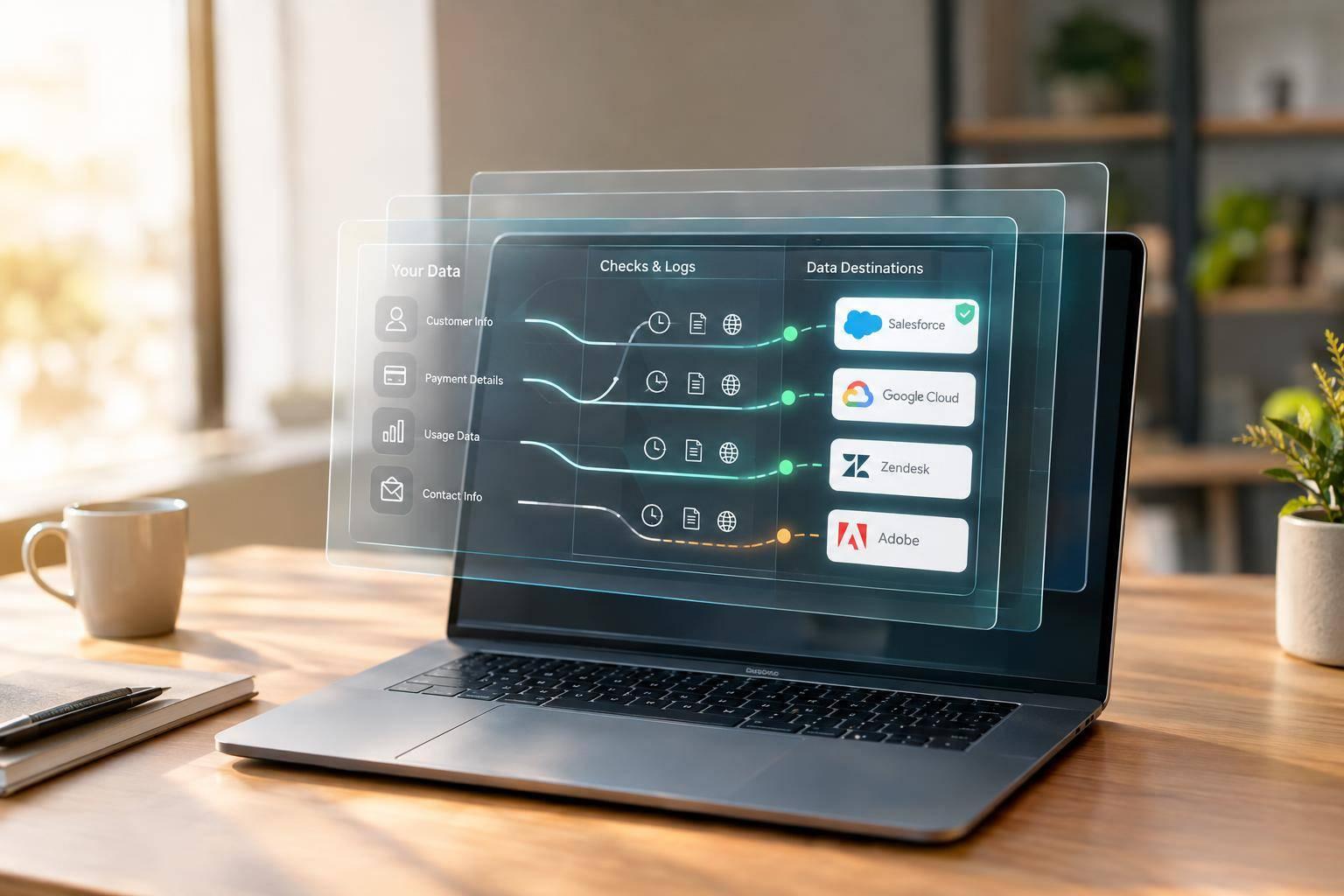
Keep a transfer register for every external recipient, linked to its contract, legal mechanism, and assessment. Include connected services such as email marketing, review apps, help desks, and analytics tools. Review changes before any new access starts.
Use the register to cross-check privacy notices, consent logs, and form disclosures.
3. Review Privacy Notices, Consent Records, and Forms
Use your transfer register to check that every external recipient appears in your privacy notices, consent logs, and deletion workflow.
Check Privacy Disclosures and Rights Requests
Match each disclosure to the data your checkout, forms, cookies, and analytics collect and send. Keep fulfillment separate from optional marketing and personalization. List required international transfers, destinations, and safeguards, then check them against your data map.
Trace how rights requests reach each recipient. Deleting a record from your CRM isn’t enough. Send deletion instructions to fulfillment centers, carriers, and returns handlers, and keep a contract clause that confirms deletion.
Check that each consent record matches the exact notice shown when the data was collected.
Audit Consent Records and Downstream Changes
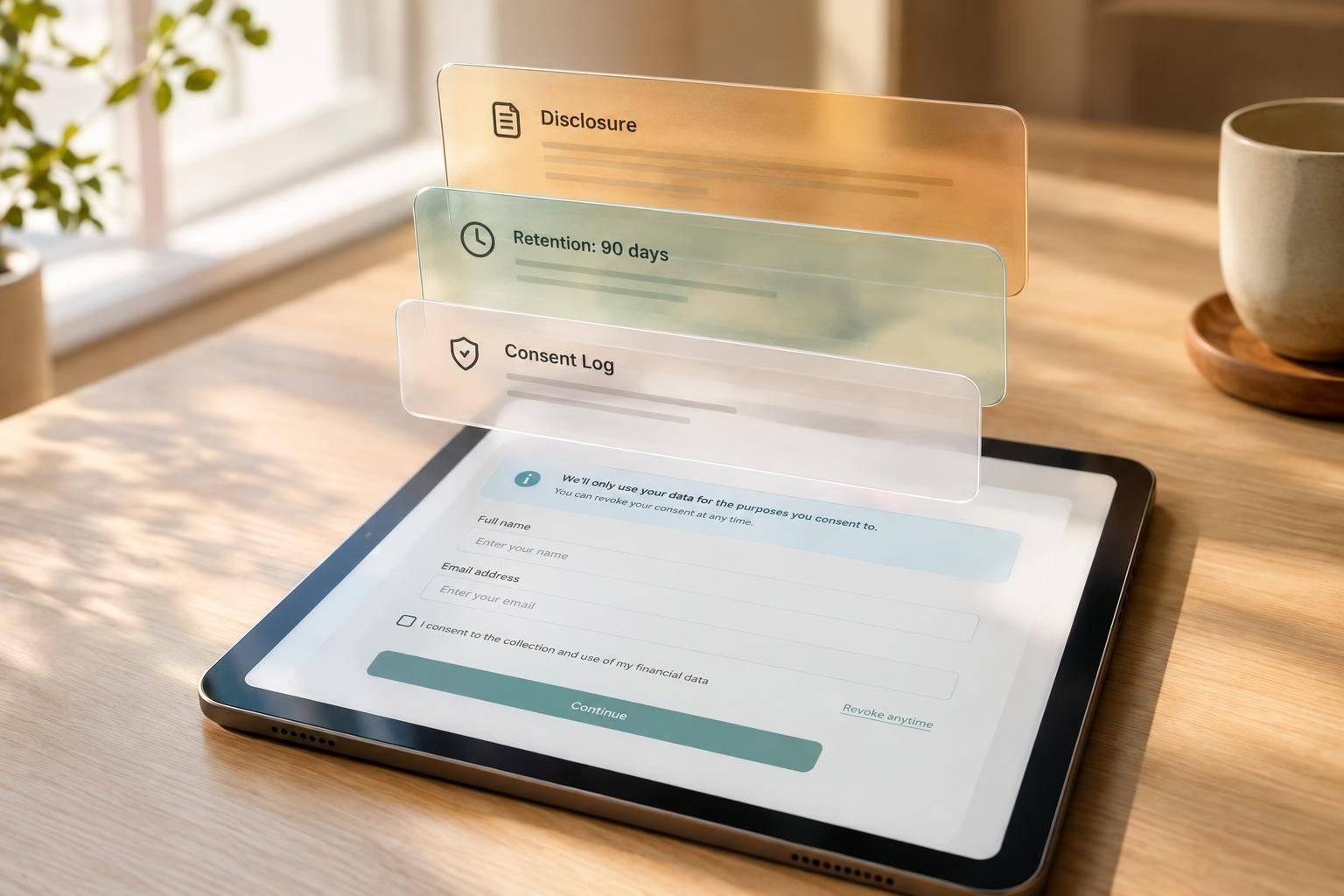
For each consent record, keep the notice version, consent text, timestamp, user or session ID, collection method, jurisdiction at collection, language, purpose, and status.
Look for missing evidence, outdated wording, prechecked options, failed CRM updates, and withdrawals that never reach connected systems. Keep optional marketing separate from fulfillment, and give marketing or personalization tools their own processing basis.
Track do-not-sell/share choices, targeted advertising preferences, recognized browser signals, and suppression status separately from marketing consent. Test that each choice reaches every recipient - and that later imports can’t reactivate opted-out contacts.
Review Reform Forms and Connected Services
Apply the same checks to every lead-capture form and the tools that receive its data.
For each form built with Reform, document its fields, purpose, and integrations. Remove fields you don’t need, and trace how submissions reach linked tools for email validation, lead enrichment, analytics, and CRM.
Flag every new integration for transfer-register and incident-log review before launch.
4. Test Incident Response and Check Records
Use the data map, transfer register, and vendor contracts you built above to test how quickly your team can stop each transfer.
Plan How to Stop Problem Transfers
Test your team’s ability to stop a transfer. Run a response exercise using your transfer map and subprocessor list. Include transfers made without permission and hidden routes.
Hidden routes may involve analytics SDKs, support tools, or CDN edge nodes.
Check who can pause exports, disable integrations, and restrict overseas access. Name leads in privacy, security, legal, vendor management, marketing, and leadership. Before an incident, agree on contacts and notification timelines with fulfillment providers and carriers so their reporting process supports your deadlines.
Update your incident log and transfer records with the exercise findings.
Keep Incident and Notification Records
Record affected systems, countries, containment steps, vendor communications, decisions, and corrective actions. Assess transfer violations separately from reportable personal data breaches. Addressing one does not resolve the other.
Track regulatory and contractual deadlines for each jurisdiction. Save completed notices and document why authorities or individuals were - or were not - notified.
Use these records to spot gaps before the next reconciliation.
Schedule Reviews and Cross-Check Records
Assign one owner to reconcile the records after each change or incident. Review the full set of transfer records at least annually and after changes involving laws, vendors, subprocessors, data, geography, or incidents. Make these checks part of procurement and infrastructure approvals, rather than leaving them to the annual review.
When switching fulfillment providers, require the outgoing provider to confirm handover and deletion. Before restarting a suspended transfer, check that the fix addresses the actual route and safeguards, and get approval from the named leads.
5. Conclusion: Assign Owners and Fix Gaps
After completing the checks above, keep one master transfer register that links each transfer to its mechanism, contract, subprocessor, notice, consent, and incident record. For each item, record its status, owner, evidence link, risk priority, remediation deadline, and next review date.
Use a consistent date format, such as Oct. 17, 2026.
To fix gaps:
- Keep missing evidence visible. Don’t mark uncertain items complete.
- Name one owner from procurement, security, privacy, or legal to maintain the register.
- Trigger reviews when laws change, new subprocessors join, security incidents occur, or services change.
- Close an item only after linking the evidence.
- Escalate unresolved high-risk transfers for legal review. Suspend or modify transfers when safeguards cannot be met.
A completed checklist is not legal certification.
FAQs
Do EU transfer rules apply to my U.S. store?
If your U.S. store handles personal data of people in the EU or UK, EU transfer rules apply. Transfers include cross-border access for remote support and backups.
Use a valid transfer mechanism: the EU-U.S. Data Privacy Framework (DPF) for certified vendors or Standard Contractual Clauses (SCCs) for others. Also conduct a Transfer Impact Assessment (TIA) to check whether laws in the destination country undermine these protections.
Does overseas remote access count as a data transfer?
Yes. Staff accessing personal data remotely from another country counts as a cross-border data transfer. This covers viewing personal data from abroad, cloud replication, analytics processing overseas, and access by subprocessors in other countries.
To stay compliant, document who can access your data, confirm where it’s stored, and put appropriate legal safeguards in place for international access, such as Standard Contractual Clauses.
What should I do if a vendor won’t provide compliance records?
Treat a vendor’s refusal to provide required compliance records - such as a signed Data Processing Agreement (DPA) or security documentation - as a major red flag. Pause or reconsider the partnership. Without transparency and contractual commitments, you can’t meet your compliance obligations or reduce regulatory risks. Give priority to vendors that provide clear, verifiable proof of compliance.
Related Blog Posts
Get new content delivered straight to your inbox

The Response
Updates on the Reform platform, insights on optimizing conversion rates, and tips to craft forms that convert.

Drive real results with form optimizations
Tested across hundreds of experiments, our strategies deliver a 215% lift in qualified leads for B2B and SaaS companies.
