
.webp)
Real-Time Lead Routing for Multi-Channel Campaigns



Want to close more deals faster? Real-time lead routing assigns leads instantly to the right sales rep based on rules like location, expertise, or workload. This eliminates delays, ensures quick follow-ups, and prevents leads from slipping through the cracks.
Key facts:
- Leads contacted within 5 minutes are 21x more likely to convert than after 30 minutes.
- Manual lead handling across 10+ channels often leads to missed opportunities.
- Automation consolidates data, applies smart rules, and notifies reps immediately.
Using tools like Reform, you can set up lead routing without coding, optimize workflows, and monitor performance with real-time analytics. Faster responses mean more conversions and better campaign results.
A Minute on API Factory: Performing Real-Time Lead Routing with a Salesforce Trigger
sbb-itb-5f36581
What Is Real-Time Lead Routing?
How Real-Time Lead Routing Works: 4-Step Process
Real-time lead routing is an automated system that takes leads from sources like web forms, social media, PPC ads, and chatbots and directs them to the appropriate sales rep or system based on pre-set rules. Unlike older methods that depend on manually checking inboxes, updating spreadsheets, or relying on guesswork, this system captures and assigns lead data instantly. This speed ensures that leads stay engaged and don’t lose interest - or worse, turn to a competitor that responds faster.
How Real-Time Lead Routing Works
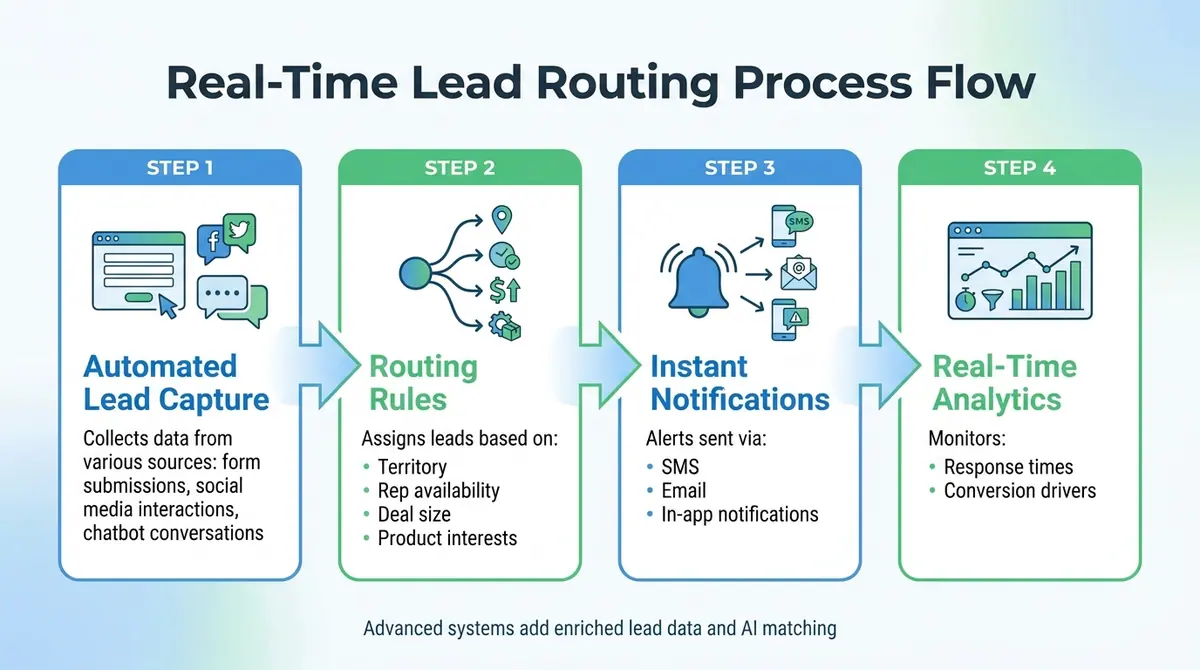
The process of real-time lead routing can be broken down into four main steps. It starts with automated lead capture, which collects data from various sources - like form submissions, social media interactions, and chatbot conversations. Then, routing rules come into play, assigning leads based on factors such as territory, rep availability, deal size, or specific product interests. Once assigned, instant notifications (via SMS, email, or in-app alerts) ensure sales reps can act quickly. Finally, real-time analytics monitor response times and track what drives conversions.
Some advanced systems take it a step further by adding enriched lead details, such as firmographic or technographic data. Others use AI to analyze past deals, helping to match new leads with the sales reps most likely to close them.
This streamlined process is essential for aligning efforts across multiple campaign channels.
Why Multi-Channel Campaigns Need Real-Time Routing
Coordinating leads from multiple channels manually is nearly impossible. Each platform - whether it’s a social media ad, a website form, or a chatbot - generates its own leads, and without automation, the data often ends up fragmented. This lack of synchronization can lead to inconsistent follow-ups and missed opportunities. Real-time routing solves this by consolidating data and ensuring every lead is handled efficiently, providing a seamless customer experience across all touchpoints.
This approach is especially important for omnichannel campaigns. Research shows that omnichannel shoppers spend about 4% more in-store and 10% more online per visit. Additionally, retention rates for businesses using omnichannel strategies can reach up to 90%.
"Multi-channel campaign management requires unified data, consistent messaging, and synchronized execution to create seamless customer experiences." - Daniel Saks, CEO, Landbase
Lead Routing Strategies for Multi-Channel Campaigns
Choosing the right routing strategy can make all the difference when it comes to quick and relevant follow-ups. By incorporating automation, these strategies ensure leads are handled with real-time precision across various channels. Each method serves a specific purpose, and knowing which one to use - and when - can boost your conversion rates. The secret lies in aligning your strategy with your team's structure, the volume of leads, and the complexity of your sales process. Let’s break down how each method works and where it shines.
Round-robin assignment operates on a rotating system, assigning each new lead to the next available rep. It’s perfect for managing high volumes of inbound leads, especially when your team members have comparable skill sets. The biggest advantage? Speed. Leads are distributed automatically, without the need for complex evaluations, keeping the process fast and fair. This method works best for general inquiries coming from web forms, social media ads, or chatbots - any scenario where quick and equitable distribution is key.
Territory-based routing is all about geography, industry, or account segmentation. If your sales team is divided by regions or specific market expertise, this method ensures leads go to reps who understand the local or industry-specific nuances. For instance, a SaaS company might route healthcare leads to reps familiar with HIPAA compliance, while retail leads might go to those who know how to navigate seasonal trends. This approach is especially effective for products or services requiring localized expertise or when running location-targeted campaigns across multiple platforms.
Capacity-based routing focuses on balancing workloads. Instead of assigning a hot lead to someone already swamped with 20 active deals, it sends the lead to a rep with the capacity to respond promptly. This not only prevents reps from burning out but also ensures that high-priority leads don’t fall through the cracks. On the other hand, persona-based routing takes a more tailored approach, matching leads with reps based on expertise, product knowledge, or the lead’s specific buyer persona. For example, a lead interested in enterprise-level features might be directed to a rep experienced in handling complex B2B deals. Considering that 73% of consumers expect brands to understand their unique needs, persona-based routing delivers the kind of personalized service today’s buyers look for. Both strategies are especially effective in multi-channel setups where lead intent and complexity can vary greatly.
How to Set Up Real-Time Lead Routing Using Reform
Reform makes it simple to implement real-time lead routing, helping you streamline multi-channel lead management. With 71% of small businesses already using CRM systems to manage customer relationships, you likely already have the tools in place to get started. Reform's no-code platform ensures a smooth integration into your existing lead routing strategy.
Connect Reform with CRM and Marketing Tools
Reform integrates directly with popular CRM platforms using field mapping, which links form submissions to your sales system effortlessly. You can map Reform fields to specific CRM categories like Contact, Lead, or Custom Fields, ensuring submissions are organized into the right segments. This integration also allows you to capture campaign-specific data for more precise routing.
For added flexibility, you can connect Reform to other tools using webhooks or Zapier.
Configure Conditional Routing Rules
Reform's conditional logic lets you route leads based on their form responses in real time. Each step or outcome in your form is represented by a separate page, allowing you to guide leads to the most relevant next step. For instance, if a lead mentions their company has annual revenue exceeding $1 million, they can be directed to a scheduling page for your senior sales team. Meanwhile, lower-priority leads might be routed to a page offering webinars or additional resources.
To set this up, add pages to your form and establish logic rules to determine where each lead should go. Activating the progress bar in Form Settings and using custom labels like "Contact Info" or "Company Details" can make the process more transparent, encouraging form completion while your routing logic works behind the scenes.
Once your rules are configured, take the time to validate them thoroughly.
Test and Refine Your Setup
Before launching, test your routing system in a controlled environment. Check for edge cases like incomplete data, leads outside designated territories, or scenarios where a representative might be unavailable. For example, in December 2025, 360Learning achieved a 97% assignment accuracy rate and reduced their speed-to-lead to under 10 minutes by switching to automated routing. This change boosted their conversion rate by 40%. Achieving this level of success requires meticulous testing.
Keep an eye on key metrics like speed-to-lead and reassignment rates. If leads are frequently reassigned, it might mean your routing rules need tweaking or your data quality needs attention. Consider setting up SLA timers to reassign leads automatically if a representative doesn’t act promptly, ensuring no lead is left unattended.
Monitor and Improve Lead Routing Performance
Keeping a close eye on your lead routing performance and making adjustments as needed is essential. As your campaigns evolve and market conditions shift, regular analysis ensures your routing process stays efficient across all channels.
Use Real-Time Analytics for Optimization
Reform's real-time analytics dashboard gives you instant insights into how your lead routing is performing. One key metric to watch is speed-to-lead - the time it takes for your team to contact a lead after they submit a form. Why is this so important? Research shows that leads contacted within five minutes are 21 times more likely to convert compared to those contacted after 30 minutes.
Other areas to monitor include channel conversion rates and audit trails. These can highlight which sources are delivering quality leads and reveal patterns in lead reassignments. For example, if you notice frequent bouncing of leads between team members, it might be time to tweak your routing rules or adjust territory boundaries.
It’s also important to assess your team’s workload. Overburdened reps can lead to uneven lead distribution, which ultimately affects your bottom line. Reform’s analytics make it easy to spot these imbalances so you can address them promptly.
Adjust Rules Based on Campaign Data
Set up a regular schedule to review and refine your routing strategy: analyze channel performance weekly, evaluate cross-channel attribution monthly, revisit your overall strategy quarterly, and review your technology stack annually.
Use campaign data to fine-tune conditional logic. For instance, if you discover that high-value leads convert better when handled by senior sales reps, adjust your routing rules to prioritize these assignments. Similarly, if certain form responses consistently lead to higher conversion rates, consider adding conditions to capture these signals in your routing logic.
Centralizing communication history - emails, calls, and chat transcripts - in your CRM is another crucial step. A unified record can help you identify where leads are getting stuck and what changes are improving outcomes. To prevent delays, implement automated SLA timers that reassign leads if they aren’t contacted quickly. These steps ensure your campaigns stay flexible and effective across all channels.
Conclusion
Bringing your multi-channel efforts together, real-time lead routing plays a critical role in keeping campaigns agile and effective. It eliminates delays and ensures leads are instantly matched with the right representative, boosting your campaign’s performance. By automating routing across platforms like email, social media, paid ads, and web forms, you’re not just saving time - you’re gaining an edge that can directly impact revenue.
The strategies discussed here - whether it’s round-robin, territory-based assignment, or persona and capacity routing - offer a solid framework for handling large lead volumes. With Reform's no-code tools, you can set up these rules in minutes, sync them with your CRM, and see immediate improvements in managing leads. Plus, these methods pave the way for accurate tracking and performance analysis.
Quick follow-ups are another key to success. They drive stronger engagement, shorten sales cycles, and improve overall efficiency. Reform’s real-time analytics provide insights into crucial metrics like speed-to-lead, conversion rates, and workload distribution, helping you refine your approach continuously.
Start using Reform’s tools today to implement real-time lead routing. Configure your conditional rules, test them across campaigns, and see the difference in your lead management - all without needing to write any code.
FAQs
What’s the best lead routing strategy for my team?
The ideal lead routing strategy varies depending on your business goals and processes. However, using automation with intelligent rules tends to be the most efficient approach.
AI-powered tools can instantly assign leads based on factors like geographic territory, specific product interests, or even the current workload of your sales team. Pairing this with real-time lead enrichment ensures that your data stays accurate, responses are faster, and conversion rates improve - all while cutting down on time-consuming manual tasks.
How do I route leads when key fields are missing or wrong?
Incomplete or incorrect key fields can throw a wrench into your lead routing process. Tools like Reform help tackle this by validating, enriching, and deduplicating data in real-time, ensuring everything is accurate before routing begins. For instance, features like form enrichment can automatically populate details like job titles or company size, cutting down on errors.
You can also set up conditional routing rules to handle incomplete leads. These rules can direct such leads to a qualification team or flag them for manual review, avoiding delays and ensuring leads don’t end up in the wrong hands.
What metrics show my routing rules are effective?
To gauge how well your routing rules are working, keep an eye on these key metrics:
- Response Times: How quickly are leads being contacted after they’re routed? Faster response times often lead to better engagement and higher chances of conversion.
- Lead Distribution Accuracy: Are leads being routed to the right teams or individuals? Accurate distribution ensures that the right person handles each lead, improving the overall experience.
- Conversion Rates: Are routed leads turning into customers? This metric directly reflects the effectiveness of your routing system.
Tracking these metrics in real time allows you to spot problems early and make adjustments as needed. By focusing on these areas, you can fine-tune your lead routing system to better meet your goals.
Related Blog Posts
Get new content delivered straight to your inbox

The Response
Updates on the Reform platform, insights on optimizing conversion rates, and tips to craft forms that convert.




Drive real results with form optimizations
Tested across hundreds of experiments, our strategies deliver a 215% lift in qualified leads for B2B and SaaS companies.
