
.webp)
5-Stage Vendor Risk Framework for SMBs


Vendor risk is a growing concern for small and medium-sized businesses (SMBs). With over 730 vendors on average sharing business data, the potential for financial loss, operational disruptions, and reputational harm is significant. A single cyberattack can force 60% of SMBs to shut down within six months. This framework breaks vendor risk management into five clear stages to help SMBs reduce vulnerabilities and meet compliance requirements without large budgets or teams:
- Identification: List all vendors, classify them by risk level, and focus on those with access to sensitive data or critical operations.
- Assessment: Collect relevant documents (e.g., SOC 2 reports) and use questionnaires to evaluate vendor security and compliance.
- Evaluation: Score vendors using a red-amber-green (RAG) system and decide whether to approve, conditionally approve, or reject them.
- Mitigation: Address risks with safeguards like encryption, multi-factor authentication (MFA), and strong contract clauses.
- Monitoring: Regularly review vendor performance and update risk levels to stay ahead of potential issues.
Key takeaway: SMBs can protect themselves by prioritizing high-risk vendors, implementing safeguards, and maintaining a structured, repeatable process. Start small by focusing on your top 10 vendors and build from there.
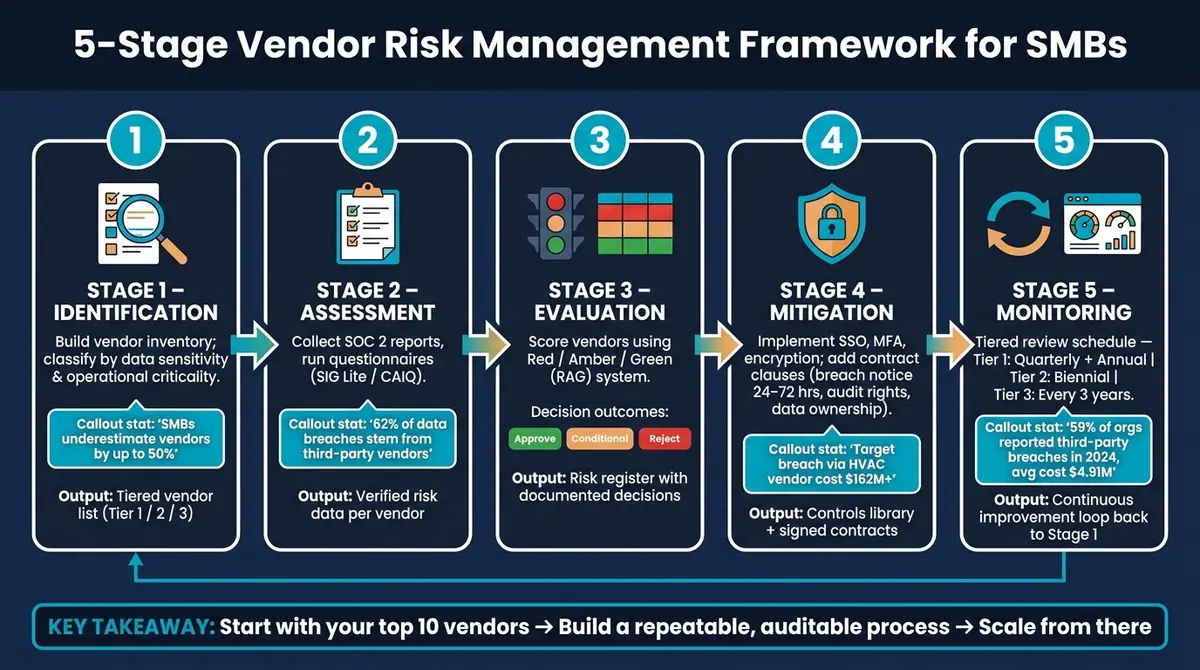
5-Stage Vendor Risk Management Framework for SMBs
Mastering Vendor Management | Cybersecurity Vendor Risk Management Training | TPRM
sbb-itb-5f36581
Stage 1: Vendor Identification and Triage
Before diving into risk management, it's essential to identify all your vendors. Many small and medium-sized businesses (SMBs) underestimate how many vendors they actually work with - often by as much as 50%. For example, a 20-person company might have between 40 and 90 active vendors.
Building a Vendor Inventory
Start by creating a detailed vendor inventory. To do this, review accounts payable records, recent credit card statements (to track recurring SaaS and other payments), and export a list of connected applications from your SSO (Single Sign-On). You can also use browser developer tools to identify external script domains, which can help uncover shadow IT.
For each vendor, record key details in a centralized spreadsheet, such as:
- Vendor name
- Category (e.g., SaaS, logistics, etc.)
- Internal owner (someone responsible for the vendor relationship)
- Annual spend
- Types of data shared (e.g., PII, financial, or health records)
- Whether the vendor has access to production systems
Assigning an internal owner to each vendor ensures someone is accountable for managing that relationship. Once your inventory is complete, you can move on to classifying vendors based on the sensitivity of the data they handle and their importance to your operations.
Classifying Vendors by Risk Factors
With your vendor list in hand, the next step is categorizing them along two key dimensions: data sensitivity (what type of information they can access) and operational criticality (how much your business depends on them). A practical way to do this is by using a 1-to-4 scoring scale for both factors. Vendors with high scores on both - such as your payroll processor or cloud infrastructure provider - should receive the most attention.
"A vendor that connects to your business' IT systems should be treated as more of a risk than a vendor that delivers paper supplies to your business." - Panorays
This scoring system helps you determine where to focus your efforts in later stages of the framework.
Assigning Risk Tiers to Vendors
After scoring, assign each vendor to one of three risk tiers based on their risk profile:
| Tier | Risk Criteria | Required Controls | Review Frequency |
|---|---|---|---|
| Tier 1: High | Handles PII/PHI, critical operations, or high spend | SOC 2, full questionnaire, contract clauses, continuous monitoring | Annual + quarterly checks |
| Tier 2: Medium | Limited data access, replaceable service, moderate spend | Abbreviated questionnaire, insurance verification, SLA review | Biennial + annual cert check |
| Tier 3: Low | No sensitive data, commodity purchase, low spend | W-9, basic due diligence, standard terms | Every 3 years or at renewal |
For most SMBs, only about 5 to 10 vendors will fall into Tier 1. These vendors represent the greatest risk to your business and should therefore be your top priority. As Vendorfi puts it: "Clarity beats comprehensiveness when you are building momentum."
Stage 2: Vendor Due Diligence and Assessment
Once you’ve categorized your vendors into tiers, it’s time to dig deeper and gather critical risk information about them. This step transforms assumptions into verified data. Considering that about 62% of data breaches stem from third-party vendors, this stage is crucial to protecting your organization. The process focuses on collecting the right documentation to assess vendor risk accurately.
What Documents to Request from Vendors
The type of documentation you need depends on the vendor’s tier:
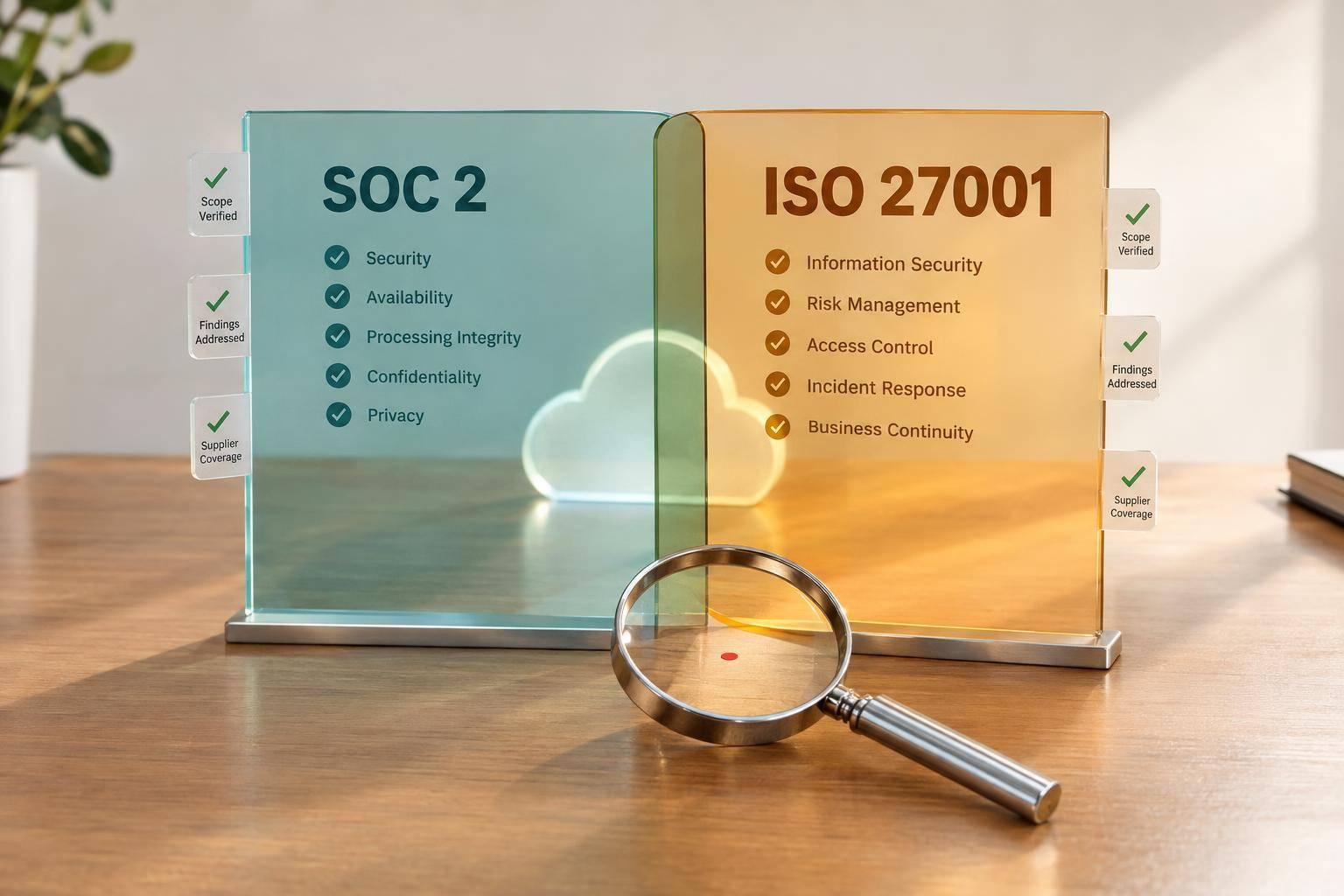
- Tier 1 vendors (handling sensitive data or critical systems): Request a SOC 2 Type II report, ISO 27001 certification, a recent penetration test executive summary, a Business Continuity Plan (BCP) with defined RTO and RPO, a Data Processing Agreement (DPA), and proof of cyber liability insurance.
- Tier 2 vendors: Typically, a security questionnaire, relevant policy documents, and an insurance certificate will suffice.
- Tier 3 vendors: For these low-risk vendors, a W-9 and standard contract terms are usually enough.
To ensure relevance, set limits on how old the provided evidence can be. For example, SOC 2 reports should be no older than 90 days, and ISO certifications should be updated within the past 12 months. Additionally, always request a list of subprocessors - the companies your vendor relies on to handle your data. This "fourth-party" risk is often overlooked but can pose significant vulnerabilities.
"Your security program is only as strong as your weakest vendor." - CISOSHARE
Running Vendor Assessments with Questionnaires
Once you have the necessary documents, structured questionnaires help refine each vendor’s risk profile. If you’re a smaller organization, you don’t need to create questionnaires from scratch. There are well-established frameworks available:
- SIG Lite: Ideal for general vendors.
- CAIQ: Geared toward SaaS providers and aligned with the Cloud Controls Matrix.
Using these standardized tools can speed up vendor onboarding by 4–6 times compared to creating custom questionnaires.
Your questionnaire should cover eight key areas: governance, information security, data privacy, business continuity, subprocessors, compliance, incident response, and AI-specific risks (e.g., whether customer data is used for AI training). Keep questions specific and actionable. For instance, instead of asking, “Do you use MFA?”, ask, “Is multi-factor authentication required for all administrative access to systems holding customer data?”. Always require supporting evidence for “yes” answers.
"A 'yes' with no artifact is a wish." - Lesia Polivod, Head of Marketing, Cyberbase
Using Reform to Collect and Score Vendor Data
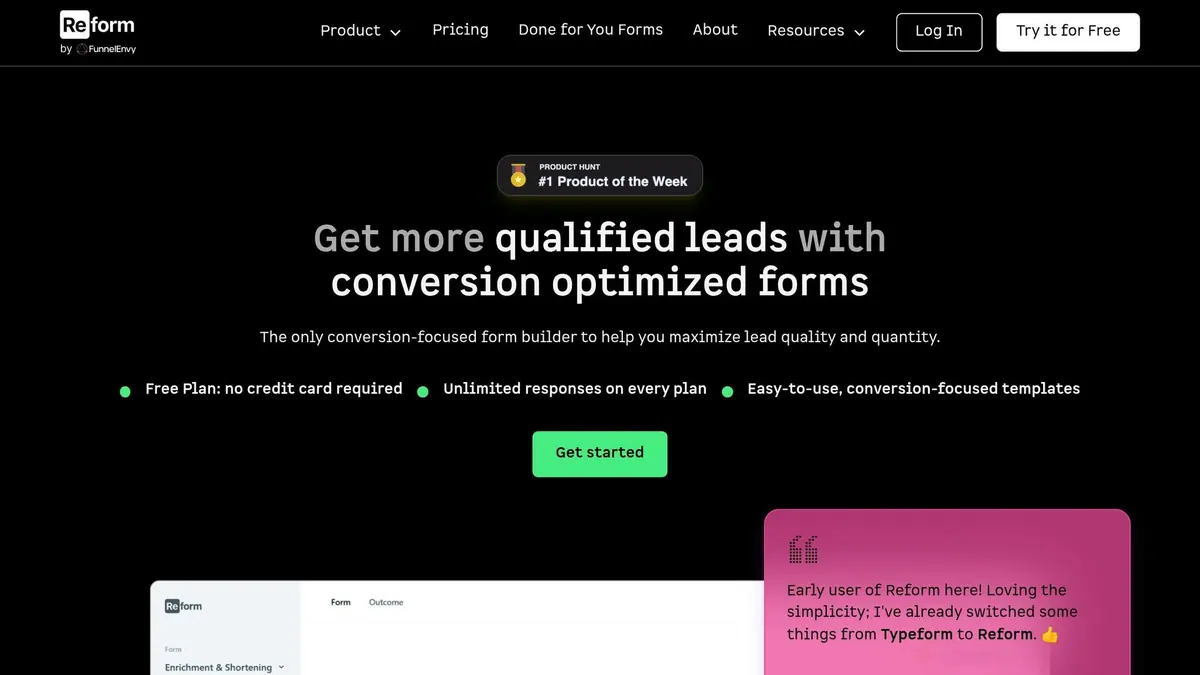
Managing vendor assessments through emails and spreadsheets can quickly become overwhelming, especially for larger portfolios. Reform simplifies this process with multi-step forms and conditional routing, ensuring vendors only answer questions relevant to their risk tier. This reduces unnecessary back-and-forth and speeds up response times.
Reform’s real-time analytics provide a clear view of your assessment pipeline, showing which vendors have responded, which questions are being skipped, and where submissions are delayed. All responses are stored in a centralized, audit-ready system, eliminating the chaos of scattered emails and folders. For SMBs without a dedicated security team, this structured and automated approach ensures consistency and efficiency across all vendor relationships.
Stage 3: Risk Evaluation and Decision Making
Turn vendor assessment data into actionable decisions by combining technical insights with business priorities. The goal is to align technical findings with what makes sense for your business.
Summarizing Vendor Assessment Findings
Use a RAG (Red, Amber, Green) scoring system to summarize each vendor's evaluation. Assign scores for key areas like Security, Compliance, Resilience, and Data Access:
- Green: The vendor meets all requirements.
- Amber: There are gaps, but they can be addressed with a mitigation plan.
- Red: Critical issues exist that must be resolved before onboarding - or may lead to outright rejection.
When analyzing these scores, focus on three critical factors: whether the vendor handles PII (Personally Identifiable Information) or PHI (Protected Health Information), the operational impact if the vendor were to go offline, and your total annual spend with them. These factors help you prioritize and decide next steps.
Deciding What to Do with Each Vendor
Based on the assessment, make one of three decisions: Approve, Approve with Conditions, or Reject. Here's what each decision means and the actions they require:
| Decision Status | Meaning | Action Required |
|---|---|---|
| Approve (Green) | Meets all security and operational standards | Move forward with onboarding and standard monitoring. |
| Conditional (Amber) | Acceptable risk with manageable gaps | Develop a mitigation plan, set a remediation deadline, and assign a responsible owner. |
| Reject/Escalate (Red) | Critical issues in security, compliance, or finances | Halt onboarding; require fixes or find an alternative vendor. |
The level of authority needed for final approval should match the vendor's risk tier. For Tier 1 vendors - those managing sensitive data or critical systems - approval must come from senior leaders like the CISO, Legal, and CFO. Tier 2 vendors can be approved by a Security Lead and Procurement Manager, while lower-risk vendors may only need approval from a business owner.
If a vendor is approved despite known gaps, those gaps must come with a hard deadline for resolution - typically 30 to 90 days - and a named individual responsible for follow-up. Letting Amber statuses linger without deadlines can create long-term vulnerabilities.
Logging Vendor Decisions for Future Reference
Every decision needs to be documented thoroughly. If a regulator or auditor asks why a high-risk vendor was onboarded without proper controls, an informal email thread won't cut it.
Maintain a central risk register that records key details such as the vendor's name, risk tier, RAG score summary, final decision, the rationale behind it, and any remaining risks after controls are applied. For vendors approved with conditions, include the risk owner, mitigation plan, and remediation deadline.
"Proper documentation is essential for accountability and can also help in regulatory compliance audits." - Dana Coates, CEO, UWIB Risk & Insurance Solutions
This centralized log ensures your decisions are transparent and prepares your organization for future audits or reviews. It also provides a clear trail of accountability for all vendor-related decisions.
Stage 4: Risk Mitigation and Contract Controls
Once you've finalized your vendor choices, the next step is tackling the risks you’ve identified by putting strong controls in place.
Implementing Technical and Process Controls
Controls should align with the vendor's risk tier. For instance, a Tier 1 vendor handling sensitive customer data demands far stricter measures than a low-risk scheduling tool.
For high-risk vendors, implement safeguards like Single Sign-On (SSO), Multi-Factor Authentication (MFA), least privilege access, and encryption for both stored and transmitted data. Also, establish clear protocols for data deletion or return once contracts end.
A real-world example highlights the importance of these measures: in 2013, a breach via a small HVAC vendor compromised the data of 70 million Target customers. By 2017, Target had paid $18.5 million in settlements, with total costs surpassing $162 million. This incident underscores why strict access controls are non-negotiable.
For added resilience, require Tier 1 vendors to share their Business Continuity Plan (BCP) and Disaster Recovery (DR) test results. It’s also wise to conduct joint incident response tabletop exercises annually.
| Control Type | Tier 1 (High Risk) | Tier 2 (Medium Risk) | Tier 3 (Low Risk) |
|---|---|---|---|
| Technical | SSO, MFA, Encryption, Pen Tests | MFA, Policy Samples | Standard T&Cs |
| Contractual | Audit Rights, 24-hr Breach Notice | Standard Liability | Basic W-9 |
| Monitoring | Quarterly Reviews, Real-time Alerts | Annual Cert Validation | Renewal Check Only |
| Resilience | DR/BCP Test Results | Incident History | Basic Contact List |
Beyond technical safeguards, well-crafted contracts provide another layer of protection against vendor-related risks.
Essential Contract Clauses for U.S.-Based SMBs
Contractual safeguards are just as critical as technical controls, especially with third-party involvement in data breaches doubling to 30% by 2025. Precise language in contracts can make a huge difference.
Here are some key clauses to consider:
- Breach Notification Timelines: Vendors should notify you within 24 to 72 hours of a confirmed security incident.
- Audit Rights: Reserve the right to request updated third-party reports, such as SOC 2 Type II or ISO 27001 certifications, whenever necessary.
-
Termination Flexibility: Push for "termination for convenience" clauses, allowing you to exit contracts without waiting for a major breach. As noted in one legal analysis:
"A contract that only allows termination for material breach... effectively means you cannot leave unless the vendor fails significantly and refuses to fix it." - Zedly AI Editorial Team
- Data Ownership: Clearly state who owns the data you upload and whether the vendor can use it for purposes like training AI models. With 97% of AI-related breaches in 2025 linked to poor access controls, this clause is crucial.
- Subcontractor Controls: Ensure vendors hold their subcontractors to the same security and confidentiality standards.
Pro tip: When signing a vendor contract, set a calendar reminder for the cancellation notice deadline. This simple step can help you avoid costly auto-renewals.
Monitoring Mitigation Efforts with Reform
After securing controls through contract clauses, it’s important to track their implementation. Conditional approvals often require timely follow-up, and that’s where tools like Reform come in handy.
Reform lets you create a dedicated mitigation tracking form for vendors or internal teams. This form can confirm whether specific controls - like enabling MFA, signing a Data Processing Agreement (DPA), or submitting a penetration test summary - are in place. Its real-time analytics dashboard offers a clear view of which tasks are complete, in progress, or overdue, eliminating the need for constant manual follow-ups.
With only 43% of organizations reporting adequate staffing for third-party risk programs, automating these processes is a game-changer. Reform's workflows can automatically re-request evidence when it expires, ensuring your controls stay up-to-date and your risk management remains strong across all vendor tiers.
Stage 5: Ongoing Monitoring and Continuous Improvement
Setting up controls is just the beginning; the real challenge lies in maintaining vigilance as vendor relationships and risks evolve. Continuous monitoring ensures your vendor risk management strategy stays adaptable and responsive to changes.
Setting a Vendor Review Schedule
Not all vendors require the same level of attention. A tiered review schedule helps you prioritize effectively, focusing more on high-risk vendors while keeping the process manageable.
| Vendor Tier | Review Frequency | Evidence to Refresh |
|---|---|---|
| Tier 1 (High Risk) | Quarterly check-ins + Annual full review | SOC 2 Type II, pen test results, DR plan |
| Tier 2 (Medium Risk) | Annual or biennial review | Security questionnaire, updated policy docs |
| Tier 3 (Low Risk) | Every 3 years or at contract renewal | Compliance attestation, W-9 |
Certain events demand immediate reassessment, regardless of the schedule. Examples include vendor data breaches, significant changes in vendor responsibilities (like access to new data sets), or new regulatory requirements impacting your industry. For instance, updates like the SEC's cybersecurity disclosure rules or new state-level privacy laws could necessitate a fresh look at vendor arrangements.
Each review should result in a clear record that outlines decisions made, the assigned owner, and the next scheduled review. Without this structure, reviews risk becoming disorganized, often buried in email threads with no actionable outcomes.
Once the review cadence is set, the next step is keeping a close eye on vendor performance and addressing issues as they arise.
Tracking Vendor Performance and Incidents
Annual assessments alone leave a significant oversight gap - 364 days where a vendor’s security posture could deteriorate unnoticed. In fact, in 2024, 59% of organizations reported data breaches caused by third parties, with an average cost of $4.91 million per breach.
The solution? Pair scheduled reviews with continuous monitoring. For Tier 1 vendors, this means tracking external signals like changes to sub-processor lists, updates to Data Processing Agreements (DPAs), or lapses in security certifications. Research shows that 67% of sub-processor pages and 41% of privacy policies sampled changed within a 90-day period, well before annual reviews would typically catch those updates.
"Relying on annual assessments alone means you're always looking at yesterday's risk." - Black Kite
You’ll also need a defined incident response process. Decide in advance who will handle vendor-related incidents, establish clear communication protocols, and coordinate on forensics as needed. Organizations using AI-driven security operations save an average of $2.2 million on breach-related costs compared to those relying on manual processes. This highlights the importance of structured workflows over reactive, ad-hoc responses.
To make monitoring more efficient and actionable, advanced analytics can be a game-changer.
Using Reform Analytics to Improve the Framework
As discussed in Stage 2, automated tools simplify data management. Tools like Reform take this further by offering real-time insights into recurring gaps. Reform’s dashboard identifies failing controls, slow remediation efforts, and unanswered questions across your vendor portfolio.
This is a big deal. By trimming redundant questions and focusing on criteria tied to actual incident trends, you can make future assessments faster and more relevant. A framework advisor summed it up well:
"Clarity beats comprehensiveness when you are building momentum." - Vendorfi Team
Reform also tracks incomplete and abandoned submissions, flagging vendors who start assessments but fail to finish them. This subtle signal can indicate potential issues worth investigating. Automated reminders for evidence expiration further ensure that a small team can maintain consistent oversight across numerous vendor relationships without drowning in manual tasks.
Conclusion: Key Takeaways and Implementation Checklist
When it comes to managing vendor risk, the work doesn’t stop at signing a contract. Third-party involvement in data breaches continues to be a costly threat, often surpassing the impact of internal incidents. For small and medium-sized businesses (SMBs), maintaining structured oversight is non-negotiable.
"You can outsource the work, but you cannot outsource the risk." - SAI360
Key Takeaways from Each Stage
The five-stage framework provides a step-by-step approach to tackle vendor risk. Here’s a quick summary of the critical lessons and actions for each stage:
| Stage | Core Lesson | What to Do |
|---|---|---|
| 1. Identification | You can’t manage what you don’t track. | Build a centralized vendor registry and define data access levels. |
| 2. Due Diligence | Tailor efforts to avoid unnecessary fatigue. | Conduct full SOC 2 reviews for Tier 1 vendors; use basic questionnaires for Tier 2. |
| 3. Evaluation | Assessments must drive decisions, not just notes. | Create clear approval pathways (e.g., Security for data, Finance for spend). |
| 4. Mitigation | Contracts are key to accountability. | Include breach notification timelines and audit rights in high-risk agreements. |
| 5. Monitoring | Risk management is ongoing, not a one-time task. | Conduct annual reviews for high-risk vendors and biennial reviews for medium-risk ones. |
These steps lay the groundwork for a vendor risk management program that’s both practical and effective.
Implementation Checklist
Vendor risk management isn’t a one-and-done task - it’s a continuous process. Start small but focused, and build from there. Here’s a simple roadmap:
- Within 30 days: Create a vendor inventory, classify vendors into risk tiers, and assess your top 10 high-risk vendors. This provides a strong starting point.
- Within 90 days: Finalize your control library, document your approval workflow, schedule regular reassessments, and train your team on vendor relationship responsibilities.
By following this timeline, you’ll have a functional and auditable framework in place, even if it’s not perfect yet.
Looking forward, consistency will pay off. By 2026, it’s expected that 60% of organizations will prioritize cybersecurity risk in third-party decisions. SMBs that start now will not only improve their security posture but also simplify vendor negotiations, audits, and compliance processes. This approach ensures a streamlined and effective vendor risk management system.
FAQs
How do I find “hidden” vendors we’re already using?
To keep track of “hidden” vendors, it’s important to maintain an up-to-date vendor inventory that also includes shadow IT and unmanaged SaaS applications. Instead of relying on one-time evaluations, conduct regular risk assessments to stay on top of potential vulnerabilities. Using tools designed to simplify vendor onboarding and manage risk workflows can make it easier to identify vendors that might otherwise be missed. Additionally, make it a habit to review vendor relationships periodically and follow a clear risk management process to ensure every vendor - hidden or not - is properly accounted for and managed.
What if a Tier 1 vendor won’t share a SOC 2 report?
If a Tier 1 vendor doesn’t provide a SOC 2 report, you still have options to manage risk effectively:
- Perform a comprehensive third-party risk assessment to identify potential vulnerabilities.
- Ask for alternative security documentation that demonstrates their compliance with industry standards.
- Explore other vendors who can meet your security requirements and provide the necessary assurances.
Taking these steps can help safeguard your business, even without access to a SOC 2 report.
When should I reassess a vendor outside the normal schedule?
When there are changes such as adjustments to the scope, new data flows, added business processes, or a growing user base, it's important to reassess a vendor even if it's outside the usual review schedule. These shifts can bring new risks, and addressing them promptly ensures that security remains intact.
Related Blog Posts
Get new content delivered straight to your inbox

The Response
Updates on the Reform platform, insights on optimizing conversion rates, and tips to craft forms that convert.

Drive real results with form optimizations
Tested across hundreds of experiments, our strategies deliver a 215% lift in qualified leads for B2B and SaaS companies.
